Living in Spain: What Daily Life Is Really Like
Living in Spain is often imagined as sunshine, beaches, tapas, relaxed evenings and a better work-life balance. That picture is not wrong, but it is incomplete.
Real daily life in Spain is also about choosing the right town, understanding local bureaucracy, dealing with summer heat, learning basic Spanish, adapting to late dinners, finding reliable healthcare, comparing schools, checking transport links and knowing which areas feel local and which areas are mainly tourist zones.
Spain is one of the most varied countries in Europe. The lifestyle in Valencia is not the same as in Madrid. Life in Málaga is different from life in Galicia. The Costa del Sol feels very different from inland Andalusia. A family living near schools and sports facilities has a different routine from a retiree living near the beach or a remote worker living in a city apartment.
I write this from real experience: after living in Spain for around ten years, first in Valencia and later on the Costa del Sol, working both as an employee in Torremolinos and as a self-employed professional, and raising three children here. Travelling regularly between Málaga, Benalmádena, Torremolinos, Mijas, Marbella, Estepona and other parts of Andalusia gives a very practical view of how Spanish life works outside the tourist postcard.
Best for: Spain is ideal for people who value outdoor living, family life, food culture, social contact, walkable towns, public healthcare, warm weather, local traditions and a more balanced lifestyle.
Not ideal for: People who need very fast administration, dislike heat, expect everything to work like Northern Europe, or choose a location only because it looks cheap online.
💶 Calculate Your Salary in Spain
Estimate your take-home pay and better understand how much of your gross salary you could receive after deductions.
🚨 Essential Numbers & Services in Spain
Find emergency numbers and official resources for healthcare, police, taxes, traffic, property records and public services.
Spain at a Glance
Spain is officially the Kingdom of Spain and is located mainly on the Iberian Peninsula in Southern and Western Europe. It also includes the Balearic Islands in the Mediterranean, the Canary Islands in the Atlantic, and the autonomous cities of Ceuta and Melilla in North Africa.
This geography matters because daily life changes dramatically from region to region. Northern Spain is greener and wetter. Central Spain has hot summers and cold winters. Mediterranean Spain is known for warm weather, coastal towns and outdoor living. The Canary Islands have a very different subtropical and Atlantic rhythm.
🌍 Country Type
Southern European country, EU member, constitutional monarchy and parliamentary democracy.
🏙 Capital
Madrid is the capital and largest city, while Barcelona, Valencia, Seville and Málaga are major urban centres.
💶 Currency
Spain uses the euro, making it practical for EU residents and easy for international comparisons.
For general travel, culture and destination ideas around the country, the official Spanish tourism portal Spain.info is a useful starting point. For practical relocation and lifestyle guides, you can also visit SpainCheck.com.
What Daily Life in Spain Feels Like
Watch: Real Life in Spain
This short video gives a more visual feeling of everyday life in Spain — the streets, lifestyle, local rhythm and atmosphere that are difficult to understand from text alone.
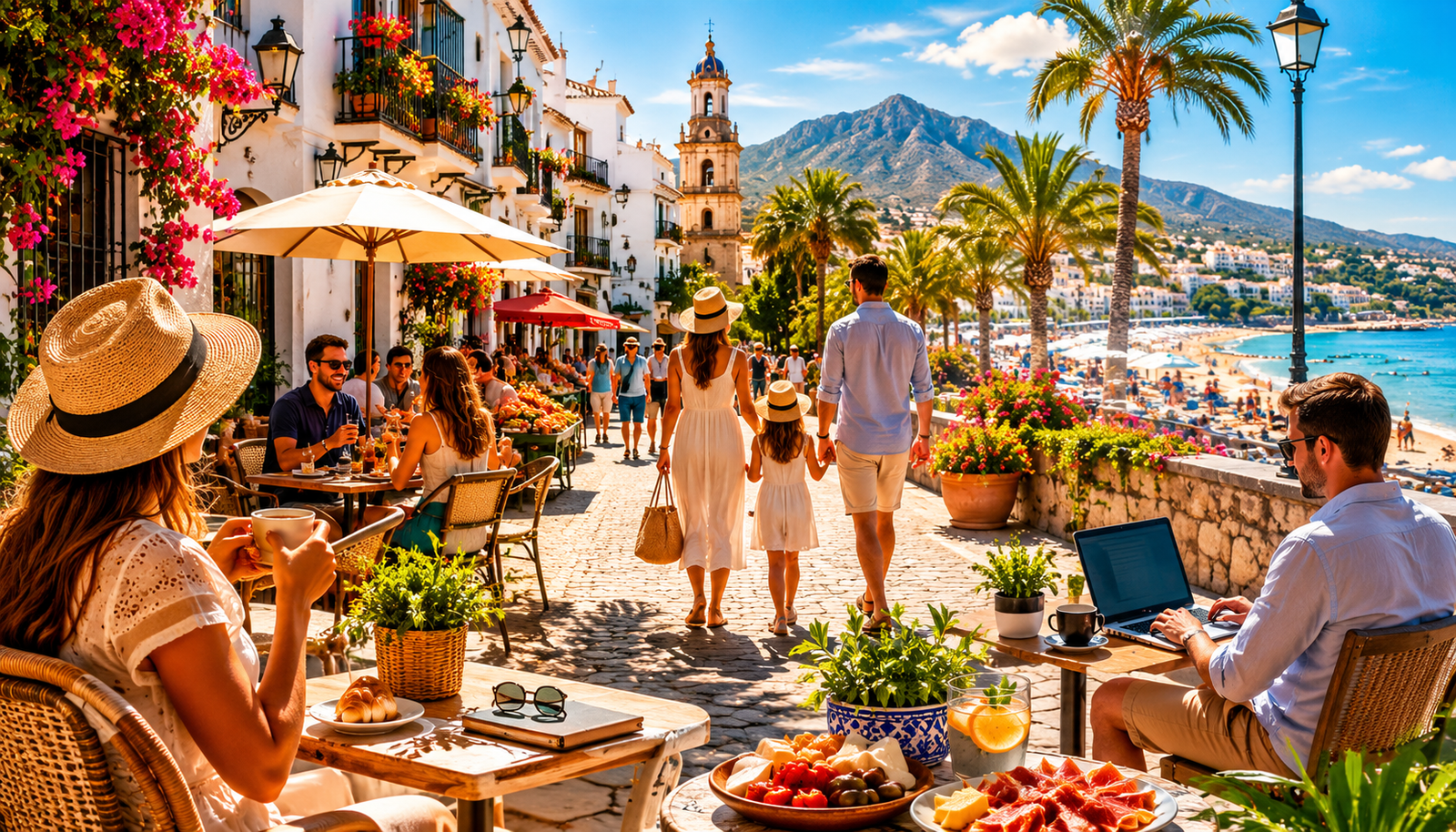
Daily life in Spain often feels more social, more outdoor and more family-oriented than in many colder or more individualistic countries. People spend time in cafés, on terraces, in parks, at the beach, in plazas and at local events. Even simple daily routines can involve more human contact.
The local bar is not only a place to drink. It can be where neighbours meet, parents wait after school drop-off, workers take a coffee break, retirees read the newspaper and friends stop for a quick chat.
This is one reason many foreigners fall in love with the country. Spain can make ordinary daily life feel more alive. A walk to buy bread, a quick coffee, a school run, a trip to the market or an evening paseo can become part of a healthier routine.
The Spanish daily rhythm
Spain usually runs later than the UK, Germany, the Netherlands or the Nordic countries. Lunch is often later. Dinner is much later. Families with children may still be outside in the evening, especially in spring and summer.
In many towns, life becomes active again after 6 pm. Playgrounds fill with children, cafés become busier, sports clubs start training sessions and families go for walks. On the Costa del Sol, summer evenings are often the most comfortable part of the day.
| Part of Day | Typical Spanish Routine | What Foreigners Notice |
|---|---|---|
| Morning | Coffee, school run, work, errands, local shops opening. | Breakfast is often simple, and cafés are busy early. |
| Lunch | Main meal of the day for many locals, often between 2 pm and 4 pm. | Some shops and offices may slow down or close during lunch hours. |
| Afternoon | Work continues, schools finish, children go to sports or activities. | The day can feel split into two parts. |
| Evening | Paseo, terraces, playgrounds, sports, family time and dinner. | Restaurants fill later than many foreigners expect. |
| Weekend | Family meals, beach, mountains, local events, shopping centres and sports. | Sunday can be quiet outside tourist areas and large shopping centres. |
Weather and Climate in Spain
Weather is one of the biggest reasons people move to Spain, but Spain does not have one single climate. The country includes Mediterranean, Atlantic, semi-arid, mountain and island climates.
The official Spanish meteorological agency, AEMET, is the best source for forecasts, warnings and climate information. This matters because weather in Spain is not only about sunshine. Heatwaves, drought, heavy rain episodes and regional differences are part of real life here.
Mediterranean Spain
The Mediterranean coast, including much of Valencia, Catalonia, Murcia, Andalusia and the Costa del Sol, usually has hot, dry summers and mild winters. This is why outdoor living is so strong.
On the Costa del Sol, winters can be very comfortable during the day, but homes may still feel cold at night if they are poorly insulated. In summer, the heat can be serious, especially away from the sea breeze.
Northern Spain
Galicia, Asturias, Cantabria and the Basque Country are greener, cooler and wetter. The lifestyle there can feel more Atlantic than Mediterranean. Summers are usually milder, but winters are cloudier and rainier.
Central Spain
Madrid and central Spain can have hot summers and cold winters. Daily life there is more urban, more business-oriented and more connected to Spain’s administrative and economic centre.
Andalusia and the Costa del Sol
Andalusia offers some of the most attractive winter weather in mainland Europe, especially along the coast. Málaga, Marbella, Benalmádena, Fuengirola and Estepona are popular because residents can enjoy sea, mountains, golf, sports clubs, international schools and outdoor cafés almost all year.
☀️ Best Weather Advantage
Many coastal areas allow outdoor living almost all year, especially in Andalusia, Valencia and the Canary Islands.
🔥 Main Weather Problem
Summer heat can be intense, especially inland and in poorly insulated homes without air conditioning.
🌧 Regional Difference
Northern Spain is greener and wetter, while southern and eastern Spain are generally drier and warmer.
Food, Cafés and the Spanish Social Life
Food is not just food in Spain. It is part of the social structure. People meet over coffee, tapas, lunch, family meals and long dinners. A meal can be practical, but it can also be the centre of the day.
Breakfast is often light. Lunch is traditionally the main meal. Dinner is usually later and may be lighter, especially during the week. On weekends, lunch with family or friends can last for hours.
Spain’s food culture is also regional. Paella belongs strongly to Valencia. Gazpacho and salmorejo are associated with Andalusia. Pintxos are part of Basque culture. Galicia is known for seafood. Madrid has its own traditional dishes, while the Mediterranean coast is full of fish, rice dishes, olive oil, vegetables and seasonal fruit.
What foreigners usually love
Many foreigners appreciate the quality of fresh produce, the local markets, the price of coffee compared with many Northern European countries, and the habit of meeting friends outside instead of staying at home.
What foreigners may struggle with
Some people struggle with late dinner times, slower restaurant service, different opening hours and the fact that many local places are not designed around fast customer turnover. Spain often rewards patience.
Work-Life Balance in Spain
Spain is famous for lifestyle, but working in Spain is not automatically relaxed. The experience depends on your industry, employer, region and whether you are employed or self-employed.
I have experienced both sides: working as an employee in Torremolinos and later becoming self-employed. As an employee, your rhythm depends heavily on the company. As a self-employed person, you may gain flexibility, but you also deal with taxes, social security payments, invoices, clients and administration.
Many foreigners move here because they want more than work and bills. But it is important to understand the real Spain work-life balance before making the move.
Realistic view: Spain can offer excellent lifestyle balance, especially if you work remotely, have stable income, choose the right city and build a local routine. But low local salaries, bureaucracy and housing costs can reduce that advantage if you arrive unprepared.
Housing and Neighbourhood Life
Housing is usually the biggest cost and the biggest lifestyle decision in Spain. The difference between two neighbourhoods in the same city can be huge.
A property near the beach may be beautiful but noisy in summer. A cheaper inland town may offer more space but require a car. A city centre apartment may be convenient but difficult for parking. A residential suburb may be perfect for families but less exciting for younger people.
Before choosing a home, check noise, parking, schools, public transport, healthcare access, supermarkets, internet, community fees, building quality, orientation, humidity, summer traffic and winter comfort.
The type of property can also have a major impact on your daily routine. Buyers looking for newer homes, better energy efficiency and shared facilities such as swimming pools, gyms, coworking areas and landscaped gardens may want to explore new build homes in Spain and understand how this type of residential lifestyle differs from living in an older apartment building or traditional neighbourhood.
If you are still comparing regions, read our guide to the best places to live in Spain.
Coastal life vs city life
Coastal life is attractive because of the sea, climate and outdoor lifestyle. But popular coastal areas can become crowded in summer. Parking becomes harder, restaurants get busy, short-term rentals increase and some neighbourhoods feel seasonal.
City life gives you better public transport, more jobs, more cultural events and better access to services. But cities like Madrid and Barcelona can be expensive and intense.
Local neighbourhoods vs tourist zones
One of the most important choices is whether you want a real local neighbourhood or a tourist-friendly area. Tourist zones can be convenient because people speak English and services are easy to find. Local neighbourhoods may offer better prices, stronger community and more authentic Spanish life.
Cost of Living in Spain
Spain can be affordable compared with many Western European countries, but it is not cheap everywhere. Madrid, Barcelona, Marbella, Ibiza, Mallorca and parts of the Costa del Sol can be expensive. Smaller inland towns and less famous cities are usually more affordable.
Your real monthly budget depends on rent or mortgage, lifestyle, school choices, car use, insurance, utilities, eating out and how often you travel.
For detailed numbers, compare our full guide to the cost of living in Spain.
| Expense | What to Know | Lifestyle Impact |
|---|---|---|
| Housing | Usually the largest monthly cost. Coastal, central and school-zone areas are more expensive. | Choosing the right town can change your budget dramatically. |
| Food | Local markets and supermarkets offer good value, especially for seasonal produce. | Cooking at home keeps costs lower, eating out often increases spending. |
| Transport | Large cities have good public transport. Coastal and suburban areas often require a car. | A car adds fuel, insurance, maintenance and parking costs. |
| Healthcare | Public healthcare is strong, but many foreigners also use private insurance. | Private insurance can be useful for faster appointments and visa requirements. |
| Schools | Public schools are free, private and international schools can be costly. | School choice often decides where families live. |
Healthcare and Safety in Spain
Spain has a strong healthcare reputation. The public system is organised through the Spanish National Health System and the autonomous communities. The Spanish Ministry of Health provides official information, while the WHO European Observatory describes Spain’s health system as based on universality, equity and public-sector care.
Many foreign residents use a combination of public healthcare and private insurance. Private insurance can be useful for faster access to specialists, English-speaking doctors and residency or visa requirements.
Spain is also generally considered a safe country for families, retirees and solo residents. The real safety picture depends on the area. Pickpocketing can happen in tourist zones. Nightlife areas can be noisy. Some neighbourhoods are better for families than others.
For a wider lifestyle overview, read our article about the quality of life in Spain.
Family Life and Raising Children in Spain
Spain is one of the most family-friendly countries I have experienced. Children are visible in public life. They are welcome in restaurants, parks, plazas, events and family gatherings.
As a father of three on the Costa del Sol, one of the biggest advantages is how much children can do outdoors. Sports clubs, football pitches, beaches, playgrounds, school events, local fairs and cultural celebrations are part of normal life.
In places like Benalmádena, Torremolinos, Fuengirola, Mijas, Marbella and Estepona, families can combine beach life with schools, sports, shopping centres, healthcare and access to Málaga Airport.
Schools and education
Families moving to Spain should compare public schools, concertado schools, private schools and international schools. School choice affects language, budget, daily routine and where you should live.
Public schools help children integrate into Spanish society. International schools can make the transition easier for foreign families, but they usually cost more and may create a more international social circle.
Culture, Society and Local Habits
Spanish society is social, expressive and family-oriented. People often speak loudly, greet warmly and spend a lot of time outside the home. This can be refreshing for foreigners, but it may also feel intense at first.
Local culture is built around family, food, public life, regional identity, festivals, football, Catholic traditions, local holidays and strong municipal life.
Regional identity matters
Spain is not culturally uniform. Andalusia, Catalonia, Galicia, the Basque Country, Valencia, Madrid and the Canary Islands all have different histories, accents, food, politics and daily habits.
This is important when choosing where to live. A person who loves Málaga may not feel the same in Madrid. Someone who loves Valencia may not enjoy a small inland village. The country is one, but the lifestyles are many.
Festivals and local events
Spain has a very strong events culture. Local ferias, Semana Santa, Christmas markets, Three Kings parades, town festivals, music events, sports celebrations and regional holidays bring people into the streets.
On the Costa del Sol, you can see how public life changes during events. Roads close, families gather, children stay out later and towns feel more alive. This is one of the reasons Spain can feel socially warmer than many northern countries.
Traffic, Driving and Public Transport
Transport is one of the biggest practical differences between regions. Madrid, Barcelona, Valencia and Málaga offer strong public transport. Smaller towns, suburbs and coastal areas often require a car.
Spain has high-speed rail, airports, motorways and regional transport networks. But daily convenience depends on where you live. A home that looks perfect online may be inconvenient if schools, supermarkets, healthcare and public transport are not nearby.
Traffic in coastal areas
On the Costa del Sol, traffic changes by season. Summer, weekends, school hours and holiday periods can make roads busier. Marbella, Puerto Banús, central Málaga, Fuengirola and beach zones can become congested at peak times.
Parking is another important detail. Some beautiful old towns and beach areas are not easy for daily parking. Families should think carefully about garage space, school routes and supermarket access.
Do you need a car in Spain?
In big cities, not always. In many coastal or suburban areas, yes. If you have children, live outside the centre, visit several towns or need to reach sports clubs and schools, a car can make life much easier.
Outdoor Living: Beaches, Mountains and Parks
One of the strongest reasons to live in Spain is how much life happens outdoors. The country offers beaches, mountains, islands, forests, rivers, natural parks, historic towns and modern cities.
In Andalusia, this variety is especially powerful. You can live near the Mediterranean Sea, drive to mountain villages, visit Málaga city, spend a day in Marbella, walk in natural parks or take children to sports and beach activities.
Spain’s official tourism website highlights beaches, cities, culture, food, nature and routes across the country, which reflects the real variety residents can enjoy, not only tourists.
🌊 Sea
The Mediterranean and Atlantic coasts shape lifestyle, tourism, food, sport and property demand.
⛰ Mountains
Spain is mountainous, with areas such as the Pyrenees, Sierra Nevada and many regional ranges.
🏞 Nature
Natural parks, walking routes and rural areas give residents more than just beach life.
Living in Spain as a Foreigner
Foreigners can build a very good life in Spain, but preparation matters. You need to understand residency, healthcare, taxes, housing, banking, language, schooling and local registration.
Americans, British citizens, Germans, Dutch, Nordics and other foreigners often compare Spain with their home countries because daily life can feel more relaxed and more social. However, paperwork can feel slower and less digital than expected.
For a dedicated comparison, read our article on living in Spain as an American. If you are still at the planning stage, start with our moving to Spain guide.
Retiring in Spain
Spain is one of Europe’s most attractive retirement destinations because of climate, healthcare, food, social life, safety and outdoor living.
Retirees often choose coastal areas, but the best location depends on budget, healthcare access, airport connections, language comfort, winter activity and whether they want an international or Spanish neighbourhood.
The Costa del Sol is especially attractive because Málaga Airport connects the region with much of Europe, while towns like Benalmádena, Fuengirola, Mijas, Marbella and Estepona offer different lifestyle options.
Read more in our full guide to retiring in Spain.
Why Life in Spain Can Feel Healthier
Many people feel healthier in Spain because they walk more, spend more time outdoors, eat more fresh food, enjoy more sunlight and have more regular social contact.
The Mediterranean lifestyle is not magic. It works when people actually live it: walking, eating fresh food, spending time with others, using public spaces and keeping a routine that is not only work-focused.
Spain is often discussed for longevity, lifestyle and public healthcare. Learn more in our article on life expectancy in Spain.
Population, Immigration and International Communities
Spain has become increasingly international. INE population data shows Spain has passed 49 million residents, with strong growth linked to foreign-born residents and immigration.
This changes daily life in many cities and coastal areas. In places like Málaga, Valencia, Alicante, Barcelona, Madrid, Marbella and the Balearic Islands, international communities influence schools, restaurants, property demand, languages, services and business opportunities.
For foreigners, this can make integration easier. You can often find English-speaking professionals, international schools and expat communities. But it can also raise housing demand in the most popular areas.
Best Types of Places to Live in Spain
Spain is not one lifestyle. It is a collection of very different lifestyle choices.
| Type of Place | Best For | Main Caution |
|---|---|---|
| Large Cities | Jobs, culture, universities, public transport and international connections. | Higher rent, traffic, noise and faster pace. |
| Coastal Towns | Weather, beach lifestyle, retirees, families and tourism-based business. | Seasonality, summer crowds and higher prices in prime areas. |
| Inland Towns | Lower costs, local culture, space and slower lifestyle. | Fewer international services and more need for Spanish. |
| Island Areas | Climate, nature, tourism, remote work and lifestyle. | Higher logistics costs and limited housing in popular zones. |
| Family Suburbs | Schools, sports, parking, safety and practical daily routines. | Often requires a car and may feel quieter at night. |
Pros and Cons of Living in Spain
Advantages
- Excellent outdoor lifestyle in many regions.
- Strong food culture and fresh local produce.
- Good public healthcare system.
- Family-friendly social life.
- Beaches, mountains, cities and historic towns.
- Large international communities in many areas.
- Better climate than much of Northern Europe.
- Strong airport and rail connections.
Disadvantages
- Bureaucracy can be slow and confusing.
- Summer heat can be difficult, especially inland.
- Housing costs are high in popular areas.
- Local salaries can be lower than in Northern Europe.
- Some areas become crowded in tourist season.
- You may need Spanish for serious integration.
- Parking and traffic can be frustrating.
- Old buildings may have insulation or humidity issues.
Who Is Spain Best For?
Spain can be excellent for retirees, families, remote workers, digital nomads, lifestyle-focused entrepreneurs and people who want a more outdoor, social and relaxed daily routine.
It is especially attractive for people who are tired of grey weather, high stress, expensive childcare, weak social life or long winters.
But Spain works best when you choose your location carefully. The wrong area can create problems with transport, schools, noise, housing costs or loneliness.
Practical Advice Before Moving to Spain
1. Visit in Different Seasons
A town can feel perfect in May and completely different in August or January.
2. Check Daily Routes
Test school runs, supermarket access, parking, traffic and public transport before choosing a home.
3. Learn Basic Spanish
You can survive in English in many areas, but Spanish gives you a better life and more respect locally.
4. Understand Healthcare
Know whether you will use public healthcare, private insurance or both.
5. Budget Realistically
Housing, utilities, schools, cars and insurance can change the real monthly cost quickly.
6. Avoid Tourist Illusions
A great holiday location is not always the best place for daily life.
Frequently Asked Questions About Living in Spain
Is Spain a good place to live?
Yes, Spain can be a very good place to live if you value climate, outdoor lifestyle, food, social life, healthcare and family culture. The key is choosing the right region for your budget and lifestyle. Read more here: is Spain a good place to live?
What is daily life in Spain really like?
Daily life in Spain is social, outdoor and often slower than in Northern Europe. People eat later, spend more time outside, use cafés as social spaces and often prioritise family and community.
Is Spain expensive?
Spain can be affordable or expensive depending on where you live. Madrid, Barcelona, Marbella and the islands can be costly, while smaller inland towns are often cheaper. Housing is usually the biggest expense.
Do I need Spanish to live in Spain?
In international areas, you can manage with English for many daily tasks. But for healthcare, bureaucracy, schools, neighbours and deeper integration, Spanish is extremely useful.
Is Spain good for families?
Yes. Spain is very family-friendly, especially because children are welcome in public spaces, restaurants, parks and local events. School choice is one of the most important decisions for relocating families.
Is Spain good for retirement?
Spain is one of Europe’s most popular retirement destinations thanks to climate, healthcare, safety, food and lifestyle. Coastal areas are popular, but inland cities can offer better value.
Final Thoughts
Living in Spain is not only about sunshine. It is about learning a different rhythm of life.
The best parts are real: outdoor living, food, family culture, healthcare, social life, beaches, mountains and a sense that life does not have to happen only between work and bills.
The difficult parts are also real: bureaucracy, housing pressure, heat, traffic, lower local salaries and the need to adapt to Spanish systems.
After years of living here, raising children here, working here and travelling regularly across the Costa del Sol, my honest view is simple: Spain can offer an excellent quality of life, but only if you choose the right location, understand the local lifestyle and prepare properly before moving.
Continue Reading About Life in Spain
To understand the full picture before relocating, continue with these related guides:
Useful Official Sources
- INE Spain — official population, demographic and economic statistics.
- AEMET — official Spanish weather forecasts, climate data and warnings.
- Spanish Ministry of Health — official healthcare and public health information.
- Spain.info — official tourism information about Spanish culture, cities, nature, beaches and food.
- SpainCheck.com — practical guides for travel, lifestyle and moving to Spain.
This article is for general information only. Always check official sources or speak with a qualified professional for legal, tax, visa, healthcare, employment or property decisions in Spain.