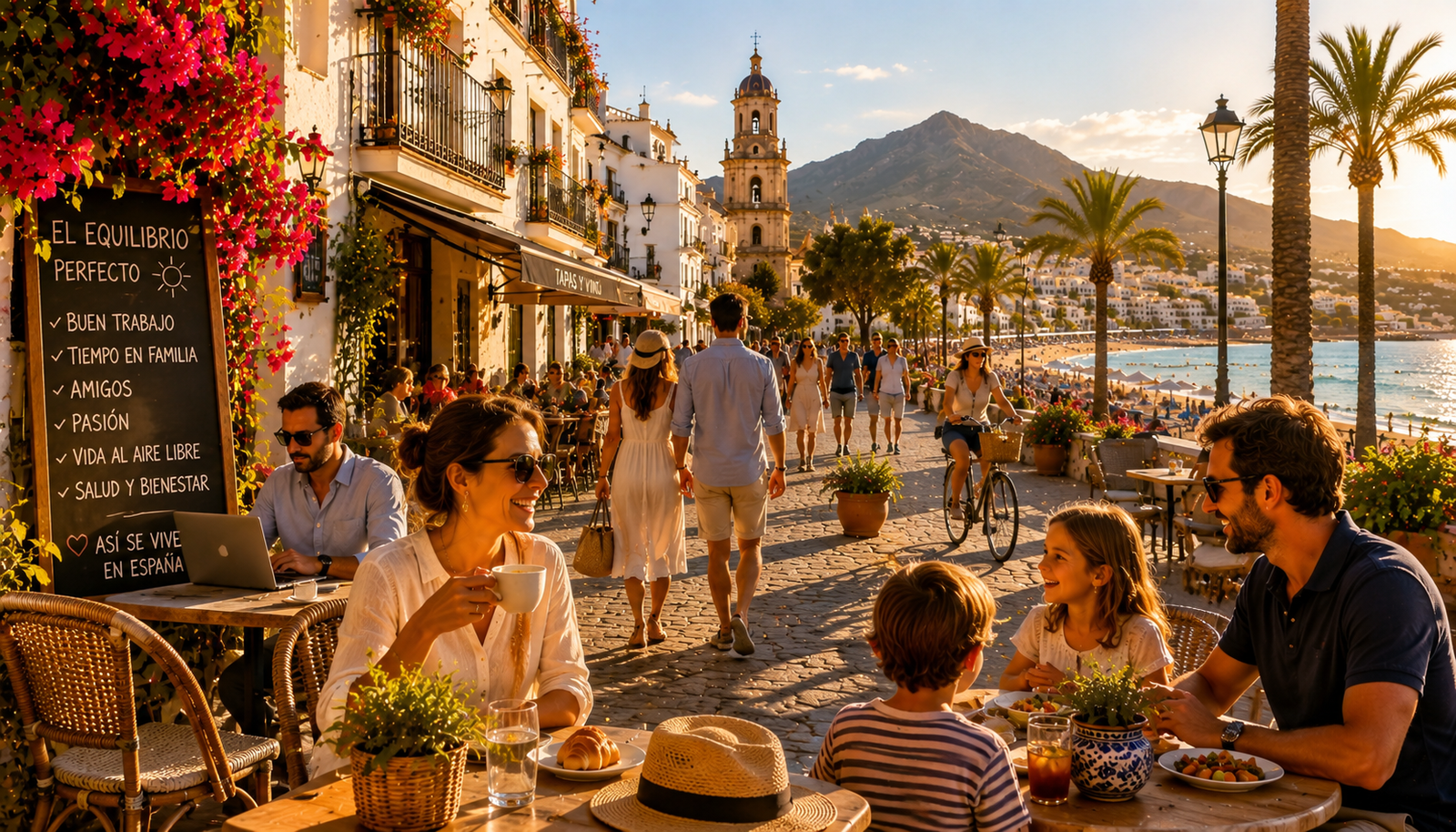
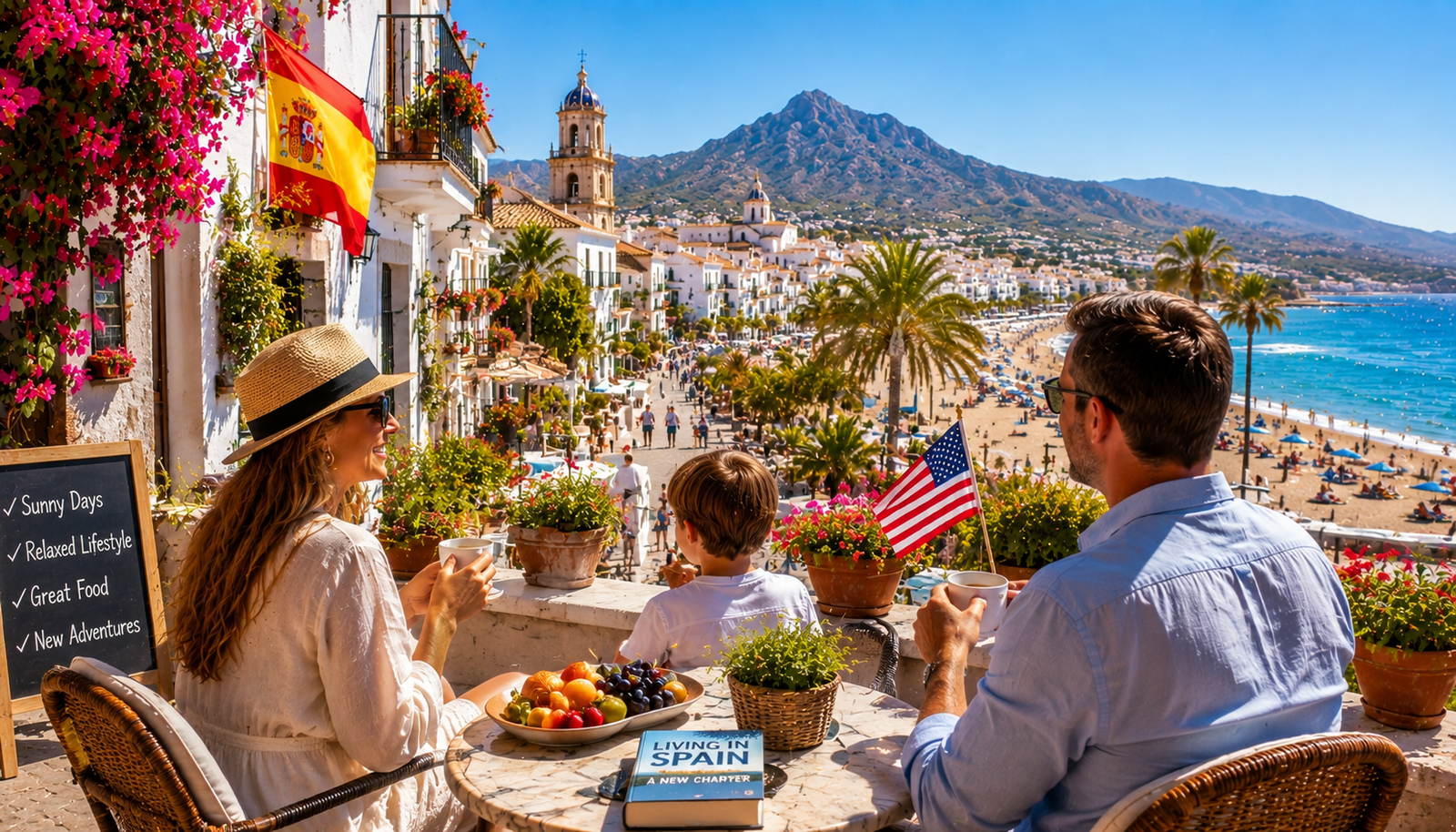
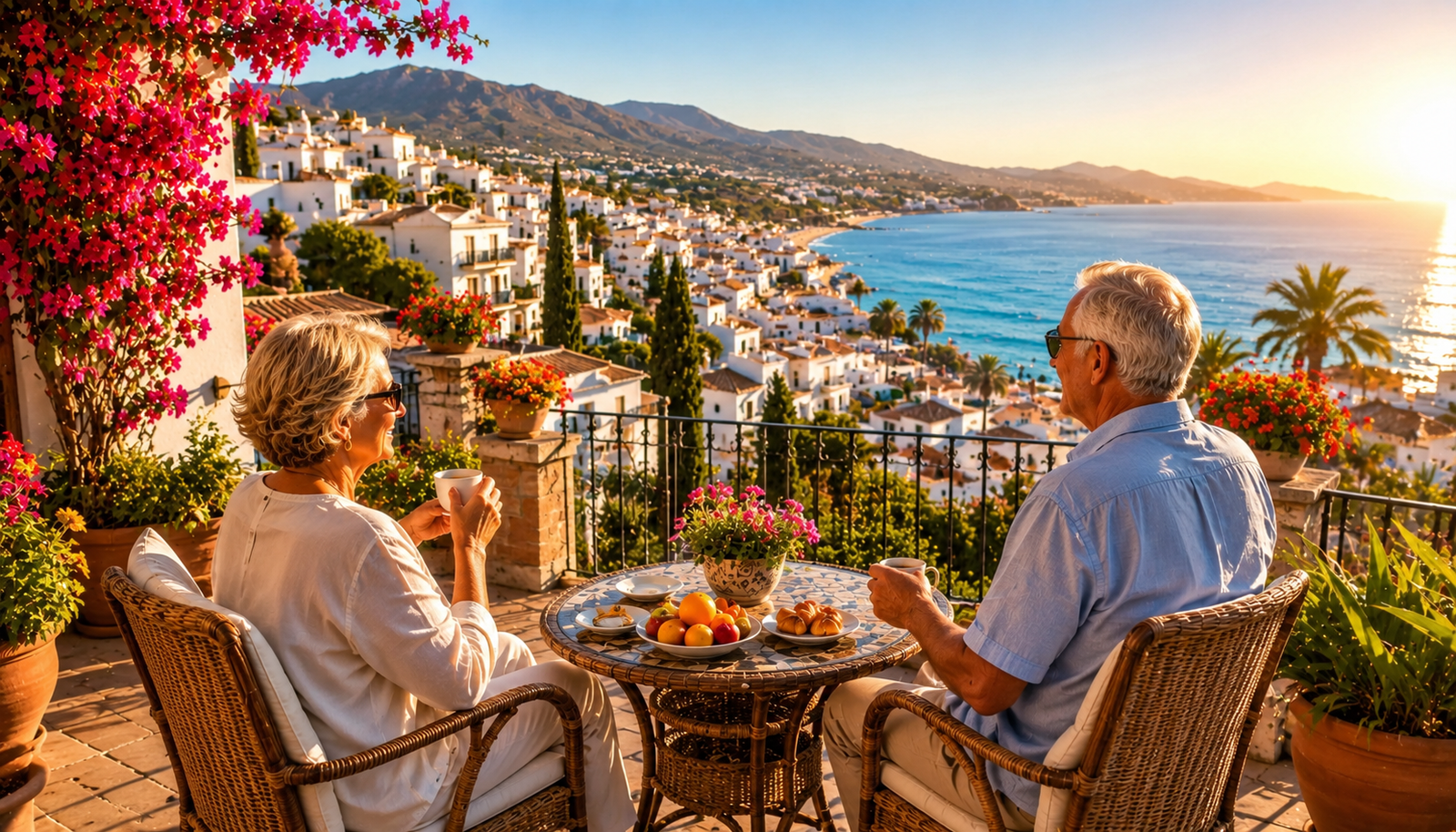
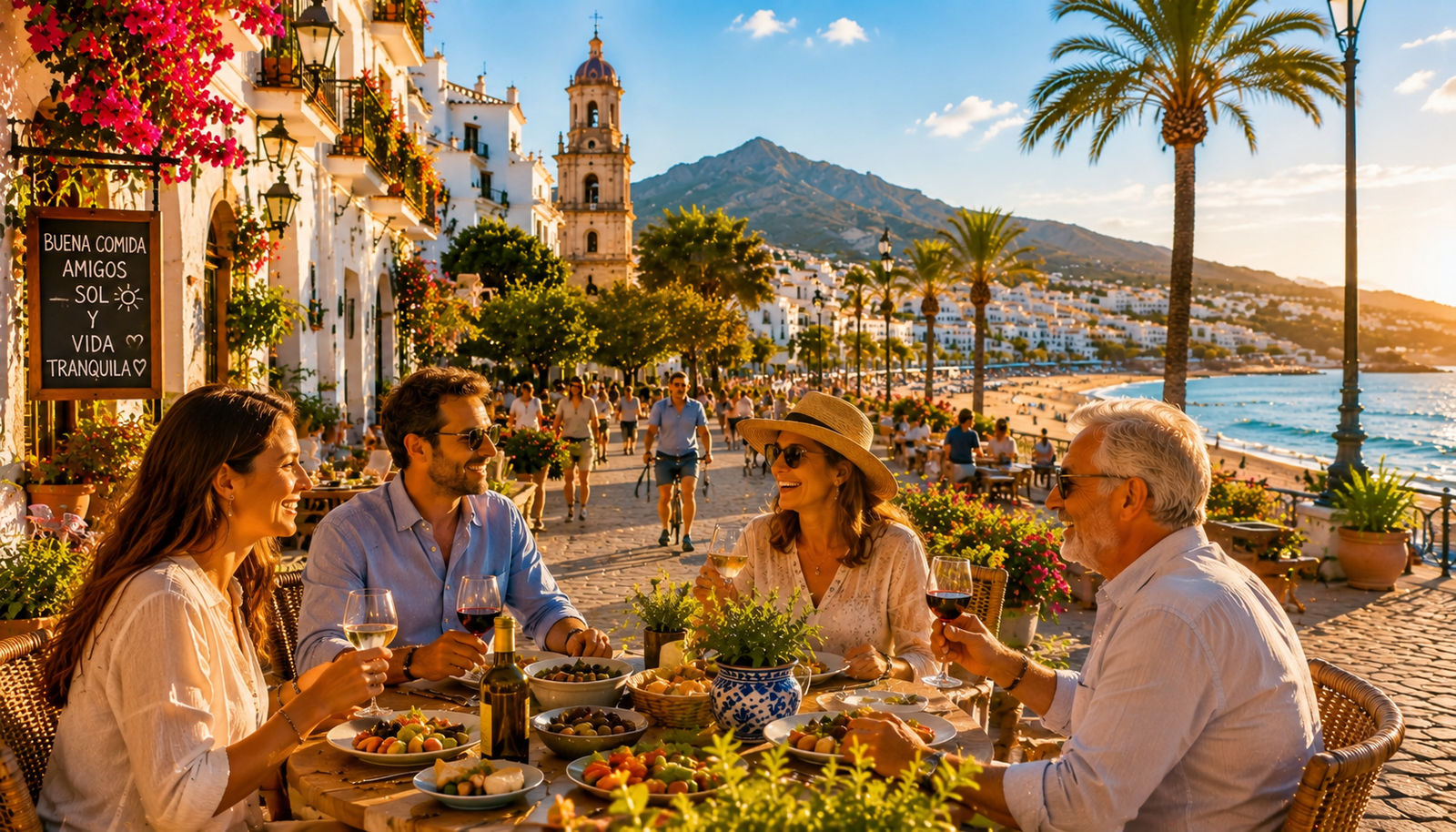
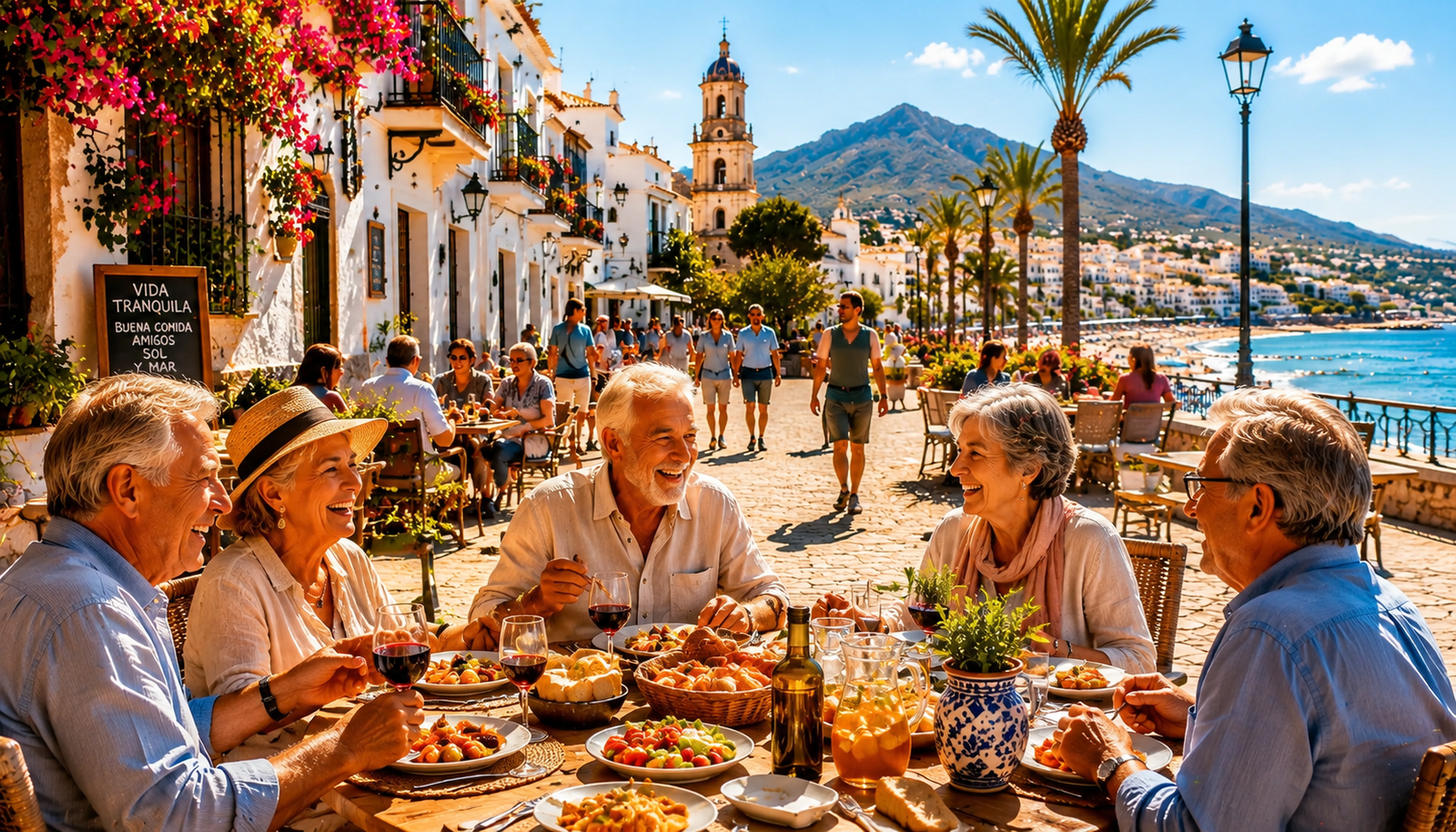
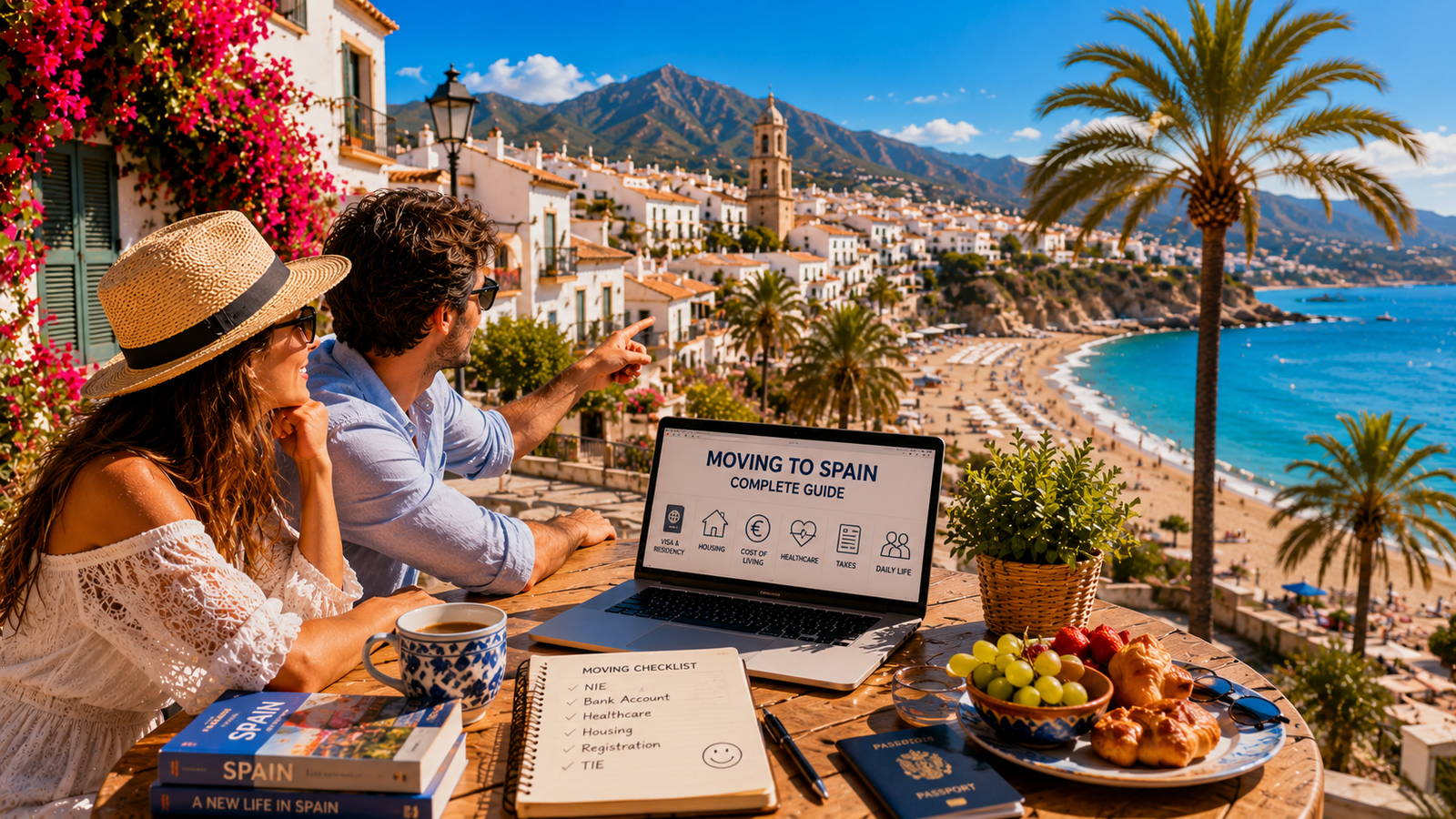
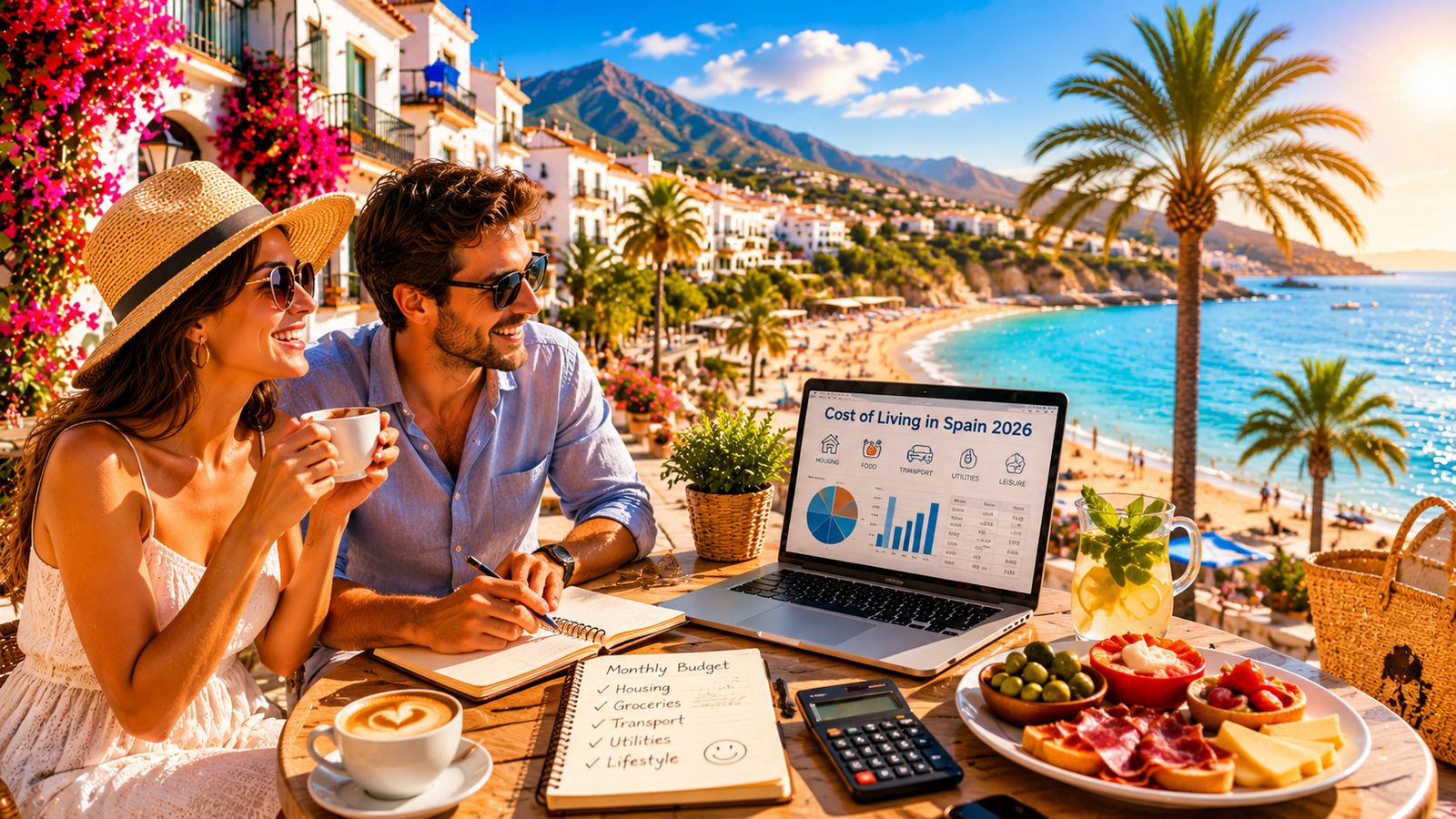
Modern new developments in Spain are not only for holiday buyers. For the right person, they can offer a very practical lifestyle: a compact apartment, communal facilities, good internet, lower maintenance, airport access and a location close to shops, beaches, restaurants and daily services.
This lifestyle is especially relevant for remote workers, career-focused couples, solo buyers, pensioners who want an easy lock-up-and-leave home and investors looking for a manageable property. One example on the Costa del Sol is Laguna One Mijas, a modern off-plan development in Las Lagunas de Mijas, close to Fuengirola, beaches, shopping and Málaga Airport.
Best ForSolo buyers, couples, retirees and remote workers
Property TypeCompact modern apartments with communal facilities
LifestyleLow maintenance, close to services and coastal life
Less Ideal ForLarge families or buyers needing multiple bedrooms
Who Is Modern New Development Living Really For?
A one-bedroom apartment in a modern Spanish development is not the right choice for everyone. It is not usually ideal for a large family, and it may feel too small for people with several pets, a large home office setup or frequent long-stay guests.
But for the right buyer profile, it can be extremely practical. A one-bedroom apartment can work well for a solo professional, a couple focused on career and lifestyle, a pensioner who wants something easy to manage, or an investor who wants a simpler property with lower maintenance than a villa.
The key is expectation. A compact apartment is not about maximum space. It is about location, simplicity, comfort, lower maintenance and being close to the things you actually use every day.
Remote Workers: A Practical Base in Spain
Spain has become very attractive for remote workers and digital professionals because of its climate, lifestyle, transport links and cost balance compared with many northern European cities. But remote workers do not always need a large home.
Many prefer a modern apartment close to cafés, gyms, coworking spaces, supermarkets, beaches and an airport. A compact property in a well-connected area can be more useful than a large house in a remote location.
Projects such as modern apartments in Las Lagunas de Mijas can be interesting because they are close to Fuengirola, shopping, services and the wider Costa del Sol road network, while still offering new-build comfort and communal facilities.
Work From Home
A one-bedroom apartment can work for remote work if the layout allows a proper desk area, good natural light and reliable internet.
Close to Everything
Remote workers often value gyms, cafés, supermarkets, restaurants, beaches and airport access more than extra unused rooms.
Low Maintenance
A compact new-build apartment is easier to clean, furnish, lock and manage than a larger property or older villa.
Better Lifestyle Balance
Living close to the coast, sports facilities and social areas can support a better work-life balance in Spain.
Couples Without Children: Location Over Size
For couples without children, a one-bedroom apartment can be enough if the priority is location, lifestyle and simplicity. Instead of paying for unused bedrooms, many buyers prefer a better location, newer building, terrace, parking or communal facilities.
This is especially true for couples who travel often, work remotely, spend time outdoors or use Spain as a flexible base. In that case, the home does not need to be huge. It needs to be practical, comfortable and easy to maintain.
The only caution is lifestyle fit. If both people work from home full time, the layout must be checked carefully. If there is a dog or multiple pets, a one-bedroom apartment may feel restrictive. For one cat or a low-maintenance pet, it may still work depending on the community rules and terrace setup.
Pensioners and Retirees: Easy Living Without Villa Maintenance
Many retirees moving to Spain originally imagine a villa with a garden and pool. In reality, a villa can mean more maintenance, higher costs, more responsibility and more driving.
A modern apartment can be easier: lift access, communal pool, lower maintenance, less garden work, better security and the ability to lock the property when travelling. For retirees who want freedom rather than responsibility, this can be a major advantage.
A compact property close to shops, healthcare, restaurants and transport can sometimes be more comfortable than a larger home in an isolated area.
Investors: Why Smaller Apartments Can Make Sense
Investors often focus on price, rental demand and resale potential. A one-bedroom apartment can be attractive because the entry price is usually lower than larger homes, maintenance is easier and the potential tenant or buyer pool can include singles, couples, remote workers and second-home buyers.
That does not mean every one-bedroom apartment is a good investment. The location, purchase price, community fees, rental rules, furniture cost, taxes and future resale market all matter.
Buyer Type
Why It Can Work
What to Check
Remote worker
Modern base close to services, coast and airport access.
Internet, workspace, noise, light and coworking options.
Couple
Easy lifestyle without paying for unused rooms.
Layout, storage, terrace and whether two people can work comfortably.
Retiree
Lower maintenance than a villa and easier lock-up-and-leave use.
Lift, healthcare access, walking distance, community fees and comfort.
Investor
Lower entry price and easier management than larger homes.
Rental rules, demand, taxes, fees, furniture and resale potential.
Why Being Close to Everything Matters
In Spain, daily lifestyle often happens outside the home: cafés, restaurants, beaches, gyms, supermarkets, promenades, local markets and social spaces. That is why location can matter more than internal square metres.
A smaller apartment in a practical location can feel more comfortable than a larger property where every errand requires a long drive. For many buyers, the ideal setup is simple: a comfortable apartment, terrace, parking, nearby services and quick access to the coast.
This is where a project like Laguna One in Mijas Costa becomes relevant. It is not trying to be a large family villa or a beachfront mansion. It is a compact, modern living concept in a practical part of the Costa del Sol.
One Bedroom: Smart Choice or Too Small?
A one-bedroom apartment can be a smart choice if the buyer is realistic. It can be enough for one person, a couple, a retiree, a remote worker or an investor. It can also work for a simple second home.
But it is not ideal for everyone. Families will usually need more space. Buyers with large dogs may prefer a ground-floor apartment, townhouse or property with outdoor space. People who often host guests may want a second bedroom.
A one-bedroom apartment is best when the buyer wants simplicity, not maximum flexibility. It works when the lifestyle is active, practical and focused on the surrounding area.
What Features Make a Modern Development More Comfortable?
The comfort of a modern development is not only inside the apartment. Communal facilities can improve daily life and also make the property easier to rent or resell in the future.
Private terrace or balcony
Parking space
Communal swimming pool
Coworking or shared work area
Gym or sports facilities nearby
Good insulation and modern air conditioning
Lift access and secure entry
Close access to supermarkets, restaurants and healthcare
Modern new development living in Spain is not about having the biggest home. It is about having the right home in the right place. For solo buyers, couples, remote workers, retirees and investors, a well-located one-bedroom apartment can be more practical than a larger property with higher maintenance.
For buyers who want to be close to beaches, services, Fuengirola, Málaga Airport and the Costa del Sol lifestyle, Laguna One Mijas is one project worth comparing.
Considering Modern Apartment Living in Mijas Costa?
Explore Laguna One Mijas, a modern off-plan development in Las Lagunas de Mijas with one-bedroom apartments, terraces, parking and communal facilities close to Fuengirola, beaches and daily services.
New residential communities are no longer simply collections of apartments and villas.
They are increasingly designed around how people actually want to live.
More Than Just a Home
Years ago, buying an apartment in Spain usually meant getting the property itself, a communal swimming pool and perhaps some gardens.
Today, things are very different.
Depending on the development, modern communities can offer:
Outdoor swimming pools
Heated indoor pools
Gyms
Saunas and spas
Coworking spaces
Children’s playgrounds
Padel and tennis courts
Private parks
Social clubs
Gaming rooms
Restaurants and pool bars
You may not find all these facilities in every development, but the concept is clear.
Your lifestyle does not stop at your front door.
Wake Up, Work and Relax
Remote working has changed the way many people live.
If you can work from anywhere, why spend every day inside a small apartment in a busy city?
Modern developments with coworking areas offer an alternative.
You can work close to home without actually working inside your home.
When you finish, the swimming pool, gym or beach may be only a few minutes away.
For many international residents, this is one of the biggest attractions of modern life in Spain.
A Different Lifestyle for Families
Modern residential developments can also make everyday life easier for families.
Children may have access to:
Playgrounds
Swimming pools
Gardens
Sports facilities
Gaming and social areas
Parents can spend time outdoors while children meet other families living in the community.
In gated developments, controlled access can also provide residents with an additional sense of privacy and security.
For families moving to Spain, this type of environment can make settling into a new country easier.
Life With More Outdoor Space
One of the biggest reasons people move to Spain is the climate.
On the Costa del Sol, outdoor living is part of everyday life.
Modern apartments often include:
Large terraces
Private gardens
Rooftop solariums
Outdoor dining areas
The distinction between indoor and outdoor living becomes much smaller.
Breakfast on the terrace, an afternoon by the swimming pool and dinner outside can become part of your normal routine.
You Can Stay Active Without Going Far
A healthy lifestyle is easier when the facilities are close to you.
Instead of driving to a gym, you may simply walk downstairs.
Instead of travelling to a sports club, you may have a padel court inside the development.
Some modern communities include walking areas, cycling facilities, gyms, swimming pools and wellness centres.
This convenience can make it easier to stay active throughout the year.
A Greater Sense of Community
Moving to another country can sometimes feel isolating.
Modern residential communities can help residents meet naturally.
You see the same people:
At the swimming pool
In the gym
At the coworking space
While walking the dog
At children’s playgrounds
In communal gardens
Over time, neighbours become familiar faces.
For international residents who are building a new life in Spain, this social environment can be particularly valuable.
Modern Homes Can Offer Greater Comfort
New developments are also designed around modern living standards.
Depending on the property, features can include:
Better insulation
Modern air conditioning
Energy-efficient systems
Large windows
Contemporary kitchens
Smart home technology
Underground parking
Electric vehicle charging
A new property generally also requires less immediate renovation and maintenance than an older home.
For people purchasing a second home or moving to Spain from another country, this can provide additional peace of mind.
What About Safety?
Security is an important consideration for many international buyers.
Modern residential developments may offer:
Gated access
Video entry systems
Security cameras
Underground parking
Concierge services
On-site security in premium communities
Of course, the level of security varies from one development to another.
However, living in a controlled residential environment can provide additional comfort, particularly for second-home owners who leave their property empty for part of the year.
Buyers should always check the expected monthly community costs before purchasing.
Another consideration is location.
Some beautiful new developments are built outside established town centres.
This may provide peace and spectacular views, but it can also mean needing a car for everyday life.
Choosing the Right Development Matters
The development with the longest list of amenities is not automatically the best one.
Think about how you actually live.
Do you work remotely?
Do you have children?
Do you play sports?
Do you want to walk to restaurants?
Will you live in Spain permanently or use the property as a holiday home?
Do you prefer a large social community or a small boutique development?
The answers can help determine which type of property is right for you.
Modern Living on the Costa del Sol
The Costa del Sol has become one of Spain’s most active markets for modern residential developments.
New properties can be found around:
Marbella
Estepona
Mijas
Benalmádena
Fuengirola
Casares
Manilva
Sotogrande
Every location offers a different lifestyle.
Marbella is known for international luxury and entertainment.
Estepona combines modern development with a growing coastal town.
Benalmádena and Fuengirola offer established infrastructure and convenient access to Málaga Airport.
Mijas provides a mixture of coastal living, golf and residential communities.
Casares and Manilva can offer more space and comparatively affordable options.
Sotogrande focuses more on privacy, golf and exclusive residential living.
Buyers interested in seeing what this lifestyle actually looks like can explore a wider selection of new developments on the Costa del Sol, from modern apartments to luxury villas.
Is Life in a Modern Development Right for You?
For many people, moving to Spain is about more than buying a property.
It is about changing how they live.
More sunshine.
More time outdoors.
Less commuting.
Better work-life balance.
More time with family and friends.
A modern residential development can support this lifestyle by bringing many everyday facilities closer to home.
You can work, exercise, relax, socialise and spend time with your family without constantly driving from one place to another.
That convenience is perhaps the greatest advantage of modern residential living.
Final Thoughts
Life in a modern new development in Spain can feel very different from living in a traditional apartment building.
Your home becomes part of a larger lifestyle.
The swimming pool is where you relax.
The coworking space is where you work.
The gym is where you exercise.
The gardens are where you walk.
And the communal areas are where neighbours can become friends.
Modern developments are not right for everyone, and the additional facilities often come with higher ownership costs.
But for people looking for comfort, convenience, security and a more relaxed way of living, they can offer an attractive way to start a new life in Spain.
Quick answer: Spain can offer a strong work-life balance because of paid holidays, public holidays, outdoor living, family culture, late social evenings, food culture and a slower daily rhythm. But the reality depends on your job, income, region and legal status. Local salaries can be lower than in Northern Europe or the United States, bureaucracy can be frustrating, and self-employed workers need to manage taxes, social security and administration carefully.
Spain is famous for lifestyle. Many foreigners imagine shorter workdays, long lunches, sunny evenings, tapas, beach walks and a healthier rhythm. There is truth in that image, but it is not the full story.
Work-life balance in Spain depends on how you earn money. An employee in Madrid, a remote worker in Málaga, a self-employed consultant in Benalmádena, a hospitality worker in Marbella and a retiree in Estepona will all experience Spain differently.
I have experienced Spain from different angles: living first in Valencia, then on the Costa del Sol, working as an employee in Torremolinos, later becoming self-employed, and raising three children here. My honest view is this: Spain can give you a better lifestyle, but only if your income, paperwork and location are stable.
Realistic view: Spain is excellent for people who want more life outside work. But Spain is not automatically relaxed if you have low income, unstable work, high rent, visa stress, tax confusion or a long commute.
How Work-Life Balance in Spain Really Works
Watch: Life in Spain – Expectations vs Reality
This video is a useful companion for anyone thinking about moving to Spain, showing the difference between the dream and the real daily experience — including lifestyle, cost of living, culture, bureaucracy, housing, weather, social life and the adjustments many foreigners only discover after arriving.
Work-life balance in Spain is shaped by several things: legal working hours, collective agreements, holidays, family culture, late meal times, regional habits, climate and the strong social role of public spaces.
Spain’s official government portal explains that the general maximum working time is 40 hours of effective work per week, calculated as an annual average. Working conditions can also depend on collective agreements, sector rules and employment contracts.
This means Spain is not a country where everyone works only a few hours and spends the rest of the day at the beach. Many people work hard. But outside work, daily life often feels more social, outdoor and family-oriented than in many colder or more work-centred countries.
⏰ Working Hours
The general limit is 40 effective hours per week on annual average, but schedules vary by sector.
🏖 Holidays
Spain combines paid annual leave with national, regional and local public holidays.
🌇 Lifestyle
Evenings, cafés, parks, sports, family meals and outdoor life strongly shape the Spanish routine.
Typical Working Hours in Spain
Traditional Spanish working hours can feel unusual to foreigners. Some offices still have long lunch breaks and later finishing times, while modern companies, remote teams and international firms may use more standard European schedules.
In big cities like Madrid and Barcelona, working life can be intense. In coastal areas, hospitality, real estate, tourism and services often follow seasonal rhythms. In remote work, the schedule may be closer to your clients’ time zone than Spanish office culture.
Work Type
Typical Rhythm
Work-Life Balance Reality
Office employee
Often Monday to Friday, with variation by company and sector.
Can be stable, but commute and salary level matter.
International company
Often more modern schedules, hybrid work and shorter lunch breaks.
Usually better for foreigners used to Northern European or U.S. structures.
Hospitality and tourism
Evenings, weekends, high season and split shifts are common.
Can be tiring despite Spain’s relaxed image.
Remote worker
Depends on foreign employer, clients and time zone.
Can offer excellent lifestyle if income and tax planning are stable.
Self-employed autónomo
Flexible but often demanding.
Freedom is real, but taxes, social security and clients create pressure.
Daily Routine in Spain
Spain’s daily routine is one of the biggest lifestyle differences for foreigners. Lunch is often later. Dinner is much later. Evenings are active. Children stay outside later than in many northern countries, especially in spring and summer.
In many Spanish towns, life does not end after work. Parks fill, cafés become active, sports clubs start training, families walk outside and people meet in public spaces.
Time of Day
Spanish Routine
Foreigners Notice
Morning
Coffee, school run, work, errands and local shops.
Breakfast is often simple and cafés are active early.
Lunch
Main meal for many people, often later than in Northern Europe.
Some businesses slow down or close during lunch hours.
Afternoon
Work continues, children finish school, sports and activities begin.
The day can feel split into two parts.
Evening
Paseo, cafés, playgrounds, sports, family time and late dinner.
Evening life is one of Spain’s biggest lifestyle advantages.
Weekend
Family meals, beach, mountains, shopping centres, sport and local events.
Sunday can be quiet outside tourist areas and large shopping centres.
Paid Holidays and Public Holidays
Spain’s holiday culture is a major part of work-life balance. Employees generally have paid annual leave, and Spain also has national, regional and local public holidays.
In practice, public holidays can feel different depending on the autonomous community and municipality. Andalusia, Madrid, Catalonia, Valencia, the Balearic Islands and the Canary Islands may have different holiday calendars.
This matters for families and foreigners because schools, banks, offices and local services may close on regional or municipal holidays.
Practical tip: Always check the local holiday calendar for your town, not only the national Spanish calendar. Local fiestas can affect schools, shops, appointments, transport and work schedules.
Remote Work in Spain
Spain has become one of Europe’s most attractive countries for remote workers. The reasons are clear: climate, cafés, coworking spaces, airports, food, safety, culture and a lower-stress daily rhythm compared with many large global cities.
The Spanish telework or digital nomad visa is intended for foreigners who travel to Spain to carry out remote work or professional activity for companies located outside Spain. This makes Spain attractive for non-EU remote workers, including Americans, British citizens and other international professionals.
Remote workers should still be careful. Living in Spain can trigger tax residency, social security questions and visa requirements. Do not assume that working online means you can ignore Spanish rules.
Americans should also read
Living in Spain as an American
because U.S. tax filing and Spanish tax residency can overlap.
Self-Employed Life in Spain
Being self-employed in Spain can offer freedom, but it is not always easy. Autónomos need to manage invoices, tax declarations, social security payments, business expenses, clients, contracts and deadlines.
I have worked both as an employee and as self-employed in Spain. The biggest difference is responsibility. As an employee, your employer handles much of the structure. As self-employed, you may control your time, but you carry more risk.
For 2026, autónomo contributions continue to depend on real net income brackets, with reduced rates available for some new self-employed workers. Always confirm your exact situation with Seguridad Social or a gestor.
Autónomo Advantages
More flexibility over your schedule.
Ability to serve international clients.
Works well with lifestyle businesses and consulting.
Can fit family life better if income is stable.
Autónomo Challenges
Monthly social security costs.
Tax declarations and accounting.
Client payment delays.
No automatic paid holidays like an employee.
More stress if income is irregular.
Work-Life Balance for Families
Spain can be excellent for families because children are part of public life. Parks, cafés, sports clubs, town festivals, beaches and family events are normal parts of the routine.
As a father of three on the Costa del Sol, this is one of the biggest lifestyle benefits I see. After school, children can go to football, swimming, playgrounds, beach walks or local events. Parents can meet other families naturally through school and sports.
But family work-life balance depends on location. School distance, traffic, parking, work schedule and housing cost can make life easy or stressful.
Spain Compared with Northern Europe and the United States
Many foreigners move to Spain because they are tired of grey weather, high stress, high childcare costs, long winters, expensive healthcare or a culture where work dominates daily life.
Spain often feels more social and outdoor. People spend more time in cafés, plazas, parks, beaches and restaurants. Family life is more visible. The climate allows more evening activity. This creates a feeling that life is not only work.
Topic
Spain
Northern Europe / U.S. Comparison
Daily rhythm
Later meals, later evenings, more public life.
Often earlier dinners and more home-based routines.
Weather
More outdoor time in many regions.
Long winters or extreme weather can limit outdoor lifestyle.
Healthcare
Strong public system for eligible residents.
U.S. healthcare can be much more financially stressful.
Work culture
Can be social and flexible, but varies by sector.
Often more productivity-focused and structured.
Salary levels
Often lower than Northern Europe or U.S.
Higher wages can come with higher costs and stress.
Family life
Children are visible in public spaces and restaurants.
Family routines may be more private or home-based.
Best Places in Spain for Work-Life Balance
The best place depends on your income source. Madrid may be best for career growth. Valencia may be best for balance. Málaga and the Costa del Sol may be best for outdoor lifestyle. Alicante may offer better value. The Canary Islands may suit remote workers who want mild weather all year.
Valencia
Excellent balance of beach, city, parks, food, cycling and family life.
Málaga
Strong for remote workers, airport access, culture, beach and coastal lifestyle.
Costa del Sol
Ideal for outdoor living, families, retirees, international schools and property buyers.
Madrid
Best for career opportunities, but more intense and expensive than coastal Spain.
Alicante
Good climate, airport access and better value for many lifestyle movers.
Canary Islands
Excellent year-round weather and popular with digital nomads.
Property and Lifestyle: Why Location Matters
Your home strongly affects work-life balance. A beautiful property with poor transport, bad internet, no parking or a long school commute can destroy the lifestyle you moved for.
The type of residential community you choose can also influence your daily routine. Swimming pools, gyms, coworking spaces, landscaped gardens and sports facilities can make everyday life more convenient. If this lifestyle appeals to you, read
what life is like in a modern new development in Spain.
If your goal is to build life on the Costa del Sol, start with
Costa Prime Realty
for local property search and buyer guidance.
Marbella can be ideal for international schools, luxury lifestyle, golf, restaurants and private healthcare. For local research, visit
Homes Marbella.
Sotogrande offers a more private, spacious golf and marina lifestyle, which you can compare at
Property Sotogrande.
Work-life balance depends on money. Spain can feel relaxed when your income is stable and housing cost is controlled. It can feel stressful when rent is high, tax planning is poor or self-employed income is irregular.
Property buyers should understand purchase taxes, ownership costs, non-resident tax, capital gains and inheritance issues. Use
Spain Property Tax
before buying or selling property.
Social life feels easier than in many colder countries.
Cons
Local salaries can be lower than expected.
Bureaucracy can reduce the feeling of freedom.
Self-employed people carry more administrative pressure.
Housing costs are high in popular cities and coastal areas.
Split shifts can be tiring in some sectors.
Summer heat can affect productivity and comfort.
Tax planning is essential for remote workers and property owners.
English is not enough in every work or administrative situation.
How to Improve Your Work-Life Balance in Spain
1. Choose Location Wisely
Live close to work, school, cafés, supermarkets, healthcare and transport.
2. Control Housing Cost
High rent or mortgage pressure can ruin Spain’s lifestyle advantage.
3. Learn Spanish
Basic Spanish reduces stress with doctors, schools, neighbours and paperwork.
4. Use Outdoor Life
Walk, go to parks, use cafés, visit beaches and build movement into the day.
5. Plan Taxes Early
Remote workers, Americans, autónomos and property owners need professional advice.
6. Build Local Routine
Sports, markets, cafés and community make Spain feel like home.
Frequently Asked Questions
Does Spain have good work-life balance?
Spain can offer very good work-life balance because of holidays, outdoor living, family culture, social life and climate. However, the reality depends on your job, income, housing cost and region.
How many hours do people work in Spain?
The general maximum working time is 40 effective hours per week on annual average, but actual schedules depend on contracts, collective agreements, sector and company culture.
Is remote work good in Spain?
Yes, Spain is excellent for many remote workers because of climate, cafés, coworking spaces, airports and lifestyle. Remote workers still need to plan visas, taxes and social security correctly.
Is Spain good for self-employed people?
Spain can be good for self-employed people with stable income and good planning. The challenge is managing autónomo contributions, tax declarations, accounting and irregular client income.
Are salaries high in Spain?
Salaries in Spain are often lower than in Northern Europe or the United States. Spain’s lifestyle advantage is strongest when income is stable, housing cost is controlled and the location supports daily life.
What is the best place in Spain for work-life balance?
Valencia, Málaga, the Costa del Sol, Alicante and the Canary Islands are strong lifestyle choices. Madrid and Barcelona are better for careers, but they are also more expensive and intense.
Final Thoughts
Spain’s work-life balance is real, but it is not automatic.
The country gives you many tools for a better life: sunshine, food, cafés, walking, family culture, public holidays, beaches, parks and a social rhythm that makes life feel less isolated.
But work-life balance depends on income, housing, taxes, paperwork, commute, job type and location. If those parts are wrong, Spain can feel stressful. If they are planned well, Spain can offer one of the best daily lifestyles in Europe.
Author Experience
This guide is written from practical experience living in Spain for around ten years, including time in Valencia and on the Costa del Sol. The perspective includes daily life as a father of three, experience working as an employee in Torremolinos, becoming self-employed in Spain, managing family routines, and regularly visiting Málaga, Benalmádena, Mijas, Marbella, Estepona and other areas across Andalusia.
Useful Spain Work, Lifestyle and Property Resources
Use these websites to compare lifestyle, relocation, property, taxes and area decisions before moving or working from Spain.
AEMET — official Spanish weather forecasts, climate data and warnings.
INE Spain — official population, employment, demographic and economic statistics.
This article is for general information only. Work conditions, holidays, taxes, self-employed contributions, visas and remote-work rules depend on contracts, sector, nationality, legal status and personal circumstances. Always check official sources and speak with qualified legal, tax, immigration or employment professionals before making decisions.
Quick answer: Living in Spain as an American can offer better weather, strong healthcare, safer daily life, walkable towns, fresh food, European travel access and a more relaxed lifestyle. The main challenges are visas, U.S. tax filing, Spanish tax residency, language, bureaucracy, housing costs in popular areas and adapting to a slower daily rhythm.
Spain has become one of the most attractive European countries for Americans who want a different lifestyle. Some move for retirement. Others come for remote work, family life, healthcare, culture, food, safety, lower stress or a home near the Mediterranean.
But moving from the United States to Spain is not the same as moving between U.S. states. Americans need to think about visas, 90-day Schengen limits, healthcare, U.S. tax filing, Spanish tax residency, banking, housing, schools, driving, language and long-term planning.
After living in Spain for around ten years, including Valencia and the Costa del Sol, working in Torremolinos, becoming self-employed and raising three children here, I see why Americans are attracted to Spain. The lifestyle can be excellent. But it works best for people who prepare properly and do not treat Spain like a permanent vacation.
Important for Americans: U.S. citizens living abroad generally still need to file U.S. tax returns, and Spain may also treat you as a Spanish tax resident depending on your time, income and centre of life. Always plan taxes before moving, not after.
Can Americans Live in Spain?
Watch: The American Dream Is Alive in Spain
This video is a good companion for Americans considering life in Spain, showing why many people from the United States see Spain as a place for better lifestyle, lower stress, healthcare access, culture, walkability, family life and a more balanced daily routine.
Yes, Americans can live in Spain, but they usually need the correct visa or residence authorization if they want to stay longer than the normal short-stay period.
U.S. citizens can generally visit Spain and the Schengen Area for short stays without a visa, but long-term living requires planning. The right route depends on whether you are retired, working remotely, studying, joining family, starting a business or moving with passive income.
Americans should not choose a visa based on internet rumours. Requirements can vary by consulate, personal situation and document quality. Always check the Spanish consulate responsible for your U.S. residence before applying.
Visa / Route
Best For
Important Notes
Non-lucrative visa
Retirees, financially independent people, passive income
Usually does not allow work in Spain. Requires financial proof and private health insurance.
Digital nomad / telework visa
Remote workers and professionals working for non-Spanish companies or clients
Designed for remote work from Spain under specific income, work and documentation conditions.
Student visa
University students, language students, academic programs
Useful for study, but work rights and long-term transitions must be checked.
Work visa
Americans hired by a Spanish employer
Usually requires employer sponsorship and authorization.
Self-employed route
Entrepreneurs and business owners
Requires serious planning, business documentation and legal guidance.
Family route
Family members of qualifying Spanish, EU or resident sponsors
Rules depend on relationship, sponsor status and income.
Golden Visa update: Spain’s real-estate Golden Visa route ended from 3 April 2025. Buying property in Spain can still be part of your lifestyle plan, but it is no longer a new residence route through the old property Golden Visa system.
Many Americans find Spain more affordable than major U.S. cities, especially compared with New York, Los Angeles, San Francisco, Miami, Boston or Washington, D.C. However, Spain is not automatically cheap.
Madrid, Barcelona, Marbella, Ibiza, Mallorca and prime coastal areas can be expensive. Valencia, Málaga, Alicante, Granada, Murcia and some inland areas can offer better value.
The main difference is lifestyle. In Spain, you may spend less on healthcare, local cafés, public transport and fresh food, but rent, private schools, international schools, property taxes, utilities, cars and premium coastal housing can still be high.
Household Type
Realistic Monthly Budget
Notes
Single American
€1,800–€3,000+
Depends heavily on rent, city and social lifestyle.
American couple
€3,000–€5,000+
Comfortable in many areas, tighter in premium coastal or city locations.
Family with children
€4,500–€9,000+
International schools, larger housing and car use can increase costs quickly.
Retired couple
€2,500–€5,500+
Healthcare, housing and travel back to the U.S. should be included.
Healthcare is one of the biggest reasons Americans consider Spain. Compared with the United States, healthcare in Spain can feel more affordable and less financially stressful.
Spain has a strong public healthcare system, but Americans do not automatically get full public healthcare access just by arriving. Your access depends on residence status, work or self-employment, social security contributions, special agreements, family status or private insurance.
The
Spanish Ministry of Health
is the official healthcare source. Many Americans use private health insurance, especially during visa applications or the first years in Spain.
🏥 Public Healthcare
Excellent if you legally qualify, but access depends on your residence and contribution situation.
🩺 Private Insurance
Common for American visa applicants, retirees and people wanting faster appointments.
💊 Lower Stress
Many Americans feel healthcare costs in Spain are more predictable than in the U.S.
Taxes are one of the biggest differences for Americans abroad. U.S. citizens and resident aliens generally remain subject to U.S. tax filing obligations even when living overseas. The IRS explains that many Americans abroad may qualify for benefits such as the foreign earned income exclusion or foreign tax credit, but they usually need to file a U.S. return to claim them.
Spain may also consider you a Spanish tax resident depending on how long you stay, where your main home is, where your income comes from and where your centre of life is located.
This means Americans in Spain often need coordinated U.S. and Spanish tax advice. Do not rely on simple online calculators if you have pensions, investments, rental income, businesses, stock options, crypto, property or self-employment income.
Tax warning for Americans: You may need to file in both countries. U.S. foreign earned income exclusion rules, foreign tax credits, FBAR, FATCA and Spanish tax residency can all matter. Speak with a qualified cross-border tax adviser before moving.
For Spanish property-related taxes, use
Spain Property Tax
before buying, selling or renting out property.
Best Places in Spain for Americans
Americans usually look for safety, healthcare, walkability, international airports, good internet, culture, food, English-speaking services and a community where they can adapt.
Place
Best For Americans
Main Advantage
Main Caution
Madrid
Jobs, business, culture, international life
Capital city, strong transport, embassies, schools, direct flights.
Higher rent, intense city life and hot summers.
Barcelona
Tech, culture, city-beach lifestyle
International, creative, coastal and well connected.
Expensive housing, tourism pressure and Catalan language context.
Valencia
Families, remote workers, lifestyle balance
Beach, parks, food, city services and lower stress.
Growing popularity and rising rents.
Málaga
Remote workers, retirees, coastal city life
Airport, beach, culture, healthcare and Costa del Sol access.
Americans can buy property in Spain, but property purchase does not automatically solve visa or tax planning. You need to separate the property decision from the residence decision.
Americans moving to Spain should also think carefully about the type of home and community that will support their new lifestyle. Newer residential projects increasingly combine contemporary homes with swimming pools, gyms, coworking areas, security and landscaped outdoor spaces. To better understand this option, discover
how modern new developments are changing everyday life in Spain.
If your focus is the Costa del Sol, start with
Costa Prime Realty
for local buyer guidance, property search support and area advice.
Marbella is popular with Americans who want luxury, restaurants, international schools, golf, private healthcare and high-end property. If Marbella is your target, use
Homes Marbella.
Sotogrande is more private, spacious and golf-marina focused. For this type of lifestyle, compare
Property Sotogrande.
Spain can feel relaxed, warm and social, but Americans often need time to adapt. The biggest differences are usually timing, service culture, bureaucracy, language and expectations around work.
What Americans Often Love
More outdoor life and walking.
Lower healthcare stress compared with the U.S.
Fresh food and social meals.
Safety and family-friendly public spaces.
European travel access.
Slower evenings and café culture.
What Americans Often Struggle With
Slower paperwork and appointments.
Later lunch and dinner times.
Less urgency in some customer service situations.
Language barriers outside international areas.
Smaller homes and different building standards.
Tax complexity across two countries.
Working Remotely from Spain as an American
Spain is very attractive for American remote workers because of time zone access to Europe, climate, cafés, coworking, airports, food and lifestyle.
However, remote work from Spain must be legally structured. The telework or digital nomad visa is designed for foreign remote workers under specific conditions, but social security, employment contracts and taxes must be reviewed carefully.
Spain is very attractive for American retirees because of healthcare, climate, food, safety, lower stress and outdoor life. Many retirees look at the non-lucrative visa if they have pensions, savings or passive income and do not plan to work in Spain.
Popular retirement areas include the Costa del Sol, Costa Blanca, Valencia, Málaga, Alicante, Mallorca and the Canary Islands.
Public system for eligible residents, private insurance available.
Transport
Car-dependent in many places.
More walkable cities, trains and public transport, but cars still needed in many areas.
Food
Large portions, convenience and varied quality.
More local markets, Mediterranean products and social meals.
Housing
Larger homes common outside cities.
Smaller apartments, older buildings and different insulation standards common.
Work rhythm
Often faster, more productivity-focused.
More social rhythm, later meals, but bureaucracy and lower salaries can frustrate.
Taxes
U.S. citizenship-based filing obligations.
Spanish tax residency may apply if Spain becomes your main home.
Practical Checklist for Americans Moving to Spain
1. Choose Visa Route
Non-lucrative, digital nomad, student, work, family or another route depending on your situation.
2. Plan Taxes Early
Coordinate U.S. and Spanish tax advice before becoming Spanish tax resident.
3. Arrange Healthcare
Check private insurance, public access and visa insurance requirements.
4. Rent Before Buying
Test neighbourhoods before committing to property, especially on the coast.
5. Learn Basic Spanish
English helps in expat zones, but Spanish improves healthcare, paperwork and daily life.
6. Keep U.S. Documents Current
Passport, IRS records, bank access, voting, mail and official documents need planning.
Frequently Asked Questions
Can an American live permanently in Spain?
Yes, but Americans usually need the correct visa or residence authorization for long-term stays. Common routes include the non-lucrative visa, digital nomad visa, student visa, work visa or family route.
Is Spain cheaper than the United States?
Spain is often cheaper than major U.S. cities for healthcare, food, cafés and public transport, but popular areas like Madrid, Barcelona, Marbella, Mallorca and Ibiza can be expensive for housing.
Do Americans pay U.S. taxes while living in Spain?
U.S. citizens generally still need to file U.S. tax returns while living abroad. Many may qualify for foreign earned income exclusion or foreign tax credits, but cross-border tax advice is strongly recommended.
Can Americans use healthcare in Spain?
Americans can access healthcare depending on their legal status. Many start with private insurance, especially for visas, and may later qualify for public healthcare through work, self-employment or other legal routes.
Where do Americans live in Spain?
Americans commonly choose Madrid, Barcelona, Valencia, Málaga, the Costa del Sol, Alicante, the Balearic Islands and the Canary Islands, depending on work, retirement, budget and lifestyle.
Is Spain good for American retirees?
Yes, Spain can be excellent for American retirees because of climate, healthcare, safety, food and outdoor life. The key is planning visas, healthcare, taxes and housing before moving.
Final Thoughts
Living in Spain as an American can be a life-changing decision. Spain offers many things Americans often look for: safer daily life, strong healthcare, better weather, walkability, fresh food, social culture and easier access to Europe.
But Spain also requires patience and planning. Visas, taxes, healthcare access, language, paperwork and housing must be taken seriously.
My honest view is this: Spain can be one of the best countries in Europe for Americans who want a healthier, calmer and more outdoor lifestyle — but only when the move is legally, financially and practically prepared.
Author Experience
This guide is written from practical experience living in Spain for around ten years, including time in Valencia and on the Costa del Sol. The perspective includes daily life as a father of three, experience working in Torremolinos, becoming self-employed in Spain, helping international buyers compare lifestyle areas, and regularly visiting Málaga, Benalmádena, Mijas, Marbella, Estepona and other areas across Andalusia.
Useful Spain Relocation and Property Resources
Use these websites to compare relocation, lifestyle, property, taxes and area decisions before moving from the United States to Spain.
INE Spain — official population, demographic and economic statistics.
AEMET — official Spanish weather forecasts, climate data and warnings.
This article is for general information only. Visa, tax, healthcare, property and relocation rules depend on nationality, income, legal status, family situation and current regulations. Always check official sources and speak with qualified immigration, tax, healthcare, legal or property professionals before making decisions.
Retiring in Spain: Cost, Healthcare and Best Places
Quick answer: Spain is one of the best countries in Europe for retirement because of its climate, healthcare, food, safety, outdoor lifestyle, international communities and relatively strong value compared with many northern countries. A retired couple usually needs around €2,200 to €4,500 per month for a comfortable lifestyle, depending on rent, healthcare, car use and location. Premium areas like Marbella, Mallorca, Madrid, Barcelona and Ibiza require much higher budgets.
Retiring in Spain is a dream for many foreigners. The idea is simple: better weather, relaxed lifestyle, good healthcare, fresh food, sea views, outdoor cafés, lower stress and more time to enjoy life.
But retirement in Spain should not be planned like a long holiday. You need to understand visas, healthcare access, taxes, housing, monthly costs, property ownership, inheritance planning, transport, language and the difference between tourist Spain and real residential Spain.
The type of property and residential community also matters. Many retirees prefer newer homes with lifts, energy-efficient systems, security, swimming pools and other shared facilities that can make everyday living more comfortable. Before deciding whether this option suits your retirement plans, explore
the lifestyle offered by modern residential communities in Spain.
After living in Spain for around ten years, first in Valencia and later on the Costa del Sol, and after raising three children here while regularly visiting Málaga, Benalmádena, Fuengirola, Mijas, Marbella and Estepona, I can say this clearly: Spain can be excellent for retirement, but only if you choose the right area and prepare properly.
Important 2026 update: Spain no longer offers real-estate Golden Visas for new applicants. The property-based Golden Visa route ended from 3 April 2025. Retirees now usually look at the non-lucrative visa, EU registration, family routes, long-term residence, or other legal options depending on nationality and personal circumstances.
Why Retire in Spain?
Watch: Best Places to Retire in Spain – Pros, Cons & Cost of Living
Planning to retire in Spain? This video compares some of Spain’s best retirement destinations, including the Costa del Sol, Valencia, Seville and Granada, while discussing healthcare, cost of living, climate, visas, taxes, expat communities and the advantages and disadvantages of each location. It’s an excellent companion to this retirement guide before choosing where to spend your retirement years. :contentReference[oaicite:0]{index=0}
Spain attracts retirees because it combines lifestyle, infrastructure and healthcare. Many countries offer sunshine. Spain also offers modern hospitals, airports, roads, public transport, cities, beaches, mountains, international communities and a culture where older people remain visible in daily life.
In Spain, retirement does not have to mean isolation. Older residents often walk, meet friends in cafés, visit local markets, help with grandchildren, sit in plazas, attend town events and stay part of public life.
☀️ Climate
Mild winters in many coastal regions make outdoor retirement easier and more enjoyable.
🏥 Healthcare
Spain has a strong healthcare system, with public and private options depending on your status.
🚶 Active Lifestyle
Walking, beach promenades, markets, cafés and parks help retirees stay active.
🍅 Food
Mediterranean eating habits, fresh produce and local markets support healthier routines.
👥 Social Life
International communities and Spanish public life make social contact easier.
✈️ Access
Airports in Málaga, Alicante, Valencia, Madrid, Barcelona and Palma make travel practical.
How Much Money Do You Need to Retire in Spain?
The amount you need depends mainly on housing, healthcare, car use, location and lifestyle. A retired couple living in an affordable inland city can spend much less than a couple renting near the beach in Marbella, Mallorca or Barcelona.
Housing is usually the largest cost. Food, coffee, local markets and outdoor activities can be reasonable, but rent, private healthcare, car ownership, community fees and premium restaurants can change the budget quickly.
Expense
Typical Monthly Range
Notes
Rent or housing cost
€900–€3,500+
Depends heavily on city, coast, size, views and seasonality.
Groceries
€400–€800
Local markets and seasonal products help control costs.
Utilities and internet
€140–€350
Air conditioning, heating, property size and insulation matter.
Private healthcare insurance
€120–€500+
Age, coverage, medical history and co-payments affect price.
Car and transport
€150–€700
Fuel, insurance, parking, maintenance and ITV must be included.
Eating out and leisure
€300–€1,500+
Local cafés are affordable; golf, beach clubs and premium dining are not.
Travel and family visits
Variable
Flights, hotels and trips back home should be budgeted.
Visa Options for Retiring in Spain
Your visa or residence route depends on your nationality. EU, EEA and Swiss citizens usually have a simpler path through EU registration, but still need to handle paperwork, healthcare and local registration. Non-EU citizens usually need a visa or residence authorization.
Spain’s Ministry of Foreign Affairs provides official consular information about national visas. One common route for retirees is the non-lucrative visa, which is designed for people who want to live in Spain without working in Spain.
Route
Best For
Important Notes
EU registration
EU, EEA and Swiss retirees
Usually requires proof of identity, resources and healthcare coverage.
Non-lucrative visa
Non-EU retirees with pension, savings or passive income
Generally does not allow work in Spain. Private health insurance is usually required at application stage.
Family route
Retirees joining qualifying family members
Rules depend on the sponsor’s status, income and relationship.
Long-term residence
People already legally resident in Spain for years
Usually relevant after a qualifying period of legal residence.
Golden Visa
Previously used by property investors
Spain’s real-estate Golden Visa route ended from 3 April 2025.
Visa warning: Do not rely on old Golden Visa articles. Since April 2025, buying property in Spain no longer gives new applicants residence through the former real-estate Golden Visa route. Always check the Spanish consulate and speak with a qualified immigration lawyer.
Healthcare for Retirees in Spain
Healthcare is one of the biggest reasons retirees choose Spain. Spain has a strong public healthcare system, and many foreign retirees also use private healthcare for faster appointments, English-speaking doctors or specialist access.
The
Spanish Ministry of Health
is the official source for healthcare information. The WHO European Observatory also describes Spain’s healthcare system as broadly public, comprehensive and close to universal coverage.
Public healthcare
Public healthcare access depends on your legal status. EU or UK pensioners may be able to use an S1 route if they qualify through their home country. Other retirees may access healthcare through employment history, social security, special agreements or other qualifying routes.
Private healthcare
Private health insurance is common for retirees, especially non-EU visa applicants. It can be important for the non-lucrative visa and useful for faster access to specialists.
Healthcare location matters
Retirees should choose areas with hospitals, clinics, pharmacies and reliable transport nearby. A beautiful rural home may not be ideal if you need regular medical appointments.
🏥 Public System
Strong long-term advantage if you qualify for access.
🩺 Private Insurance
Useful for visa applications, specialists and English-speaking care.
📍 Location
Live near healthcare services, especially if you are over 65.
Taxes When Retiring in Spain
Taxes are one of the most important parts of retirement planning. Your tax position may depend on where you are tax resident, your pension type, foreign income, savings, investments, property ownership and time spent in Spain.
Property buyers also need to understand purchase taxes, annual property taxes, non-resident tax, wealth considerations, inheritance tax and capital gains tax.
For focused property tax guidance, use
Spain Property Tax
before buying or selling property in Spain.
Tax warning: Retiring in Spain can change your tax obligations. Speak with a qualified tax adviser before moving, especially if you have foreign pensions, investments, rental income, property, company shares or inheritance planning needs.
Should Retirees Rent or Buy in Spain?
Most retirees should rent first unless they already know the area very well. A town can feel perfect during a holiday and very different in winter, high summer or after several months of daily life.
Buying can make sense if you plan to stay long term, understand the area, have checked healthcare and transport, and have calculated property taxes and community fees.
Rent First
Test the area before committing.
Understand traffic, noise and winter life.
Avoid fast property mistakes.
Useful during the visa and healthcare setup period.
Buy Later
Creates long-term stability.
Useful for family visits and retirement planning.
Allows you to adapt the home for ageing.
Can protect against rental market pressure.
If you are considering buying on the Costa del Sol, start with
Costa Prime Realty
for local property search, buyer support and area guidance.
The best retirement place depends on climate, healthcare, budget, airport access, walkability, language comfort and whether you want local Spanish life or an international community.
Place
Best For
Main Advantage
Main Caution
Costa del Sol
Climate, healthcare, international communities, property choice
Sun, airport, beaches, golf, private clinics and year-round life.
Prime areas can be expensive and busy in summer.
Costa Blanca
Affordable coastal retirement
Good climate, airport access and large expat communities.
Some areas feel seasonal or very expat-focused.
Valencia
City, beach and family visits
Balanced city lifestyle, parks, food, healthcare and transport.
Rising popularity and humid summers.
Málaga
City-coastal retirement
Airport, hospitals, culture, beach and train connections.
Housing prices have risen strongly.
Marbella
Luxury retirement
International schools, clinics, golf, restaurants and premium property.
High property and lifestyle costs.
Estepona
Relaxed coastal life
Beautiful old town, beaches, new developments and calmer pace than Marbella.
Car may be needed depending on location.
Canary Islands
Year-round mild weather
Stable climate, nature and outdoor life.
Island logistics and distance from mainland Europe.
Granada / inland Andalusia
Culture and lower costs
History, food, lower housing costs and mountain views.
Hot summers, colder winters and less beach lifestyle.
The Costa del Sol is one of the strongest retirement areas in Spain. It offers sunny weather, beaches, international communities, golf, private healthcare, public hospitals, shops, restaurants and Málaga Airport.
The region includes Málaga, Torremolinos, Benalmádena, Fuengirola, Mijas, Marbella, Estepona, Casares, Manilva and Sotogrande. Each area has a different price level and lifestyle.
Benalmádena and Fuengirola
Benalmádena and Fuengirola are practical for retirees because they offer walkable areas, beach promenades, train access, shops, restaurants, clinics and a strong international community.
Marbella and Estepona
Marbella is ideal for retirees who want luxury, restaurants, golf, international services and premium property. Estepona offers a more relaxed atmosphere, an attractive old town, beaches and many modern homes.
If Marbella is your target, use
Homes Marbella
for area and property research.
Sotogrande
Sotogrande is ideal for retirees who want privacy, golf, marina life, villas, security and a calmer premium environment. For Sotogrande research, compare
Property Sotogrande.
Spain has one of the highest life expectancies in Europe, and retirement here often supports healthier routines. People walk more, spend more time outside, eat fresh food, use cafés and public spaces, and stay socially connected.
According to INE, Spain’s life expectancy at birth reached 84.01 years in 2024, with women at 86.53 and men at 81.38. This makes Spain especially attractive for retirees who care about long-term health, lifestyle and active ageing.
Check whether you need EU registration, non-lucrative visa or another legal route.
2. Plan Healthcare
Check S1, public healthcare, private insurance or special agreements before moving.
3. Build Budget
Include rent, healthcare, car, utilities, tax advice, travel and property costs.
4. Rent First
Test the area in winter and summer before buying property.
5. Check Walkability
Live close to shops, clinics, pharmacies, cafés and transport where possible.
6. Plan Tax
Review pensions, investments, property and inheritance with a qualified adviser.
Pros and Cons of Retiring in Spain
Pros
Excellent climate in many regions.
Strong healthcare system.
High life expectancy and active ageing culture.
Fresh food, markets and Mediterranean diet.
Beaches, mountains, cities and islands.
Large international communities.
Good airports and travel connections.
Generally safe and social daily life.
Cons
Visa rules can be complex for non-EU retirees.
Golden Visa by property purchase is no longer available.
Housing is expensive in popular coastal areas.
Summer heat can be difficult for older people.
Taxes must be planned carefully.
English is not enough everywhere.
Some areas are too seasonal.
Bureaucracy can be slow and frustrating.
Frequently Asked Questions
Can foreigners retire in Spain?
Yes, foreigners can retire in Spain if they meet the correct residence, healthcare and financial requirements. EU citizens usually use EU registration, while many non-EU retirees look at the non-lucrative visa or other legal routes.
How much money do you need to retire in Spain?
A retired couple usually needs around €2,200 to €4,500 per month for a comfortable lifestyle, depending on housing, healthcare, car use and location. Premium areas can require much more.
Is healthcare free for retirees in Spain?
It depends on your status. Some EU or UK pensioners may qualify through an S1 route, while others need private insurance or another healthcare access route. Always confirm your eligibility before moving.
Can I retire in Spain by buying property?
Buying property can support your lifestyle, but it no longer gives new non-EU applicants a Spanish Golden Visa through real estate investment. The property-based Golden Visa route ended from 3 April 2025.
Where is the best place to retire in Spain?
The Costa del Sol, Costa Blanca, Valencia, Málaga, Estepona, Marbella, Alicante, Mallorca and the Canary Islands are among the most popular retirement choices. The best area depends on budget, healthcare, climate and lifestyle.
Is Spain good for retirement?
Yes, Spain is one of the best retirement destinations in Europe thanks to climate, healthcare, food, safety, outdoor living and international communities. The key is choosing the right area and planning taxes and healthcare correctly.
Final Thoughts
Retiring in Spain can offer a very high quality of life. The climate, healthcare, food, walking culture, social life and international communities make Spain one of Europe’s strongest retirement choices.
But the move must be planned carefully. Visa rules, healthcare access, taxes, housing costs and property decisions matter. The end of the Golden Visa means retirees should not rely on property purchase alone as a residence strategy.
My honest view is simple: Spain is excellent for retirement when you choose the right place, control housing costs, understand healthcare and taxes, and build a real life beyond the holiday dream.
Author Experience
This guide is written from practical experience living in Spain for around ten years, including time in Valencia and on the Costa del Sol. The perspective includes daily life as a father of three, experience working in Torremolinos, becoming self-employed in Spain, helping international buyers compare lifestyle areas, and regularly visiting Málaga, Benalmádena, Mijas, Marbella, Estepona and other areas across Andalusia.
Useful Spain Retirement and Property Resources
Use these websites to compare retirement lifestyle, relocation, property, taxes and area decisions before making a long-term move.
INE Spain — official population, demographic and life expectancy statistics.
AEMET — official Spanish weather forecasts, climate data and warnings.
Spain.info — official tourism information about Spanish cities, culture, food, beaches and nature.
This article is for general information only. Retirement, visas, healthcare, taxes and property decisions depend on nationality, income, age, health, legal status and personal circumstances. Always check official sources and speak with qualified immigration, tax, healthcare, legal or property professionals before making decisions.
Quick answer: Spain offers a high quality of life for many foreigners thanks to strong healthcare, good safety, warm climate, outdoor living, food culture, family-friendly society, public transport, beaches, cities and a slower daily rhythm. The main challenges are housing costs, bureaucracy, summer heat, lower local salaries and choosing the right location.
Quality of life in Spain is one of the main reasons foreigners move here. Spain is not only a holiday destination. It is a real country with public healthcare, schools, transport, cities, universities, family neighbourhoods, local markets, sports facilities, beaches, mountains and a lifestyle that many people find healthier and more social.
But quality of life depends on where and how you live. A retired couple in Estepona, a remote worker in Valencia, a family in Benalmádena, a student in Granada and a business professional in Madrid will all experience Spain differently.
After living in Spain for around ten years, including time in Valencia and on the Costa del Sol, working in Torremolinos, becoming self-employed and raising three children here, I would describe Spain as a country with excellent lifestyle potential — but only if you choose the right area, budget properly and understand the local rhythm.
Realistic view: Spain can improve quality of life through weather, healthcare, food, walking, family culture and social life. But it can also become stressful if housing, taxes, paperwork, school choice or location are poorly planned.
What Makes Spain’s Quality of Life So Attractive?
Watch: 18 Months of Living in Spain – An Honest UK vs Spain Comparison
Thinking about moving to Spain? This honest first-hand experience compares life in Spain with the UK, covering the weather, healthcare, cost of living, taxes, safety, community, lifestyle and the realities that many newcomers only discover after relocating.
Spain’s quality of life comes from a combination of lifestyle and infrastructure. Many countries have sunshine. Some have good healthcare. Others have food culture or strong cities. Spain combines many of these advantages in one place.
The Spanish lifestyle is built around public life. People walk, use cafés, meet friends outside, take children to parks, eat with family and spend more time in shared spaces. This makes daily life feel less isolated than in many colder or more private cultures.
🏥 Healthcare
Spain has a strong public healthcare system, with private healthcare widely used by foreigners.
☀️ Climate
Many regions offer mild winters, long outdoor seasons and more sunlight than Northern Europe.
👨👩👧 Family Life
Children, parents and grandparents are visible in restaurants, parks, plazas and local events.
🍅 Food Culture
Fresh produce, local markets, olive oil, fish, legumes and seasonal eating support healthier routines.
🚶 Outdoor Living
Walking, beach promenades, parks, terraces, sport and evening strolls are part of everyday life.
✈️ Connectivity
Airports, high-speed rail and public transport make Spain practical for residents and travellers.
Healthcare and Quality of Life in Spain
Healthcare is one of the strongest quality-of-life advantages in Spain. The WHO European Observatory describes Spain’s National Health System as offering virtually universal coverage, mainly tax-funded care and a comprehensive benefits package. Health services are largely provided in the public sector and free at the point of delivery, although some items such as pharmaceuticals and dental care may involve costs.
Foreigners should not assume automatic access in every situation. Your access depends on your residency status, employment, self-employment, pension rights, social security contributions, EU status or private insurance.
Healthcare is also closely linked to
life expectancy in Spain,
because access to care, prevention and active ageing help explain why Spain performs so well in longevity.
Healthcare Option
Best For
Quality-of-Life Impact
Public healthcare
Residents with legal access through work, pension, social security or qualifying routes.
Strong long-term security and lower healthcare stress.
Private insurance
Foreigners during relocation, visa applicants and people wanting faster appointments.
More flexibility, often easier specialist access and English-speaking options.
Combination of both
Many long-term foreign residents.
Public system for core care, private care for convenience and speed.
Safety and Everyday Security
Spain generally feels safe for families, retirees and solo residents. Many people feel comfortable walking in the evening, taking children to parks, using public transport and spending time in cafés and plazas.
Safety varies by area. Tourist zones can have pickpocketing. Nightlife districts can become noisy. Some neighbourhoods are better for families than others. But for most residents, violent crime is not part of normal daily life.
Safety Advantages
Strong public life and active streets in many towns.
Family-friendly public spaces.
Generally calm residential areas.
Good sense of community in local neighbourhoods.
Safety Cautions
Pickpocketing in tourist areas.
Summer crowds in coastal towns.
Noise in nightlife or holiday rental zones.
Neighbourhood choice matters a lot.
Climate and Outdoor Lifestyle
Climate is one of Spain’s biggest quality-of-life advantages. Many areas allow residents to walk, eat outside, use terraces, play sports and enjoy parks or beaches during much of the year.
But Spain does not have one climate. Northern Spain is greener and wetter. Central Spain has hot summers and colder winters. Mediterranean Spain has mild winters and hot summers. The Canary Islands offer some of the most stable weather in Spain.
The official weather agency
AEMET
provides forecasts, warnings and climate information. This matters because Spain’s climate also brings risks: heatwaves, drought, heavy rain episodes and high summer temperatures. Reuters reported Spain’s first official heatwave of 2026 in June, with AEMET alerts across many regions.
Best climate areas for quality of life
The Costa del Sol, Costa Blanca, Valencia region, Canary Islands and parts of Andalusia are especially attractive for people who want mild winters and outdoor routines. Northern Spain is better for people who prefer green landscapes and cooler summer weather.
Food, Markets and Mediterranean Living
Food is a major part of Spanish quality of life. Spain is famous for olive oil, fresh vegetables, fruit, fish, rice, legumes, seafood, local markets and regional cooking.
But food quality is not only about ingredients. It is also about culture. Meals are social. Lunch matters. Cafés are meeting points. People eat with family, friends and colleagues. This creates a slower and more connected relationship with food.
Spain’s food culture supports the country’s reputation for health and long life. For more detail, read
why Spaniards live so long.
🥗 Fresh Food
Markets and supermarkets make seasonal fruit, vegetables, fish and olive oil easy to access.
☕ Café Culture
Cafés are social spaces, not only places to drink coffee.
🍽 Social Meals
Family lunches, shared plates and slower meals are part of Spanish daily life.
Cost of Living and Financial Comfort
Spain can offer good value compared with many Northern European countries, the UK or the United States. Local food, cafés, public transport and outdoor leisure can be affordable. However, housing is the big exception.
Madrid, Barcelona, Marbella, Ibiza, Mallorca and prime coastal areas can be expensive. Smaller cities and inland towns can offer much better value.
Before moving, compare the real
cost of living in Spain.
Quality of life depends on your monthly budget. Spain feels very different when your housing cost is controlled.
Cost Area
Quality-of-Life Advantage
What to Watch
Food
Fresh local products and markets can offer good value.
Imported products and premium restaurants increase costs.
Housing
Still reasonable in some smaller cities and inland areas.
Expensive in prime coastal and city locations.
Transport
Public transport is strong in many large cities.
Cars are often needed in suburbs and coastal areas.
Healthcare
Public healthcare is a major long-term advantage.
Private insurance may be needed during relocation or visa processes.
Schools
Public schools support local integration.
International schools can be a major family expense.
Housing and Neighbourhood Quality
Housing is the biggest quality-of-life decision in Spain. A good home in the right neighbourhood can make life healthier, easier and more enjoyable. A bad location can create daily stress through traffic, noise, parking problems, poor insulation or lack of services.
The residential environment itself can also have a major impact on everyday comfort. Newer communities often include shared facilities, outdoor spaces and services designed to make daily life easier and more enjoyable. If you are comparing different housing options, it is worth exploring
what everyday living in a modern Spanish development can offer.
If you plan to buy property on the Costa del Sol, use
Costa Prime Realty
for local property search, area guidance and buyer support.
Marbella is one of Spain’s strongest lifestyle areas for international buyers, with beaches, golf, international schools, restaurants, private clinics and luxury property. For local research, visit
Homes Marbella.
Sotogrande offers a different type of quality of life: privacy, golf, marina life, villas, space and security. For this market, compare
Property Sotogrande.
Spain has strong transport infrastructure. Madrid, Barcelona, Valencia and Málaga have useful public transport. Spain also has high-speed rail, airports, motorways and regional transport networks.
Quality of life improves when you live near the services you use every day: school, healthcare, supermarket, sports, parks and transport. A beautiful home far from daily needs can become frustrating.
For families and retirees, airport access is also important. Málaga, Alicante, Valencia, Madrid, Barcelona, Palma and the Canary Islands are strong for international connections.
Family Life in Spain
Spain is one of the most family-friendly countries I have experienced. Children are welcome in restaurants, cafés, plazas, parks, beaches and local events. This changes daily life for parents.
As a father of three on the Costa del Sol, I see the advantage every day: outdoor sports, football pitches, beaches, playgrounds, school events, local fairs and social life where children are part of the community.
Families should choose location carefully. The best family quality of life usually depends on schools, safe streets, sports facilities, healthcare, parking and daily transport.
Spain is often associated with work-life balance. Many people move here because they want more than work, bills and bad weather. Outdoor cafés, later evenings, family meals and social life all help create a more balanced rhythm.
But the reality depends on your income source. Local salaries can be lower than in Northern Europe or the United States. Self-employed people must manage taxes, social security and administration. Remote workers may enjoy Spain more if they keep stable international income.
Strong if the area fits long-term lifestyle, not only holiday appeal.
Costa del Sol, Costa Blanca, Valencia, Mallorca, selected inland cities.
Regional Differences in Quality of Life
Spain is not one lifestyle. The country includes Mediterranean coast, Atlantic north, inland cities, islands, mountain regions and rural villages.
Valencia
Excellent balance of city life, beach, parks, food and family-friendly daily routines.
Málaga & Costa del Sol
Strong for climate, airport access, outdoor living, families, retirees and property buyers.
Madrid
Best for careers, culture, transport and business, but more intense and expensive.
Barcelona
International, creative and coastal, but housing pressure and tourism are serious factors.
Northern Spain
Greener, cooler and less Mediterranean, ideal for people who dislike extreme heat.
Canary Islands
Excellent year-round weather and outdoor life, but island logistics must be considered.
Pros and Cons of Quality of Life in Spain
Pros
Strong healthcare and high life expectancy.
Excellent outdoor lifestyle in many regions.
Generally safe daily life.
Family-friendly culture.
Fresh food, markets and Mediterranean eating habits.
Beaches, mountains, cities and islands.
Good airports and national transport.
Large international communities in popular areas.
Cons
Housing costs are high in popular cities and coastal areas.
Bureaucracy can be slow and frustrating.
Local salaries can be lower than expected.
Summer heat can be difficult and sometimes dangerous.
English is not enough everywhere.
Tourist areas can become crowded or noisy.
Property taxes and purchase costs need planning.
Some older homes have insulation or humidity problems.
How to Improve Your Quality of Life in Spain
1. Choose Area First
Do not choose a home before understanding the town, transport, schools and services.
2. Control Housing Cost
Your rent or mortgage will shape your financial comfort more than almost anything else.
3. Learn Spanish
Even basic Spanish improves healthcare, paperwork, neighbours and daily confidence.
4. Walk Daily
Spain is healthier when you actually use the outdoor lifestyle.
5. Plan Taxes
Tax residence and property costs can affect your real budget.
6. Build Local Routine
Cafés, markets, sports, schools and neighbours make Spain feel like home.
If you are buying property, review
Spain Property Tax
before signing anything, because taxes and purchase costs affect long-term quality of life.
Frequently Asked Questions
Is the quality of life in Spain good?
Yes, Spain offers very good quality of life for many people thanks to healthcare, safety, climate, food, family culture, outdoor living and strong social life. The experience depends heavily on location and budget.
Why is Spain’s quality of life high?
Spain combines public healthcare, Mediterranean food culture, outdoor lifestyle, family life, walkable towns, beaches, cities, transport and social habits that support daily wellbeing.
Is Spain good for families?
Yes, Spain can be excellent for families. Children are welcome in public spaces, restaurants, parks and events. School choice, housing, healthcare and transport should be planned carefully.
Is Spain good for retirees?
Yes, Spain is one of Europe’s strongest retirement destinations because of healthcare, climate, food, safety and outdoor life. Retirees should plan healthcare access, taxes and long-term housing.
Is Spain expensive for quality of life?
Spain can offer good value, but popular areas such as Madrid, Barcelona, Marbella, Ibiza, Mallorca and prime coastal zones are expensive. Housing is the key cost.
What is the biggest downside of living in Spain?
The biggest downsides are bureaucracy, housing pressure in popular areas, lower local salaries, summer heat and the need to understand taxes and local systems.
Final Thoughts
Quality of life in Spain can be excellent. The country offers healthcare, climate, food, safety, family life, public spaces, beaches, mountains, cities and a lifestyle that helps many people feel healthier and more connected.
But the best quality of life does not come automatically. It comes from choosing the right area, controlling housing costs, understanding paperwork, planning healthcare and building a real local routine.
My honest view after years of living here is simple: Spain can offer one of the best lifestyles in Europe, but only when your location, budget and expectations match real daily life.
Author Experience
This guide is written from practical experience living in Spain for around ten years, including time in Valencia and on the Costa del Sol. The perspective includes daily life as a father of three, experience working in Torremolinos, becoming self-employed in Spain, comparing family lifestyle, observing local healthcare and regularly visiting Málaga, Benalmádena, Mijas, Marbella, Estepona and other areas across Andalusia.
Useful Spain Lifestyle and Property Resources
Use these websites to compare lifestyle, relocation, property, taxes and area decisions before making a long-term move.
Spain.info — official tourism information about Spanish cities, culture, food, beaches and nature.
This article is for general information only. Quality of life depends on location, income, healthcare access, legal status, housing, taxes, family needs and personal expectations. Always check official sources and speak with qualified legal, tax, healthcare or property professionals before making decisions.
Life Expectancy in Spain: Why Spaniards Live So Long
Quick answer: Spain has one of the highest life expectancies in Europe. According to INE, life expectancy at birth in Spain reached 84.01 years in 2024, with women at 86.53 years and men at 81.38 years. The main reasons include healthcare access, Mediterranean diet, walking culture, social life, climate, family support and a lifestyle that keeps many people active later in life.
Spain is often discussed as one of the healthiest countries in the world to live in. People ask why Spaniards live so long, why older people stay active, and whether the Spanish lifestyle really supports longevity.
The answer is not one single thing. Spaniards do not live longer only because of olive oil, sunshine or healthcare. Spain’s longevity comes from a combination of public healthcare, family culture, Mediterranean eating habits, walking, outdoor living, social connection, climate and daily routines that are less isolated than in many colder countries.
After living in Spain for around ten years, including Valencia and the Costa del Sol, raising three children here and regularly visiting Málaga, Benalmádena, Torremolinos, Mijas, Marbella and Estepona, I see this lifestyle every day. Older people walk outside, sit in cafés, meet neighbours, take grandchildren to parks, shop locally and stay visible in public life.
Important idea: Spain’s long life expectancy is not only about living longer. It is also about daily habits: walking more, eating fresher food, spending more time outside, using public spaces, having social contact and accessing healthcare when needed.
What Is the Life Expectancy in Spain?
Watch: Why Do Spaniards Live So Long?
Discover the everyday habits that contribute to Spain’s high life expectancy, from the Mediterranean diet and active lifestyle to healthcare, strong family connections, walkable cities and the slower pace of daily life.
Spain’s official statistics office, INE, reported that life expectancy at birth increased in 2024 to 84.01 years. Men reached 81.38 years and women reached 86.53 years. At age 65, men could expect to live an average of 19.87 more years, while women could expect 23.64 more years.
OECD data also places Spain among the leading OECD countries for life expectancy, with Spain above the OECD average. The WHO European Observatory has described Spain as having the highest life expectancy among EU countries in its 2024 health system review.
Indicator
Spain 2024
What It Means
Life expectancy at birth
84.01 years
Average expected lifespan under current mortality conditions.
Men
81.38 years
Male life expectancy remains lower than female life expectancy.
Women
86.53 years
Spanish women live significantly longer on average.
Life expectancy at age 65: men
19.87 more years
A man reaching 65 could expect to live close to 85 on average.
Life expectancy at age 65: women
23.64 more years
A woman reaching 65 could expect to live close to 89 on average.
These numbers help explain why Spain is so attractive for retirees and long-term residents. If retirement is part of your plan, read our full guide to
retiring in Spain.
Why Do Spaniards Live So Long?
Spain’s longevity comes from several lifestyle and healthcare factors working together. It is not perfect, and Spain also faces modern problems such as heatwaves, stress, rising housing costs, obesity and an ageing population. But the overall lifestyle still supports health in several important ways.
🥗 Mediterranean Diet
Olive oil, vegetables, legumes, fish, fruit, nuts and shared meals are part of traditional Spanish eating habits.
🚶 Walking Culture
Many towns and cities encourage walking, errands on foot, evening strolls and active daily routines.
🏥 Healthcare Access
Spain has a strong public healthcare system, supported by private options for faster specialist access.
☀️ Outdoor Living
Climate allows more time outside, especially in Mediterranean and southern coastal regions.
👨👩👧 Social Connection
Family, neighbours, cafés, plazas and local events reduce isolation for many older people.
🧘 Slower Rhythm
Daily life often includes pauses, long meals, social contact and a stronger separation between work and life.
The Mediterranean Diet and Longevity
The Mediterranean diet is one of the most famous explanations for life expectancy in Spain. But it is important to understand it correctly. It is not only about eating paella or tapas.
A traditional Mediterranean eating pattern includes olive oil, vegetables, fruit, legumes, fish, nuts, whole grains and moderate portions. It also includes eating socially, cooking at home, buying seasonal food and treating meals as part of life rather than only fuel.
In Spain, local markets and supermarkets make it easy to buy fresh vegetables, fruit, olive oil, seafood, rice, legumes and seasonal produce. On the Costa del Sol, for example, it is normal to see people buying fresh fish, tomatoes, oranges, avocados, olive oil, almonds and local produce throughout the year.
Food culture matters as much as ingredients
Spanish food culture is social. Lunch with family, coffee with neighbours, a simple menú del día, shared plates and market shopping all create routines that are different from fast, isolated eating.
This does not mean everyone in Spain eats perfectly. Modern life has brought more processed food, fast food and sedentary habits. But the traditional structure of Spanish eating still supports healthier habits than many ultra-processed diets.
Practical lesson: The healthiest part of Spanish food culture is not only what people eat. It is how they eat: slower meals, fresher products, family routines and more social connection around food.
Healthcare in Spain and Longer Life
Healthcare is a major reason Spain performs strongly in life expectancy. The Spanish National Health System offers broad public healthcare coverage, and many foreigners also use private insurance for faster access to specialists.
For residents, healthcare access depends on employment, self-employment, pension rights, residency status, social security contributions, regional rules and private insurance choices.
If you are planning to move, healthcare should be part of your relocation plan. Read the
moving to Spain guide
before arriving, especially if you are non-EU, retired, self-employed or moving with children.
Walking, Public Life and Daily Movement
One thing foreigners notice in Spain is how much daily life happens outside. People walk to cafés, supermarkets, schools, pharmacies, beaches, parks and local markets.
In many Spanish towns, older people remain visible. They sit on benches, walk with friends, go to cafés, attend local events and help with grandchildren. This matters. Longevity is not only about hospitals; it is also about staying active and socially connected.
On the Costa del Sol, I often see older residents walking along the promenade in Benalmádena, Fuengirola, Torremolinos or Estepona. In Valencia, the Turia Park is a perfect example of how urban design can support daily movement. In Málaga, people combine city life, beach walks and social routines.
Small daily movement adds up
Many Spaniards do not “exercise” in the gym sense. They simply move more in daily life. Walking to buy bread, taking stairs, going to the market, walking children to school, visiting a café and doing an evening paseo can all contribute to healthier ageing.
Climate, Sunshine and Outdoor Living
Spain’s climate helps people spend more time outside, especially in Mediterranean and southern coastal regions. Outdoor living supports walking, social contact, vitamin D exposure, sport, family activities and mental wellbeing.
The official weather agency
AEMET
provides forecasts, climate information and weather warnings. This is important because Spain’s climate is not always easy. Heatwaves, drought and extreme summer temperatures are real health risks.
Climate supports longevity when people adapt wisely: walking early or late in summer, drinking water, using shade, protecting older people during heatwaves and choosing homes with good ventilation and cooling.
Climate Benefits
More outdoor time during much of the year.
More walking and social life outside the home.
Winter sunshine in many coastal areas.
Better conditions for sport, cafés, terraces and parks.
Climate Risks
Summer heat can be dangerous for older people.
Heatwaves are becoming more frequent and intense.
Poorly insulated homes can be uncomfortable.
Drought and water pressure affect some regions.
Family Life and Social Connection
Social connection is one of the most underrated reasons Spaniards live long lives. In Spain, older people are often more integrated into family and neighbourhood life than in many colder, more individualistic countries.
Grandparents are visible in daily routines. They help with school pickups, attend local events, sit in cafés, walk with friends and remain part of public life. This does not remove loneliness completely, but it creates more natural opportunities for contact.
As a father of three in Spain, I see how children, parents and grandparents often share the same public spaces. Playgrounds, town squares, beaches and restaurants are not separated by age in the same way as in some other countries.
Stress affects health, and Spain’s lifestyle can reduce stress for some people. Later evenings, outdoor cafés, family meals, holidays, social contact and walkable towns can create a healthier rhythm.
But it would be dishonest to say Spain is stress-free. Local salaries can be low, bureaucracy can be frustrating, housing costs are rising, and self-employed people must deal with taxes, social security and administration.
Spain supports health best when your financial and legal situation is stable. A good lifestyle cannot fully compensate for money stress or paperwork problems.
The Costa del Sol is not the only healthy place in Spain, but it is one of the most attractive regions for people who want outdoor living, sea air, winter sunshine and an active retirement or family lifestyle.
Where and how you live can also influence your daily habits, comfort and ability to stay active. Many buyers are therefore considering
new developments in Spain
that combine modern homes with swimming pools, gyms, landscaped gardens, sports facilities and other amenities designed around an active outdoor lifestyle.
Towns such as Málaga, Benalmádena, Fuengirola, Mijas, Marbella and Estepona offer beaches, promenades, golf, gyms, sports clubs, parks, international communities, private healthcare, public hospitals and airport access.
Marbella can support a high-quality lifestyle through international schools, golf, private clinics, sports, restaurants, beach walks and premium residential areas. If Marbella is your target, use
Homes Marbella
for local property guidance.
Sotogrande is more private and spacious, with golf, marina life, villas and a calm residential atmosphere. For that lifestyle, compare
Property Sotogrande.
Spain does not automatically make anyone healthier. If you move to Spain and spend every day driving, eating processed food, drinking too much, avoiding exercise and staying isolated, the country will not save you.
But Spain makes healthy habits easier for many people. Walking outside is pleasant. Fresh food is available. Cafés and public spaces encourage social contact. Winters are easier in many coastal areas. Children can play outdoors. Older people can stay visible and active.
This is why many foreigners say they feel better after moving to Spain. It is not magic. It is the daily environment.
Realistic view: Spain gives you more opportunities to live well. You still need to choose the right place, manage stress, eat well, walk, sleep properly, protect yourself from heat and use healthcare when needed.
Health Risks in Spain
Spain’s high life expectancy does not mean there are no health risks. Modern Spain faces several challenges that residents should take seriously.
Risk
Why It Matters
Practical Advice
Heatwaves
Extreme heat is dangerous, especially for older people and children.
Use shade, hydration, cooling, early walks and AEMET warnings.
Sedentary habits
Modern life can reduce natural movement.
Build walking into your daily routine.
Processed food
Traditional diet is healthy, but modern ultra-processed food exists everywhere.
Shop at markets, cook at home and eat seasonal food.
Alcohol and nightlife
Social life can sometimes become unhealthy if habits are not controlled.
Enjoy culture without making drinking the centre of life.
Housing quality
Poor insulation, humidity or heat can affect comfort and health.
Check orientation, ventilation, insulation and cooling before renting or buying.
Longevity Lessons from Spain
Even if you do not move to Spain, the Spanish lifestyle offers useful lessons.
1. Walk More
Daily walking matters more than occasional intense exercise for many people.
2. Eat Fresh
Vegetables, fruit, legumes, fish, olive oil and seasonal food should be normal, not special.
3. Stay Social
Neighbours, family, cafés and public spaces can protect against isolation.
4. Go Outside
Sunlight, fresh air, terraces, parks and promenades support better daily routines.
5. Slow Meals Down
Eating slowly with others is very different from eating alone in a hurry.
6. Use Healthcare Early
Preventive care and access to doctors can reduce avoidable health problems.
Life Expectancy and Cost of Living
Health and cost of living are connected. A healthy life in Spain is easier when your budget is realistic. Stress from rent, taxes, healthcare or school costs can damage the quality of life people are trying to improve.
According to INE, life expectancy at birth in Spain was 84.01 years in 2024. Men reached 81.38 years and women reached 86.53 years.
Why do Spaniards live so long?
Spaniards live long lives because of several combined factors: public healthcare, Mediterranean diet, walking culture, outdoor living, family support, social connection and generally active daily routines.
Is Spain one of the healthiest countries?
Spain performs very strongly in life expectancy and health system comparisons. The WHO European Observatory notes that Spain has the highest life expectancy among EU countries, while OECD data places Spain above the OECD average.
Does the Mediterranean diet increase life expectancy?
A Mediterranean eating pattern is associated with healthier ageing because it includes olive oil, vegetables, fruit, legumes, fish, nuts and less reliance on ultra-processed food. In Spain, food culture also encourages slower, more social meals.
The type of home and residential environment can also influence how active and comfortable everyday life feels. Swimming pools, gyms, walking areas and landscaped gardens can encourage residents to spend more time outdoors and stay active. This is one reason why
modern new developments in Spain
are becoming increasingly attractive to people looking for a healthier and more convenient lifestyle.
Is Spain good for healthy retirement?
Yes, Spain can be excellent for healthy retirement because of climate, healthcare, walking, social life, food and outdoor activities. Retirees should still plan healthcare access, taxes, housing quality and summer heat protection.
Can moving to Spain improve quality of life?
For many people, yes. Spain can improve quality of life by encouraging more outdoor time, walking, social contact and healthier eating. But the benefits depend on choosing the right location and managing finances, healthcare and legal paperwork properly.
Final Thoughts
Spain’s high life expectancy is not an accident. It reflects healthcare access, social habits, food culture, walking, climate and a lifestyle where people often remain active and connected later in life.
The Spanish lifestyle is not perfect, and modern Spain faces real health challenges such as heatwaves, housing stress and processed food. But compared with many countries, Spain still gives residents strong conditions for a longer and healthier life.
My honest view after years of living here is this: Spain does not only add years to life for many people. When chosen well, it can also add more life to everyday years.
Author Experience
This guide is written from practical experience living in Spain for around ten years, including time in Valencia and on the Costa del Sol. The perspective includes daily life as a father of three, experience working in Torremolinos, becoming self-employed in Spain, comparing family lifestyle, observing local healthcare and regularly visiting Málaga, Benalmádena, Mijas, Marbella, Estepona and other areas across Andalusia.
Useful Spain Lifestyle and Property Resources
Use these websites to compare lifestyle, relocation, property, taxes and area decisions before making a long-term move.
AEMET — official Spanish weather forecasts, climate information and warnings.
This article is for general information only. Health, life expectancy and lifestyle outcomes depend on personal circumstances, genetics, habits, healthcare access, income, housing and region. Always check official sources and speak with qualified medical, legal, tax or relocation professionals before making decisions.
Quick answer: Yes, Spain is a good place to live for many foreigners, especially if you value sunshine, outdoor lifestyle, healthcare, food, family life, safety, culture and a slower daily rhythm. But Spain is not perfect. Housing costs, bureaucracy, local salaries, summer heat, taxes and regional differences can surprise people who arrive unprepared.
Spain is one of the most attractive countries in Europe for foreigners, retirees, families, remote workers and lifestyle-focused buyers. It offers beaches, mountains, historic cities, Mediterranean food, strong public healthcare, international communities and a social culture that makes daily life feel more human.
But the honest answer is not simply “yes”. Spain is a good place to live if your income, location, paperwork, housing and expectations match the reality of the country.
After living in Spain for around ten years, including time in Valencia and on the Costa del Sol, working in Torremolinos, becoming self-employed and raising three children here, my answer is clear: Spain can offer an excellent quality of life, but the right area and preparation matter more than the dream.
Best fit: Spain is especially good for people who want outdoor living, family time, a Mediterranean lifestyle, better weather, good healthcare, walkable towns, social life and access to beaches, cities and nature.
Bad fit: Spain may be frustrating if you expect fast bureaucracy, very high local salaries, cheap housing in popular areas, English everywhere or Northern European-style efficiency in every service.
Why So Many Foreigners Choose Spain
Spain is attractive because it combines lifestyle and infrastructure. It is not only a sunny holiday destination. It is a large European Union country with modern cities, airports, hospitals, universities, high-speed trains, ports, international schools, strong tourism infrastructure and a deep local culture.
According to Spain’s official statistics office INE, Spain’s population passed 49 million residents in 2026, and Spain exceeded 10 million foreign-born inhabitants for the first time. That tells you something important: Spain is not only attracting tourists. It is attracting long-term residents from many countries.
Foreigners move to Spain for different reasons. Some want retirement in the sun. Some want a safer family lifestyle. Some want remote work with better weather. Some want property on the coast. Some want culture, food and European travel access.
☀️ Weather
Many regions offer mild winters, long outdoor seasons and more sunshine than Northern Europe.
🏥 Healthcare
Spain has a strong public healthcare system, with private options widely used by foreigners.
👨👩👧 Lifestyle
Family life, cafés, beaches, parks, sports and local events are part of everyday life.
Spain is generally a safe country to live in. Families, retirees and solo residents often feel comfortable walking, using public spaces, taking children to parks and enjoying evening life outside.
Like any country, Spain is not risk-free. Pickpocketing can happen in busy tourist areas, especially in major cities and crowded coastal zones. Some nightlife areas can be noisy or unpleasant late at night. Certain neighbourhoods are better for families than others.
The Global Peace Index regularly ranks countries by peacefulness across indicators such as conflict, safety and militarisation. Spain normally performs better than many large countries, which supports what many residents feel in daily life: Spain is generally calm, social and safe.
Real safety advice
Safety in Spain depends on choosing the right area. A quiet residential neighbourhood in Benalmádena, Valencia, Estepona or a Madrid suburb feels very different from a late-night tourist strip in summer.
Safety Advantages
Strong public life and active streets in many towns.
Families and children are visible in public spaces.
Many residential areas feel calm and community-oriented.
Violent crime is not part of normal daily life for most residents.
Safety Cautions
Pickpocketing exists in tourist-heavy areas.
Nightlife zones can be noisy and less family-friendly.
Some cheap areas may lack good services or community life.
Summer crowds can change the feeling of coastal towns.
Watch: Moving to Spain in 2026 – The Good, the Bad & the Reality
Thinking about relocating to Spain? This video explores both the advantages and the challenges of moving to Spain in 2026, including visas, bureaucracy, housing, healthcare, taxes, everyday life and what many expats wish they had known before making the move.
Is Healthcare Good in Spain?
Healthcare is one of Spain’s strongest advantages. Spain has a national health system with wide public coverage, and many residents also use private healthcare for faster appointments or English-speaking specialists.
The Spanish Ministry of Health provides official public health information, and the WHO European Observatory describes Spain’s national health system as mainly tax-funded, broadly public and close to universal coverage.
For foreigners, access depends on your legal situation. Employees, self-employed people, pensioners, EU residents, non-EU residents, students and private-insurance holders may access healthcare in different ways.
Healthcare is one reason Spain is strong for long-term living, especially when combined with climate, food, walking and social life. Read more in our guide to
quality of life in Spain
and our article on
life expectancy in Spain.
Public Healthcare
Strong system, but access depends on residency, work, pension or contribution status.
Private Healthcare
Often used by foreigners for faster appointments and easier specialist access.
Regional Differences
Healthcare is managed regionally, so access and waiting times can vary by area.
Is Spain Affordable?
Spain can be affordable, but it depends strongly on location. Madrid, Barcelona, Marbella, Ibiza, Mallorca and prime Costa del Sol areas can be expensive. Smaller cities, inland towns and less tourist-driven regions can be much cheaper.
The most important cost is housing. Food, coffee, public transport and local markets can still offer good value, but rent, mortgages, schools, utilities, private healthcare and car costs can change the full budget quickly.
Read the complete
cost of living in Spain
guide before deciding whether Spain fits your budget.
Expense
Spain Advantage
Spain Warning
Housing
Still affordable in some inland and smaller cities.
Very expensive in Madrid, Barcelona, Marbella, Ibiza and prime coast.
Food
Seasonal produce, markets and local restaurants can offer good value.
Imported products and premium restaurants are costly.
Transport
Public transport is strong in major cities.
Cars are often needed in suburbs, coastal towns and rural areas.
Healthcare
Public healthcare is a major long-term advantage.
Private insurance may be needed during relocation or for some visas.
Schools
Public schools are available and support integration.
International schools can be expensive for families.
Is Spain Good for Families?
Yes, Spain can be excellent for families. Children are welcome in public life, restaurants, parks, plazas, beaches, sports clubs and local events. Family culture is visible and practical.
As a father of three living on the Costa del Sol, this is one of the biggest lifestyle advantages I see every day. Children can spend more time outdoors. Sports activities are common. Local festivals include families. Evenings are social. Parks, beaches and cafés are part of normal life.
The most important family decision is location. Schools, parking, healthcare, sports, safety, transport and neighbourhood life matter more than a sea view.
Best family areas
Valencia, Málaga, Benalmádena, Fuengirola, Mijas, Marbella, Estepona, Alicante and Madrid suburbs are strong family options depending on budget and school needs.
Spain is one of Europe’s most attractive retirement countries. Retirees often choose Spain for climate, healthcare, food, safety, social life, walkability and lower stress.
The Costa del Sol, Costa Blanca, Valencia region, Canary Islands and Mallorca are especially popular. However, retirees should think carefully about healthcare access, residency rules, tax position, property costs, community fees, transport and long-term care.
Read the full guide to
retiring in Spain
before making long-term decisions.
Is Spain Good for Remote Workers?
Spain is very attractive for remote workers because of climate, cafés, coworking spaces, airports, culture, food and social life. Cities like Valencia, Málaga, Madrid, Barcelona, Alicante and Las Palmas are especially popular.
But remote workers should not choose only by beach photos. Internet quality, rental contracts, visa rules, tax residence, coworking access, noise levels and year-round community matter.
Spain can give remote workers a better daily rhythm, but only if the income is stable and the tax situation is planned. Read more about
Spain work-life balance.
Is the Weather in Spain Really That Good?
Spain has excellent weather in many regions, but the climate is not the same everywhere. The Mediterranean coast has hot, dry summers and mild winters. Northern Spain is greener, cooler and rainier. Central Spain has hot summers and colder winters. The Canary Islands offer some of the most stable weather.
AEMET, Spain’s official meteorological agency, is the best source for weather forecasts and warnings. This matters because Spain also faces heatwaves, drought risk and heavy rain episodes depending on the region.
☀️ Costa del Sol
Excellent winter lifestyle, sunny days, beach walks and outdoor cafés, but busy and hot in summer.
🌧 Northern Spain
Greener, cooler and more Atlantic, with more rain and less extreme summer heat.
🔥 Inland Spain
Can be very hot in summer and colder in winter, especially away from the coast.
Work-Life Balance in Spain
Spain is often associated with good work-life balance, but the reality depends on your job, income and sector.
Local jobs may pay less than in Northern Europe or the United States. Self-employed people need to understand taxes, social security contributions and business administration. Remote workers may enjoy Spain more if they keep international income.
The lifestyle advantage is real: more outdoor time, later evenings, social cafés, family culture and a slower rhythm. But lower stress only works when your income and paperwork are stable.
Housing: The Biggest Challenge
Housing is one of the biggest reasons Spain can become difficult. In popular cities and coastal areas, demand has increased from locals, foreigners, investors, tourists and remote workers.
A beautiful holiday area may not be practical for full-time life. You need to check schools, traffic, parking, noise, healthcare, shops, insulation, community fees and summer pressure.
The type of property you choose can also shape your everyday lifestyle. For buyers looking for modern homes, energy efficiency, swimming pools, gyms, coworking spaces and landscaped communal areas,
new build properties in Spain
can offer a very different living experience from traditional apartments and older residential communities.
Marbella is one of Spain’s strongest luxury lifestyle areas, with international schools, golf, restaurants, beach clubs and high-end homes. If you are researching Marbella, use
Homes Marbella.
Sotogrande is more private, spacious and golf-marina focused. If that lifestyle fits you better, compare
Property Sotogrande.
Spain can be a good place to live, but taxes must be understood. Your tax position depends on residency, income source, property ownership, pensions, investments, business activity and how many days you spend in Spain.
Property buyers should also understand purchase taxes, annual ownership costs, non-resident tax, capital gains and inheritance considerations. For a focused property tax resource, use
Spain Property Tax.
Practical warning: Spain may feel affordable day to day, but taxes, property purchase costs and self-employed obligations can surprise people who only budget for rent and groceries.
Pros and Cons of Living in Spain
Pros
Excellent outdoor lifestyle in many regions.
Strong healthcare system.
Family-friendly culture.
Good food, markets and Mediterranean diet.
Beaches, mountains, islands and historic cities.
Large international communities.
Good airports and transport connections.
Generally safe and socially active daily life.
Cons
Bureaucracy can be slow and frustrating.
Housing is expensive in popular places.
Local salaries can be lower than expected.
Summer heat can be intense.
English is not enough everywhere.
Some areas are too tourist-focused.
Property taxes and purchase costs need planning.
Parking and traffic can be difficult in coastal areas.
Who Should Live in Spain?
Person Type
Is Spain Good?
Best Areas to Consider
Retirees
Yes, especially with good healthcare and pension planning.
Costa del Sol, Costa Blanca, Valencia, Canary Islands, Mallorca.
Families
Yes, if schools, housing and transport are planned well.
Valencia, Málaga, Benalmádena, Fuengirola, Marbella, Estepona, Madrid suburbs.
The best place in Spain depends on your lifestyle:
Best Balance
Valencia offers city life, beach, parks, food and family-friendly daily routines.
Best Climate Lifestyle
Málaga and the Costa del Sol are excellent for sunshine, airport access and outdoor living.
Best Career City
Madrid is usually the strongest choice for work, business and professional growth.
Best Culture City
Barcelona, Seville, Granada and Bilbao are strong for culture, food and identity.
Best Value Coast
Alicante and parts of the Costa Blanca often offer better value than premium coastal areas.
Best Year-Round Weather
The Canary Islands are excellent for mild temperatures and outdoor life all year.
Is Spain Better Than Portugal, Italy or France?
Spain is often compared with Portugal, Italy and France. Each country has advantages. Spain is strong because it combines climate, healthcare, infrastructure, airports, cities, beaches, food and large international communities.
Portugal can feel smaller and easier in some ways. Italy has incredible culture and food but can also be bureaucratic. France has strong infrastructure and healthcare but can be more expensive in many areas.
Spain’s advantage is balance. You can choose big-city life, coastal life, island life, mountain life, retirement zones, family suburbs, luxury resorts or lower-cost inland cities.
Biggest Mistakes People Make
Smart Decisions
Visit in different seasons before moving.
Rent before buying property.
Check healthcare and school access early.
Budget for taxes, insurance and transport.
Learn basic Spanish.
Choose a real residential area, not only a holiday zone.
Common Mistakes
Buying too quickly after one holiday.
Ignoring property taxes and purchase costs.
Choosing a cheap area with poor infrastructure.
Underestimating summer heat.
Assuming all of Spain has the same lifestyle.
Moving without proper visa, tax or healthcare planning.
Frequently Asked Questions
Is Spain a good place to live for foreigners?
Yes, Spain is a good place to live for many foreigners because it offers climate, healthcare, food, safety, culture, transport and strong international communities. The best experience comes when you choose the right area and prepare paperwork properly.
Is Spain safe to live in?
Spain is generally safe for families, retirees and solo residents. Tourist areas can have pickpocketing, and nightlife zones can be noisy, so neighbourhood choice matters.
Is Spain expensive to live in?
Spain can be affordable or expensive depending on location. Madrid, Barcelona, Marbella and the islands are costly, while smaller cities and inland areas can offer better value.
Is healthcare in Spain good?
Yes, Spain has a strong healthcare system. Public healthcare access depends on your legal and contribution status, and many foreigners also use private insurance.
Is Spain good for families?
Yes, Spain is very family-friendly. Children are welcome in public spaces, restaurants, events and parks. School choice, housing and daily transport should be planned carefully.
Is Spain good for retirement?
Yes, Spain is one of Europe’s strongest retirement destinations because of climate, healthcare, social life, food and safety. Retirees should plan healthcare access, taxes and long-term housing.
Final Verdict: Is Spain a Good Place to Live?
Yes, Spain is a good place to live — but not automatically for everyone.
Spain is excellent if you value lifestyle, health, food, weather, family, culture, outdoor time and a more social daily rhythm. It is especially strong for retirees, families, remote workers and people who want a better quality of life.
But Spain is not perfect. Housing, bureaucracy, taxes, summer heat, lower local salaries and regional differences must be taken seriously.
My honest answer after years of living here is this: Spain can be one of the best places in Europe to live if you choose the right area, prepare properly and respect the local way of life.
Author Experience
This guide is written from practical experience living in Spain for around ten years, including time in Valencia and on the Costa del Sol. The perspective includes daily life as a father of three, experience working in Torremolinos, becoming self-employed in Spain, managing family life, comparing housing areas and regularly visiting Málaga, Benalmádena, Mijas, Marbella, Estepona and other areas across Andalusia.
Useful Spain Lifestyle and Property Resources
Use these websites to compare lifestyle, relocation, property, taxes and area decisions before making a move.
Spain.info — official tourism information about Spanish cities, culture, food, beaches and nature.
This article is for general information only. Lifestyle, safety, healthcare access, taxes and property costs vary by region and personal situation. Always check official sources and speak with qualified professionals before making legal, tax, healthcare, employment or property decisions in Spain.
Quick answer: Moving to Spain means planning your visa or residency route, housing, healthcare, banking, NIE or TIE, tax position, schools, transport and lifestyle before you arrive. Spain can offer excellent quality of life, but the move is much easier when you prepare documents, budget realistically and choose the right city or region.
Moving to Spain is one of the biggest lifestyle decisions many foreigners make. Some people move for sunshine and retirement. Others move for family life, remote work, lower stress, better weather, healthcare, property investment or a new personal chapter.
Spain can be an excellent country to live in, but it is not a place where you should arrive without a plan. You need to understand visas, residence cards, housing, healthcare, schools, banking, taxes, transport, language and the real cost of living.
After living in Spain for around ten years, first in Valencia and later on the Costa del Sol, working in Torremolinos, becoming self-employed and raising three children here, my view is simple: Spain rewards people who prepare properly. The lifestyle can be incredible, but bureaucracy, housing pressure and regional differences can surprise foreigners.
Most important rule: Do not move to Spain based only on holiday feelings. Test the area in real life, calculate your monthly budget, check school and healthcare access, understand your visa route and decide whether you want city life, coastal life, family suburbs, retirement areas or a local Spanish town.
This video gives a practical visual overview of what foreigners should know before moving to Spain in 2026, including lifestyle, planning, paperwork and daily realities.
Moving to Spain is easier when you separate the process into clear steps. The order may change depending on whether you are an EU citizen, UK citizen, American, retiree, digital nomad, worker, student or property buyer.
Step
What to Do
Why It Matters
1. Choose your visa or residency route
Check whether you need a visa, residence permit, EU registration or TIE.
Your legal route affects healthcare, work rights, taxes and documentation.
2. Choose your region
Compare Madrid, Barcelona, Valencia, Málaga, Costa del Sol, Alicante, islands and inland Spain.
Weather, housing, schools, transport and lifestyle vary strongly by area.
3. Build your budget
Include rent, utilities, healthcare, transport, schools, taxes and moving costs.
Spain is not one price market. Costs differ hugely by city and lifestyle.
4. Find temporary housing first
Use short-term rental or temporary accommodation before committing long term.
You need to test neighbourhoods before signing a long rental or buying.
5. Arrange documents
Prepare passport, birth/marriage certificates, bank statements, insurance, criminal record checks if needed and translations.
Spanish administration often requires originals, copies, apostilles and sworn translations.
6. Register locally
Get empadronamiento, NIE/TIE or EU registration depending on your case.
Local registration is often needed for healthcare, schools and other services.
7. Build your daily life
Set up bank account, phone, internet, school, doctor, transport and local support.
The move becomes real when daily systems work smoothly.
Do You Need a Visa to Move to Spain?
Whether you need a visa depends mainly on your nationality, how long you want to stay and whether you plan to work, study, retire, invest or live from foreign income.
EU, EEA and Swiss citizens have a simpler route because they have freedom of movement rights, although they still need to register if they stay long term. Non-EU citizens usually need a visa or residence authorization before moving permanently.
Spain’s Ministry of Foreign Affairs provides official information through Spanish consulates, including national visa guidance. Always check the Spanish consulate responsible for your country before making decisions.
Common visa and residency routes
Route
Best For
Important Notes
EU citizen registration
EU, EEA and Swiss citizens staying long term
You usually need to show identity, financial means, work/self-employment or healthcare coverage.
Non-lucrative visa
Retirees and people with passive income
Usually does not allow work in Spain. Private health insurance and financial proof are important.
Digital nomad visa
Remote workers and foreign-company contractors
Designed for people working remotely for non-Spanish companies or clients, subject to conditions.
Work visa
People hired by a Spanish employer
Normally requires job sponsorship and authorization.
Self-employed visa
Entrepreneurs and autónomos
Requires business planning, financial proof and administrative preparation.
Student visa
Students and language learners
Useful for study, but work rights and long-term transition rules must be checked.
Family reunification
Family members of eligible residents
Depends on the sponsor’s status, income and legal residence.
Important: Visa rules change and depend on nationality. Use official Spanish consulate information first, then speak with a qualified immigration lawyer if your situation is complex.
NIE, TIE and Empadronamiento Explained
Foreigners moving to Spain quickly hear three words: NIE, TIE and empadronamiento. They are not the same thing, but they are all important.
NIE
The NIE is the foreigner identification number. You may need it for property, tax, banking, contracts, employment, self-employment and many administrative steps.
TIE
The TIE is the Foreigner Identity Card. It is a physical card used by many non-EU residents to prove legal residence status in Spain.
Empadronamiento
Empadronamiento means registering your address with the local town hall. It helps prove where you live and is often needed for schools, healthcare, residency processes and local services.
🧾 NIE
Your foreigner identification number for tax, legal and administrative use.
💳 TIE
Your physical foreigner identity card if your residence route requires one.
🏛 Padrón
Your municipal registration proving where you live in Spain.
Choosing Where to Live in Spain
Your location will shape your entire experience. Spain is very regional. Madrid, Barcelona, Valencia, Málaga, Marbella, Alicante, Seville, Bilbao, Palma and the Canary Islands all offer different versions of Spanish life.
Families should think about schools and daily routes. Retirees should think about healthcare, walkability and winter life. Remote workers should think about internet, airport access and year-round community. Property buyers should think about long-term value, taxes and legal checks.
Balanced cost, beach, parks, food and city services
Rising popularity and summer humidity
Málaga
Remote workers, families, airport access
Climate, culture, beach, transport and Costa del Sol access
Housing demand rising quickly
Costa del Sol
Retirees, families, property buyers
Weather, international schools, healthcare, golf, beaches
Summer traffic and higher prices in prime areas
Alicante / Costa Blanca
Retirees and value-focused expats
Good climate, airport and more affordable coastal options
Some areas feel seasonal
Canary Islands
Year-round mild weather and remote work
Climate, nature and outdoor lifestyle
Island logistics and distance from mainland Europe
Housing: Rent First or Buy First?
For most foreigners, renting first is safer. Spain looks different when you live there than when you visit for a holiday. A neighbourhood can feel perfect in May and too busy in August. A coastal apartment can be beautiful but noisy. A cheap inland home can be peaceful but inconvenient without a car.
When comparing long-term housing options, it is also worth understanding how newer residential communities work in practice. Many people moving to Spain are attracted by modern homes, swimming pools, gyms, coworking spaces, landscaped gardens and secure communal areas. Before deciding if this type of property fits your relocation plans, read about
living in a modern new development in Spain.
If you are moving to the Costa del Sol and considering buying, use
Costa Prime Realty
for property search, area guidance, legal coordination and buyer support.
Buying property in Marbella, Sotogrande or the Costa del Sol
Marbella and Sotogrande are very different markets from a normal city rental search. Marbella is more international, luxury-focused and lifestyle-driven. Sotogrande is more private, golf, marina and villa-oriented.
If Marbella is your target, use
Homes Marbella
for local property and area information. If you are comparing Sotogrande, review
Property Sotogrande.
The cost of moving to Spain depends on your household size, visa route, country of origin, shipping needs, temporary housing, property choice and whether you rent or buy.
Do not calculate only flights and rent. Include legal documents, translations, apostilles, insurance, deposits, agency fees, furniture, school costs, car costs, health insurance and emergency savings.
Moving Cost
Typical Range
Notes
Flights and initial travel
Varies widely
Depends on origin country, family size and baggage.
Temporary accommodation
€1,000–€4,000+
First month or two can be expensive in popular areas.
Rental deposit
1–3 months of rent
Landlords may ask for proof of income or extra guarantees.
Visa/legal documents
Varies
May include fees, translations, apostilles, lawyers and certificates.
Health insurance
Often €50–€200+ per person/month
Depends on age, coverage and visa requirements.
Furniture and setup
€1,000–€8,000+
Depends on whether the home is furnished.
Car and transport setup
€500–€10,000+
Depends on whether you buy, import or lease a car.
Healthcare is one of the most important parts of moving to Spain. Spain has a strong public healthcare system, but access depends on your status: employed, self-employed, pensioner, EU resident, non-EU resident, student, private insured person or family member.
The
Spanish Ministry of Health
is the official source for healthcare information. Some foreigners also use private insurance, especially during the first stage of relocation or when required for a visa.
Public healthcare
Public healthcare access is often connected to social security contributions, employment, self-employment, pension rights or qualifying residence routes. The practical steps can vary by region.
Private healthcare
Private healthcare is common among foreigners because it can offer faster appointments, English-speaking doctors and easier access during the transition period.
Special healthcare agreement
Spain also has a special healthcare agreement route in some situations. The Ministry of Health explains that applicants may need effective residence, municipal registration and identification documents.
A Spanish bank account can be useful for rent, utilities, taxes, salaries, school payments, insurance and property purchases. Some banks offer non-resident accounts, while others require more documentation.
Common documents may include passport, NIE, proof of address, proof of income, tax identification information and residency documents. Requirements vary by bank.
🏦 Bank Account
Useful for rent, utilities, salaries, taxes, insurance and daily payments.
💶 Currency Planning
If your income is not in euros, exchange rates can affect your real budget.
📄 Tax Position
Tax residence can change your obligations. Plan before you move, not after.
Taxes When Moving to Spain
Taxes are one of the most important areas to understand before moving. Your tax position can change depending on how many days you spend in Spain, where your income comes from, whether you work, own property, receive a pension or become self-employed.
Property buyers should especially review
Spain Property Tax
before buying, because purchase taxes, ownership costs, non-resident tax and capital gains rules can affect the real cost of living.
Tax warning: Do not assume your tax situation stays the same after moving to Spain. Speak with a qualified tax adviser before relocating, especially if you have foreign income, property, pensions, investments or business income.
Schools and Moving with Children
Moving to Spain with children requires more planning than moving alone. You need to think about schools, language, transport, healthcare, after-school activities, sports, friends and long-term integration.
As a father of three living on the Costa del Sol, I would say school choice is one of the biggest decisions. It affects where you live, your morning routine, your social circle, your budget and your children’s language development.
School Type
Best For
Main Consideration
Public school
Integration and Spanish language
Good for local life, but children may need language support.
Concertado school
Semi-private structure
Lower cost than private, but availability varies.
Private Spanish school
Families wanting structured private education
Costs, language and curriculum should be checked.
International school
Foreign families and smoother academic transition
Can be expensive and may influence where you live.
Families often choose areas such as Valencia, Madrid suburbs, Barcelona suburbs, Málaga, Benalmádena, Fuengirola, Marbella, Estepona and Alicante because of schools, healthcare and international communities.
Working in Spain
Working in Spain can mean very different things. You might work for a Spanish employer, run your own business, work remotely for a foreign company, become self-employed, study first or retire without working.
Local salaries in Spain can be lower than in Northern Europe or the United States, especially outside major cities. This is why many foreigners move with remote income, pensions, savings or international clients.
If your move depends on work, read our guide to
Spain work-life balance
before deciding. Spain offers lifestyle advantages, but administration, autónomo costs and local salary levels must be understood.
Moving to Spain as a Retiree
Spain is one of the most attractive countries in Europe for retirement because of climate, healthcare, food, social life, safety and outdoor living.
Retirees should focus on healthcare access, walkability, airport connections, winter activity, language comfort, local community, property costs and long-term care planning.
The Costa del Sol, Costa Blanca, Valencia region, Canary Islands and Mallorca are popular retirement choices, but the best place depends on budget and lifestyle.
Read the full guide to
retiring in Spain
before making a final decision.
Moving to Spain from the United States
Americans moving to Spain often focus on healthcare, lower stress, walkability, safety, climate and European culture. The biggest differences are usually visa planning, tax planning, banking, healthcare access and the slower rhythm of Spanish administration.
Madrid, Barcelona, Valencia, Málaga, the Costa del Sol and Alicante are common choices because they offer international airports, services, lifestyle and communities where foreigners can adapt more easily.
The Costa del Sol is one of the strongest lifestyle regions in Spain for foreigners. It offers sunshine, beaches, mountains, golf, international schools, healthcare, Málaga Airport, sports facilities and a large international community.
But the Costa del Sol is not one place. Málaga city, Torremolinos, Benalmádena, Fuengirola, Mijas, Marbella, Estepona, Casares, Manilva and Sotogrande all have different prices, traffic, schools, property types and lifestyle.
Ideal for people who want sea, promenades, cafés, sports and outdoor living.
🏫 Schools
International and private school access makes the region popular with families.
✈️ Airport Access
Málaga Airport is a major advantage for international families, retirees and business owners.
Before You Move: 90-Day Checklist
Time Before Move
What to Do
Why
90 days before
Confirm visa route, budget, destination shortlist and document requirements.
Some documents take weeks or months to prepare.
60 days before
Book temporary accommodation, compare schools, arrange insurance and prepare funds.
You need a safe arrival plan before signing long-term contracts.
30 days before
Prepare copies, translations, appointments, moving logistics and local contacts.
Spanish administration often requires paper documents and appointments.
Arrival week
Get SIM card, settle housing, register locally, open bank account if possible and learn your area.
The first week should focus on practical stability.
First 90 days
Complete TIE/EU registration, healthcare steps, school setup, tax planning and long-term housing search.
This is when your move becomes legally and practically stable.
Common Mistakes Foreigners Make
Smart Moves
Visit the area outside holiday season.
Rent before buying.
Prepare visa documents early.
Check school and healthcare access first.
Budget for taxes, insurance and transport.
Learn basic Spanish before arriving.
Costly Mistakes
Choosing a home only because it has a sea view.
Ignoring summer traffic and parking.
Underestimating bureaucracy.
Forgetting property purchase taxes.
Assuming English is enough everywhere.
Moving without emergency savings.
Frequently Asked Questions
Is moving to Spain easy?
Moving to Spain can be straightforward if you prepare correctly, but it is not always fast. The easiest moves are usually made by people who understand their visa route, budget, healthcare access and housing plan before arriving.
How much money do I need to move to Spain?
It depends on your household size and destination. A single person should usually have several months of living costs saved. Families and property buyers need much more because housing, schools, deposits, insurance and setup costs are higher.
Can I move to Spain without a job?
Some people can move without a Spanish job if they qualify for a non-working visa, retirement route, student visa, digital nomad route or have sufficient financial means. The correct option depends on nationality and personal situation.
Should I rent or buy first in Spain?
Most foreigners should rent first unless they already know the area very well. Renting lets you test daily life, traffic, noise, schools, shops and the neighbourhood before buying.
Is Spain good for families?
Yes, Spain can be excellent for families. Children are welcome in public life, outdoor activities are strong, and many regions offer good schools, healthcare and sports. School choice should be planned early.
Where should foreigners move in Spain?
Popular choices include Madrid, Barcelona, Valencia, Málaga, the Costa del Sol, Alicante, the Canary Islands and Mallorca. The best choice depends on work, budget, schools, weather and lifestyle.
Final Thoughts
Moving to Spain can be one of the best decisions of your life, but only if you prepare properly.
Spain offers sunshine, healthcare, food, culture, family life, beaches, mountains, history and a better outdoor lifestyle than many countries. But it also requires patience, paperwork, realistic budgeting and respect for local systems.
The best move is not the fastest move. Visit first, compare regions, prepare documents, rent before buying, understand taxes and build a daily life that works beyond the holiday feeling.
Author Experience
This guide is written from practical experience living in Spain for around ten years, including time in Valencia and on the Costa del Sol. The perspective includes daily life as a father of three, experience working in Torremolinos, becoming self-employed in Spain, managing relocation questions, comparing housing areas and regularly visiting Málaga, Benalmádena, Mijas, Marbella, Estepona and other areas across Andalusia.
Useful Spain Relocation and Property Resources
Use these websites to compare lifestyle, relocation, property, taxes and area decisions before moving.
INE Spain — official population, demographic and economic statistics.
AEMET — official Spanish weather forecasts, climate data and warnings.
Spain.info — official tourism information about Spanish cities, food, culture, beaches and nature.
This article is for general information only. Visa, tax, healthcare and residency rules depend on nationality and personal situation. Always check official sources and speak with qualified legal, tax, immigration, healthcare or property professionals before making decisions.
Quick answer: In 2026, a single person can live in Spain from around €1,300 to €2,200 per month depending on the city, rent and lifestyle. A couple usually needs around €2,200 to €3,800 per month. A family with children may need €3,200 to €6,000+ per month, especially if they choose private or international schools, a coastal property, private healthcare and a car.
The cost of living in Spain in 2026 depends heavily on where you live. Spain can still feel affordable compared with many parts of the UK, Germany, the Netherlands, Scandinavia and the United States, but it is no longer automatically “cheap”.
Madrid, Barcelona, Marbella, Ibiza, Mallorca and prime Costa del Sol locations can be expensive. Valencia, Málaga, Alicante, Granada, Murcia and inland towns can offer better value, but prices are rising in many popular areas.
Spain’s official statistics office,
INE,
reported annual CPI inflation of 3.2% in May 2026, so anyone planning to move should build a realistic budget and not rely on old “Spain is cheap” advice.
Important: Housing is the biggest cost difference in Spain. Food, coffee, local transport and basic services can still be reasonable, but rent, mortgage payments, schools, cars, private healthcare and utilities can change your budget quickly.
Average Monthly Cost of Living in Spain in 2026
These are realistic monthly budget ranges for 2026. They are not luxury budgets, but they are also not survival budgets. They assume a normal lifestyle with rent, groceries, utilities, transport, phone, internet, basic healthcare planning and some social life.
Household Type
Lower Budget
Comfortable Budget
High-Cost Areas
Single person
€1,300–€1,700/month
€1,800–€2,500/month
€2,700+/month in Madrid, Barcelona, Marbella, Ibiza or prime coastal areas
Couple
€2,200–€2,800/month
€3,000–€4,200/month
€4,500+/month with premium rent, car and frequent dining out
Family with children
€3,200–€4,200/month
€4,500–€6,500/month
€7,000+/month with international school and premium housing
Retired couple
€2,200–€3,000/month
€3,200–€4,500/month
€5,000+/month in luxury coastal areas
Retirees should also compare lifestyle, healthcare and housing carefully in our guide to
retiring in Spain,
while Americans should check the specific differences explained in
Living in Spain as an American.
Watch: Cost of Living in Spain 2026
This video gives a practical visual breakdown of real monthly expenses in Spain, including housing, groceries, utilities, transport and lifestyle costs.
Cost of Living by City and Region
Spain is very regional. The same income can feel comfortable in one city and tight in another. A €2,500 monthly budget in Granada or Murcia is not the same as €2,500 in Barcelona, Madrid or Marbella.
Location
Typical Cost Level
Best For
Budget Warning
Madrid
High
Jobs, business, culture, transport
Rent, parking, restaurants and family housing can be expensive.
Barcelona
High
International lifestyle, tech, culture, city-beach life
Housing pressure, tourism demand and central rents are major costs.
Valencia
Medium to high
Families, remote workers, balanced lifestyle
Still cheaper than Madrid or Barcelona, but popular areas are rising.
Málaga
Medium to high
Remote workers, families, airport access, coastal city life
Housing demand has increased strongly in central and coastal areas.
Marbella, Benahavís, Estepona and prime beach areas can be expensive.
Alicante / Costa Blanca
Medium
Retirees, expats, affordable coastal living
Tourist zones and modern homes can cost more than expected.
Seville
Medium
Culture, history, Andalusian lifestyle
Hot summers may increase air-conditioning costs.
Granada / Murcia
Lower to medium
Students, remote workers, value-focused expats
Lower costs, but fewer international services than premium coastal areas.
Rent in Spain in 2026
Rent is usually the largest monthly expense in Spain. The difference between a city centre apartment in Madrid, a family home near an international school in Marbella, a coastal apartment in Benalmádena or a flat in inland Murcia can be enormous.
In 2026, the rental market remains tight in many popular cities and coastal towns. Demand from locals, remote workers, students, retirees, digital nomads and short-term rentals has pushed prices higher in many areas.
Rental Type
Lower-Cost Areas
Popular Cities / Coast
Premium Areas
Room in shared apartment
€300–€500
€450–€750
€700–€1,000+
1-bedroom apartment
€550–€800
€850–€1,300
€1,300–€2,000+
2-bedroom apartment
€750–€1,100
€1,100–€1,800
€1,800–€3,000+
Family townhouse / villa
€1,100–€1,800
€1,800–€3,500
€3,500–€8,000+
If your long-term plan is to buy rather than rent, compare property options through
Costa Prime Realty
for Costa del Sol buying guidance and local property support.
Renting gives flexibility, especially during your first year. Buying can make sense if you know the area, understand purchase costs, plan to stay long-term and have checked taxes, community fees and legal documents.
The age and type of property can also affect your monthly budget. Newer homes may offer better energy efficiency and lower immediate maintenance costs, although facilities such as swimming pools, gyms, security and landscaped gardens can increase community fees. Before comparing the true costs, it is worth understanding
what life is like in a modern new development in Spain.
Spain has strong regional property differences. A Marbella villa, a Benalmádena apartment, a Sotogrande home and an inland Andalusian townhouse are completely different financial decisions.
Renting Pros
Flexible during your first year in Spain.
Easier to test different cities or neighbourhoods.
No property purchase taxes or notary costs.
Less responsibility for major repairs.
Buying Pros
More stability for families and retirees.
Potential long-term capital growth in strong areas.
Many foreigners underestimate Spanish property taxes and buying costs. The purchase price is not the final price. You may need to budget for transfer tax or VAT, notary, land registry, legal checks, mortgage costs and ongoing ownership expenses.
For a dedicated explanation of taxes, use
Spain Property Tax
before making any property decision.
Practical rule: If you buy resale property in Spain, you usually need a significant amount above the purchase price for taxes and costs. New-build property has a different tax structure. Always confirm with a qualified lawyer or tax adviser before signing.
Groceries and Supermarket Costs
Groceries in Spain can still be good value, especially if you buy seasonal fruit, vegetables, rice, pasta, olive oil, eggs, chicken, fish and local products. Supermarkets such as Mercadona, Lidl, Carrefour, Aldi, Consum and Día are common, while local markets can be excellent for fresh produce.
Household
Basic Monthly Groceries
Comfortable Monthly Groceries
Notes
Single person
€180–€260
€280–€400
Depends on eating out, meat, fish, imported products and alcohol.
Couple
€350–€500
€550–€750
Cooking at home keeps costs reasonable.
Family of four
€650–€900
€950–€1,300+
Children, snacks, school food and branded products increase costs.
Food costs are also part of lifestyle. Spain rewards people who shop locally, eat seasonal food and use markets. Imported products, international brands and frequent restaurant meals will increase your monthly spending.
Eating Out, Coffee and Social Life
Eating out is one of the pleasures of living in Spain, but it can quietly increase your monthly budget. Coffee is still relatively affordable in many local cafés, while beach restaurants, tourist areas, rooftop bars and premium Marbella or Madrid restaurants can become expensive quickly.
☕ Coffee
A simple coffee in a local bar is often affordable, but prices are higher in tourist and premium areas.
🍽 Menú del Día
Set lunch menus can still offer good value in many towns, especially away from tourist streets.
🥂 Lifestyle Spending
Beach clubs, cocktails, premium restaurants and frequent dinners can double your social budget.
For travel, food and destination research around Spain, use
SpainCheck.com
as a practical support website before planning trips or relocation.
Utilities: Electricity, Water, Gas and Internet
Utilities in Spain vary by property size, insulation, air-conditioning use, heating system and season. Older Spanish homes may be less insulated than foreigners expect, so winter comfort and summer cooling can affect your bills.
Red Eléctrica reports electricity market data, and Spain’s electricity prices remain an important budget item because air conditioning in summer and heating in winter can change monthly costs significantly.
Utility
Typical Monthly Range
What Changes the Cost
Electricity
€60–€180+
Air conditioning, heating, pool pumps, appliances and tariff type.
Water
€25–€70
Municipality, household size, garden, pool and local charges.
Gas
€20–€100+
Heating, hot water and cooking system.
Internet
€30–€60
Speed, package, mobile bundle and provider.
Mobile phone
€10–€35 per line
Data package, calls and bundled contracts.
For weather-sensitive budgeting, check Spain’s official weather agency
AEMET,
especially if you are comparing hot inland cities, humid Mediterranean areas or cooler northern Spain.
Transport Costs in Spain
Transport costs depend on whether you live in a big city, a coastal town or a suburban area. Madrid, Barcelona, Valencia and Málaga have useful public transport. Many coastal and residential areas require a car.
Spain has strong national rail infrastructure, including high-speed trains. For official train information, check
Renfe.
Transport Type
Typical Cost
Best For
Local public transport
Usually affordable, varies by city and pass type
Madrid, Barcelona, Valencia, Málaga and larger cities.
Car ownership
Fuel, insurance, ITV, maintenance, parking and tax
Families, suburbs, coastal towns and rural areas.
High-speed train
Variable pricing depending on route and booking time
Madrid, Barcelona, Valencia, Seville, Málaga and business travel.
Taxis / ride apps
Useful but adds up quickly
Airport trips, evenings out and occasional city travel.
In coastal areas like the Costa del Sol, car ownership can be important. School runs, sports activities, supermarkets, viewings, hospitals and airport trips are much easier with a car.
Healthcare Costs in Spain
Spain has a strong public healthcare system, but your access depends on residency status, social security contributions, pension arrangements, employment situation and region.
The
Spanish Ministry of Health
is the official source for healthcare information. Many foreigners also choose private health insurance, especially during relocation, visa applications or when they want faster access to specialists.
Healthcare Item
Typical Cost Range
Notes
Public healthcare
Often covered through work, autónomo payments, pension rights or eligible residency routes
Access rules depend on your situation.
Private health insurance
Often €50–€200+ per person/month
Age, coverage, co-payments and medical history affect price.
Private GP visit
Often €40–€100+
Useful if you do not yet have public access.
Dental care
Usually paid separately
Dental is commonly outside standard public coverage.
Families moving to Spain need to budget carefully for education. Public schools are free, but private schools, international schools, uniforms, books, lunches, transport and after-school activities can add significant costs.
School Type
Typical Cost
Best For
Public school
Low direct monthly cost
Integration, Spanish language, local life.
Concertado school
Usually lower than private school, but with extra costs
Families wanting a semi-private option.
Private school
Often several hundred euros per child/month
Families wanting smaller classes or specific education style.
International school
Can be €600–€1,500+ per child/month
Foreign families wanting English, German, French or other curricula.
On the Costa del Sol, school choice often influences where families live. Marbella, Estepona, Benalmádena, Fuengirola, Mijas and Málaga all offer different school and commute realities.
Entertainment, Sports and Lifestyle Costs
Spain can be very affordable if your lifestyle is built around walks, beaches, parks, local cafés, family events and outdoor sports. It becomes expensive if your lifestyle includes frequent premium restaurants, beach clubs, private gyms, golf, international schools and regular travel.
🏖 Low-Cost Lifestyle
Beach walks, parks, local cafés, public sports areas and town events can keep life enjoyable and affordable.
🏌 Premium Lifestyle
Golf, marina life, private clubs, beach restaurants and luxury areas increase spending quickly.
👨👩👧 Family Lifestyle
Children’s sports, school activities, birthdays, transport and weekend plans should be included in the budget.
Example Monthly Budgets in Spain
Single remote worker in Valencia or Málaga
Rent
€900–€1,300
Groceries
€250–€400
Utilities and internet
€120–€220
Transport
€40–€150
Healthcare / insurance
€50–€150
Eating out and lifestyle
€250–€600
Total
€1,610–€2,820/month
Retired couple on the Costa Blanca or Costa del Sol
Rent or housing cost
€1,000–€2,200
Groceries
€450–€750
Utilities and internet
€160–€300
Car / transport
€250–€600
Healthcare / insurance
€150–€500+
Eating out and travel
€400–€1,000
Total
€2,410–€5,350/month
Family of four near the Costa del Sol
Rent or mortgage
€1,500–€3,500+
Groceries
€800–€1,300
Utilities and internet
€220–€450
Car and transport
€400–€900
Healthcare
€200–€700+
Schools and activities
€200–€3,000+
Eating out and lifestyle
€500–€1,500+
Total
€3,820–€11,350+/month
Is Spain Still Affordable in 2026?
Spain is still affordable compared with many wealthy countries, but only if you choose the right location and lifestyle. The biggest mistake is comparing Spain as a whole with one expensive city abroad.
Spain is not one price market. Marbella is not Murcia. Madrid is not Granada. Barcelona is not Alicante. A beachside apartment is not the same as an inland townhouse.
Spain can offer excellent value if your lifestyle includes outdoor living, local food, walking, public spaces and smart housing choices. It becomes expensive if you want premium property, international schooling, luxury restaurants, private clubs and frequent travel.
How to Reduce Your Cost of Living in Spain
1. Choose Location Carefully
Living 10–20 minutes away from prime zones can reduce rent or purchase costs significantly.
2. Avoid Tourist Streets
Restaurants, cafés and shops are usually cheaper in local neighbourhoods.
3. Check Energy Efficiency
Poor insulation can increase heating and cooling costs.
4. Use Local Markets
Seasonal produce can be cheaper and better quality than imported products.
5. Plan School Costs
Families should compare public, concertado, private and international school options early.
6. Understand Taxes
Tax residence, property tax and self-employed costs can change your real budget.
Cost of Living for Self-Employed People
If you become self-employed in Spain, your cost of living must include business expenses, gestor fees, tax planning and social security contributions. Spain can offer a strong lifestyle for freelancers and consultants, but the administrative side should not be ignored.
As someone who has worked both as an employee and as self-employed in Spain, my advice is simple: do not calculate only rent and groceries. Include tax, accounting, transport, health coverage, pension planning, unpaid holidays and slow months.
This is closely connected to the real
Spain work-life balance,
because lower stress is only possible when the numbers work.
Frequently Asked Questions
How much money do you need to live comfortably in Spain in 2026?
A single person usually needs around €1,800–€2,500 per month for a comfortable lifestyle in many Spanish cities. A couple often needs €3,000–€4,200. Families may need much more if they choose private schools, premium housing or coastal areas.
Is Spain cheaper than the UK or Germany?
Spain is often cheaper for food, local cafés, public transport and lifestyle, but not always for housing in popular areas. Madrid, Barcelona, Marbella, Ibiza and prime coastal zones can be expensive.
What is the biggest monthly expense in Spain?
Housing is usually the biggest expense. Rent or mortgage costs vary dramatically by city, coast, school access, transport, views and neighbourhood quality.
Can a couple retire in Spain on €2,500 per month?
Yes, in some areas, especially if housing costs are controlled. However, €2,500 may feel tight in Marbella, Barcelona, Madrid, Mallorca or premium coastal areas if rent, private insurance and car costs are high.
Is healthcare expensive in Spain?
Public healthcare can be accessible depending on your legal and contribution status. Private insurance is common among foreigners and varies by age, coverage and medical history.
Is buying property in Spain cheaper than renting?
Buying can be better long-term if you know the area and plan to stay. Renting is safer during the first year because it lets you test locations before committing to taxes, purchase costs and community fees.
Final Thoughts
The cost of living in Spain in 2026 is still attractive, but it is no longer simple. Spain can be affordable, expensive or excellent value depending on your choices.
The biggest factors are housing, location, schools, healthcare, car use and lifestyle. A person living locally in Valencia, Alicante or Granada can spend far less than someone renting near the beach in Marbella or living centrally in Barcelona.
My honest advice after years of living in Spain is this: do not ask only “Is Spain cheap?” Ask “Which Spain fits my budget?” The answer will be very different for a student, a retiree, a remote worker, a family with children or a property buyer.
Author Experience
This guide is written from practical experience living in Spain for around ten years, including time in Valencia and on the Costa del Sol. The perspective includes daily life as a father of three, experience working in Torremolinos, becoming self-employed in Spain, managing family expenses, comparing coastal towns and regularly visiting Málaga, Benalmádena, Mijas, Marbella, Estepona and other areas across Andalusia.
Useful Spain Living and Property Resources
Use these guides and websites to compare lifestyle, relocation, property and tax questions before making decisions.
Spain.info — official tourism information about Spanish cities, food, culture, beaches and nature.
This article is for general information only. Costs vary by city, lifestyle, household size and personal situation. Always check official sources and speak with a qualified professional before making legal, tax, healthcare, employment or property decisions in Spain.
Manage Consent
To provide the best experiences, we use technologies like cookies to store and/or access device information. Consenting to these technologies will allow us to process data such as browsing behavior or unique IDs on this site. Not consenting or withdrawing consent, may adversely affect certain features and functions.
Functional
Always active
The technical storage or access is strictly necessary for the legitimate purpose of enabling the use of a specific service explicitly requested by the subscriber or user, or for the sole purpose of carrying out the transmission of a communication over an electronic communications network.
Preferences
The technical storage or access is necessary for the legitimate purpose of storing preferences that are not requested by the subscriber or user.
Statistics
The technical storage or access that is used exclusively for statistical purposes.The technical storage or access that is used exclusively for anonymous statistical purposes. Without a subpoena, voluntary compliance on the part of your Internet Service Provider, or additional records from a third party, information stored or retrieved for this purpose alone cannot usually be used to identify you.
Marketing
The technical storage or access is required to create user profiles to send advertising, or to track the user on a website or across several websites for similar marketing purposes.