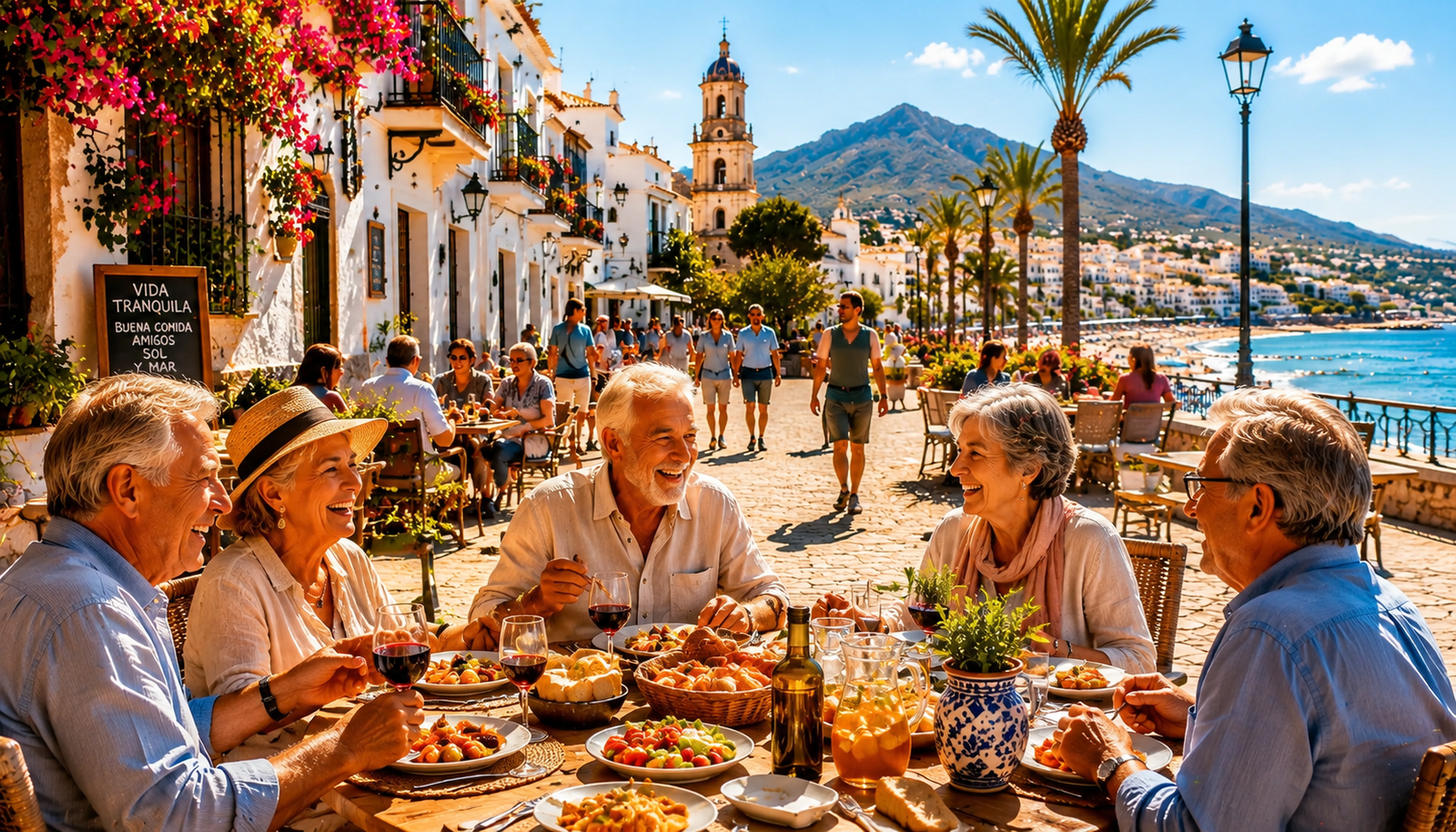
Life Expectancy in Spain: Why Spaniards Live So Long
Spain is often discussed as one of the healthiest countries in the world to live in. People ask why Spaniards live so long, why older people stay active, and whether the Spanish lifestyle really supports longevity.
The answer is not one single thing. Spaniards do not live longer only because of olive oil, sunshine or healthcare. Spain’s longevity comes from a combination of public healthcare, family culture, Mediterranean eating habits, walking, outdoor living, social connection, climate and daily routines that are less isolated than in many colder countries.
After living in Spain for around ten years, including Valencia and the Costa del Sol, raising three children here and regularly visiting Málaga, Benalmádena, Torremolinos, Mijas, Marbella and Estepona, I see this lifestyle every day. Older people walk outside, sit in cafés, meet neighbours, take grandchildren to parks, shop locally and stay visible in public life.
If you are still deciding whether Spain fits your lifestyle, start with our guide to whether Spain is a good place to live and compare the practical relocation advice on SpainCheck.com.
Important idea: Spain’s long life expectancy is not only about living longer. It is also about daily habits: walking more, eating fresher food, spending more time outside, using public spaces, having social contact and accessing healthcare when needed.
What Is the Life Expectancy in Spain?
Watch: Why Do Spaniards Live So Long?
Discover the everyday habits that contribute to Spain’s high life expectancy, from the Mediterranean diet and active lifestyle to healthcare, strong family connections, walkable cities and the slower pace of daily life.
Spain’s official statistics office, INE, reported that life expectancy at birth increased in 2024 to 84.01 years. Men reached 81.38 years and women reached 86.53 years. At age 65, men could expect to live an average of 19.87 more years, while women could expect 23.64 more years.
OECD data also places Spain among the leading OECD countries for life expectancy, with Spain above the OECD average. The WHO European Observatory has described Spain as having the highest life expectancy among EU countries in its 2024 health system review.
| Indicator | Spain 2024 | What It Means |
|---|---|---|
| Life expectancy at birth | 84.01 years | Average expected lifespan under current mortality conditions. |
| Men | 81.38 years | Male life expectancy remains lower than female life expectancy. |
| Women | 86.53 years | Spanish women live significantly longer on average. |
| Life expectancy at age 65: men | 19.87 more years | A man reaching 65 could expect to live close to 85 on average. |
| Life expectancy at age 65: women | 23.64 more years | A woman reaching 65 could expect to live close to 89 on average. |
These numbers help explain why Spain is so attractive for retirees and long-term residents. If retirement is part of your plan, read our full guide to retiring in Spain.
Why Do Spaniards Live So Long?
Spain’s longevity comes from several lifestyle and healthcare factors working together. It is not perfect, and Spain also faces modern problems such as heatwaves, stress, rising housing costs, obesity and an ageing population. But the overall lifestyle still supports health in several important ways.
🥗 Mediterranean Diet
Olive oil, vegetables, legumes, fish, fruit, nuts and shared meals are part of traditional Spanish eating habits.
🚶 Walking Culture
Many towns and cities encourage walking, errands on foot, evening strolls and active daily routines.
🏥 Healthcare Access
Spain has a strong public healthcare system, supported by private options for faster specialist access.
☀️ Outdoor Living
Climate allows more time outside, especially in Mediterranean and southern coastal regions.
👨👩👧 Social Connection
Family, neighbours, cafés, plazas and local events reduce isolation for many older people.
🧘 Slower Rhythm
Daily life often includes pauses, long meals, social contact and a stronger separation between work and life.
The Mediterranean Diet and Longevity
The Mediterranean diet is one of the most famous explanations for life expectancy in Spain. But it is important to understand it correctly. It is not only about eating paella or tapas.
A traditional Mediterranean eating pattern includes olive oil, vegetables, fruit, legumes, fish, nuts, whole grains and moderate portions. It also includes eating socially, cooking at home, buying seasonal food and treating meals as part of life rather than only fuel.
In Spain, local markets and supermarkets make it easy to buy fresh vegetables, fruit, olive oil, seafood, rice, legumes and seasonal produce. On the Costa del Sol, for example, it is normal to see people buying fresh fish, tomatoes, oranges, avocados, olive oil, almonds and local produce throughout the year.
Food culture matters as much as ingredients
Spanish food culture is social. Lunch with family, coffee with neighbours, a simple menú del día, shared plates and market shopping all create routines that are different from fast, isolated eating.
This does not mean everyone in Spain eats perfectly. Modern life has brought more processed food, fast food and sedentary habits. But the traditional structure of Spanish eating still supports healthier habits than many ultra-processed diets.
Practical lesson: The healthiest part of Spanish food culture is not only what people eat. It is how they eat: slower meals, fresher products, family routines and more social connection around food.
Healthcare in Spain and Longer Life
Healthcare is a major reason Spain performs strongly in life expectancy. The Spanish National Health System offers broad public healthcare coverage, and many foreigners also use private insurance for faster access to specialists.
The Spanish Ministry of Health is the official source for public health information. The WHO European Observatory Spain Health System Review 2024 notes that Spain has the highest life expectancy among EU countries and low levels of avoidable mortality compared with many peers.
For residents, healthcare access depends on employment, self-employment, pension rights, residency status, social security contributions, regional rules and private insurance choices.
If you are planning to move, healthcare should be part of your relocation plan. Read the moving to Spain guide before arriving, especially if you are non-EU, retired, self-employed or moving with children.
Walking, Public Life and Daily Movement
One thing foreigners notice in Spain is how much daily life happens outside. People walk to cafés, supermarkets, schools, pharmacies, beaches, parks and local markets.
In many Spanish towns, older people remain visible. They sit on benches, walk with friends, go to cafés, attend local events and help with grandchildren. This matters. Longevity is not only about hospitals; it is also about staying active and socially connected.
On the Costa del Sol, I often see older residents walking along the promenade in Benalmádena, Fuengirola, Torremolinos or Estepona. In Valencia, the Turia Park is a perfect example of how urban design can support daily movement. In Málaga, people combine city life, beach walks and social routines.
Small daily movement adds up
Many Spaniards do not “exercise” in the gym sense. They simply move more in daily life. Walking to buy bread, taking stairs, going to the market, walking children to school, visiting a café and doing an evening paseo can all contribute to healthier ageing.
Climate, Sunshine and Outdoor Living
Spain’s climate helps people spend more time outside, especially in Mediterranean and southern coastal regions. Outdoor living supports walking, social contact, vitamin D exposure, sport, family activities and mental wellbeing.
The official weather agency AEMET provides forecasts, climate information and weather warnings. This is important because Spain’s climate is not always easy. Heatwaves, drought and extreme summer temperatures are real health risks.
Climate supports longevity when people adapt wisely: walking early or late in summer, drinking water, using shade, protecting older people during heatwaves and choosing homes with good ventilation and cooling.
Climate Benefits
- More outdoor time during much of the year.
- More walking and social life outside the home.
- Winter sunshine in many coastal areas.
- Better conditions for sport, cafés, terraces and parks.
Climate Risks
- Summer heat can be dangerous for older people.
- Heatwaves are becoming more frequent and intense.
- Poorly insulated homes can be uncomfortable.
- Drought and water pressure affect some regions.
Family Life and Social Connection
Social connection is one of the most underrated reasons Spaniards live long lives. In Spain, older people are often more integrated into family and neighbourhood life than in many colder, more individualistic countries.
Grandparents are visible in daily routines. They help with school pickups, attend local events, sit in cafés, walk with friends and remain part of public life. This does not remove loneliness completely, but it creates more natural opportunities for contact.
As a father of three in Spain, I see how children, parents and grandparents often share the same public spaces. Playgrounds, town squares, beaches and restaurants are not separated by age in the same way as in some other countries.
This social structure is part of the wider quality of life in Spain.
Work-Life Balance and Stress
Stress affects health, and Spain’s lifestyle can reduce stress for some people. Later evenings, outdoor cafés, family meals, holidays, social contact and walkable towns can create a healthier rhythm.
But it would be dishonest to say Spain is stress-free. Local salaries can be low, bureaucracy can be frustrating, housing costs are rising, and self-employed people must deal with taxes, social security and administration.
Spain supports health best when your financial and legal situation is stable. A good lifestyle cannot fully compensate for money stress or paperwork problems.
For a balanced view, read our article about Spain work-life balance.
Why the Costa del Sol Can Feel Healthier
The Costa del Sol is not the only healthy place in Spain, but it is one of the most attractive regions for people who want outdoor living, sea air, winter sunshine and an active retirement or family lifestyle.
💶 Calculate Your Net Income in Spain
Estimate your take-home pay and better understand how much of your gross salary you could receive after deductions.
🚨 Healthcare & Emergency Numbers in Spain
Find emergency numbers and official resources for healthcare, police, taxes, traffic, property records and public services.
Where and how you live can also influence your daily habits, comfort and ability to stay active. Many buyers are therefore considering new developments in Spain that combine modern homes with swimming pools, gyms, landscaped gardens, sports facilities and other amenities designed around an active outdoor lifestyle.
Towns such as Málaga, Benalmádena, Fuengirola, Mijas, Marbella and Estepona offer beaches, promenades, golf, gyms, sports clubs, parks, international communities, private healthcare, public hospitals and airport access.
If you are considering buying a home in this region for lifestyle or retirement, start with Costa Prime Realty. For apartments, compare apartments on the Costa del Sol. For new-build lifestyle homes, see new developments on the Costa del Sol.
Marbella and Sotogrande lifestyle
Marbella can support a high-quality lifestyle through international schools, golf, private clinics, sports, restaurants, beach walks and premium residential areas. If Marbella is your target, use Homes Marbella for local property guidance.
Sotogrande is more private and spacious, with golf, marina life, villas and a calm residential atmosphere. For that lifestyle, compare Property Sotogrande.
If your dream is a healthier villa lifestyle with space, garden, pool and outdoor living, review villas for sale in Spain and supporting insights from Villa for Sale Spain Blog.
Does Living in Spain Make Foreigners Healthier?
Spain does not automatically make anyone healthier. If you move to Spain and spend every day driving, eating processed food, drinking too much, avoiding exercise and staying isolated, the country will not save you.
But Spain makes healthy habits easier for many people. Walking outside is pleasant. Fresh food is available. Cafés and public spaces encourage social contact. Winters are easier in many coastal areas. Children can play outdoors. Older people can stay visible and active.
This is why many foreigners say they feel better after moving to Spain. It is not magic. It is the daily environment.
Realistic view: Spain gives you more opportunities to live well. You still need to choose the right place, manage stress, eat well, walk, sleep properly, protect yourself from heat and use healthcare when needed.
Health Risks in Spain
Spain’s high life expectancy does not mean there are no health risks. Modern Spain faces several challenges that residents should take seriously.
| Risk | Why It Matters | Practical Advice |
|---|---|---|
| Heatwaves | Extreme heat is dangerous, especially for older people and children. | Use shade, hydration, cooling, early walks and AEMET warnings. |
| Sedentary habits | Modern life can reduce natural movement. | Build walking into your daily routine. |
| Processed food | Traditional diet is healthy, but modern ultra-processed food exists everywhere. | Shop at markets, cook at home and eat seasonal food. |
| Alcohol and nightlife | Social life can sometimes become unhealthy if habits are not controlled. | Enjoy culture without making drinking the centre of life. |
| Housing quality | Poor insulation, humidity or heat can affect comfort and health. | Check orientation, ventilation, insulation and cooling before renting or buying. |
Longevity Lessons from Spain
Even if you do not move to Spain, the Spanish lifestyle offers useful lessons.
1. Walk More
Daily walking matters more than occasional intense exercise for many people.
2. Eat Fresh
Vegetables, fruit, legumes, fish, olive oil and seasonal food should be normal, not special.
3. Stay Social
Neighbours, family, cafés and public spaces can protect against isolation.
4. Go Outside
Sunlight, fresh air, terraces, parks and promenades support better daily routines.
5. Slow Meals Down
Eating slowly with others is very different from eating alone in a hurry.
6. Use Healthcare Early
Preventive care and access to doctors can reduce avoidable health problems.
Life Expectancy and Cost of Living
Health and cost of living are connected. A healthy life in Spain is easier when your budget is realistic. Stress from rent, taxes, healthcare or school costs can damage the quality of life people are trying to improve.
Before relocating for lifestyle or retirement, compare the real cost of living in Spain. If you plan to buy property, understand taxes through Spain Property Tax.
Frequently Asked Questions
What is the life expectancy in Spain?
According to INE, life expectancy at birth in Spain was 84.01 years in 2024. Men reached 81.38 years and women reached 86.53 years.
Why do Spaniards live so long?
Spaniards live long lives because of several combined factors: public healthcare, Mediterranean diet, walking culture, outdoor living, family support, social connection and generally active daily routines.
Is Spain one of the healthiest countries?
Spain performs very strongly in life expectancy and health system comparisons. The WHO European Observatory notes that Spain has the highest life expectancy among EU countries, while OECD data places Spain above the OECD average.
Does the Mediterranean diet increase life expectancy?
A Mediterranean eating pattern is associated with healthier ageing because it includes olive oil, vegetables, fruit, legumes, fish, nuts and less reliance on ultra-processed food. In Spain, food culture also encourages slower, more social meals.
The type of home and residential environment can also influence how active and comfortable everyday life feels. Swimming pools, gyms, walking areas and landscaped gardens can encourage residents to spend more time outdoors and stay active. This is one reason why modern new developments in Spain are becoming increasingly attractive to people looking for a healthier and more convenient lifestyle.
Is Spain good for healthy retirement?
Yes, Spain can be excellent for healthy retirement because of climate, healthcare, walking, social life, food and outdoor activities. Retirees should still plan healthcare access, taxes, housing quality and summer heat protection.
Can moving to Spain improve quality of life?
For many people, yes. Spain can improve quality of life by encouraging more outdoor time, walking, social contact and healthier eating. But the benefits depend on choosing the right location and managing finances, healthcare and legal paperwork properly.
Final Thoughts
Spain’s high life expectancy is not an accident. It reflects healthcare access, social habits, food culture, walking, climate and a lifestyle where people often remain active and connected later in life.
The Spanish lifestyle is not perfect, and modern Spain faces real health challenges such as heatwaves, housing stress and processed food. But compared with many countries, Spain still gives residents strong conditions for a longer and healthier life.
My honest view after years of living here is this: Spain does not only add years to life for many people. When chosen well, it can also add more life to everyday years.
Useful Spain Lifestyle and Property Resources
Use these websites to compare lifestyle, relocation, property, taxes and area decisions before making a long-term move.
Continue Reading About Life in Spain
Useful Official Sources
- INE Spain — official Spanish life expectancy and demographic statistics.
- INE Life Tables — official life expectancy data by age and sex.
- OECD Health at a Glance: Spain — health and life expectancy indicators.
- WHO European Observatory: Spain Health System Review — healthcare system and health status analysis.
- Spanish Ministry of Health — official healthcare and public health information.
- AEMET — official Spanish weather forecasts, climate information and warnings.
This article is for general information only. Health, life expectancy and lifestyle outcomes depend on personal circumstances, genetics, habits, healthcare access, income, housing and region. Always check official sources and speak with qualified medical, legal, tax or relocation professionals before making decisions.