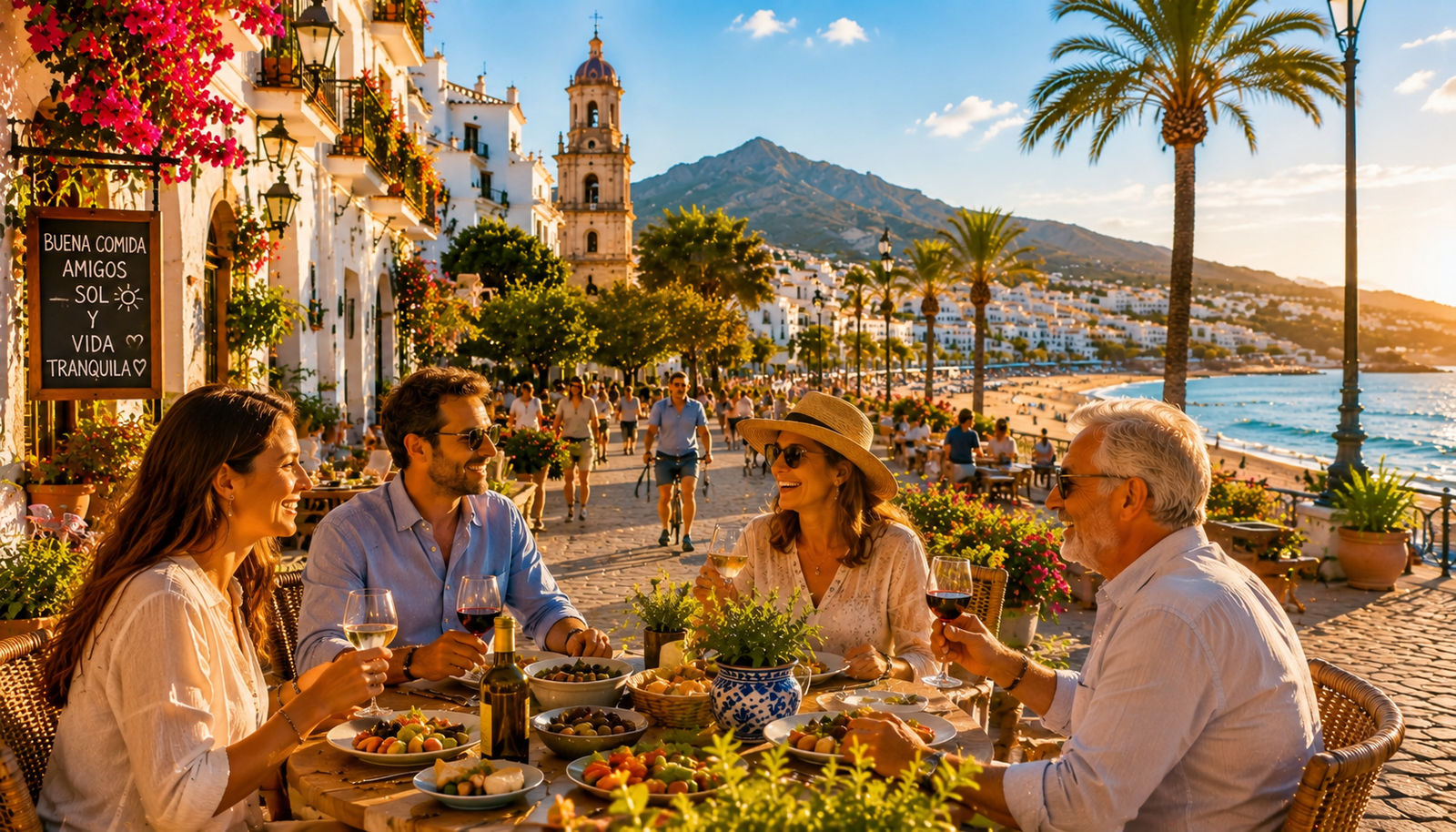
Quality of Life in Spain
Quality of life in Spain is one of the main reasons foreigners move here. Spain is not only a holiday destination. It is a real country with public healthcare, schools, transport, cities, universities, family neighbourhoods, local markets, sports facilities, beaches, mountains and a lifestyle that many people find healthier and more social.
But quality of life depends on where and how you live. A retired couple in Estepona, a remote worker in Valencia, a family in Benalmádena, a student in Granada and a business professional in Madrid will all experience Spain differently.
After living in Spain for around ten years, including time in Valencia and on the Costa del Sol, working in Torremolinos, becoming self-employed and raising three children here, I would describe Spain as a country with excellent lifestyle potential — but only if you choose the right area, budget properly and understand the local rhythm.
For a broader practical view, start with SpainCheck.com, then compare what daily life in Spain is really like and whether Spain is a good place to live for your personal situation.
Realistic view: Spain can improve quality of life through weather, healthcare, food, walking, family culture and social life. But it can also become stressful if housing, taxes, paperwork, school choice or location are poorly planned.
What Makes Spain’s Quality of Life So Attractive?
Watch: 18 Months of Living in Spain – An Honest UK vs Spain Comparison
Thinking about moving to Spain? This honest first-hand experience compares life in Spain with the UK, covering the weather, healthcare, cost of living, taxes, safety, community, lifestyle and the realities that many newcomers only discover after relocating.
Spain’s quality of life comes from a combination of lifestyle and infrastructure. Many countries have sunshine. Some have good healthcare. Others have food culture or strong cities. Spain combines many of these advantages in one place.
The Spanish lifestyle is built around public life. People walk, use cafés, meet friends outside, take children to parks, eat with family and spend more time in shared spaces. This makes daily life feel less isolated than in many colder or more private cultures.
🏥 Healthcare
Spain has a strong public healthcare system, with private healthcare widely used by foreigners.
☀️ Climate
Many regions offer mild winters, long outdoor seasons and more sunlight than Northern Europe.
👨👩👧 Family Life
Children, parents and grandparents are visible in restaurants, parks, plazas and local events.
🍅 Food Culture
Fresh produce, local markets, olive oil, fish, legumes and seasonal eating support healthier routines.
🚶 Outdoor Living
Walking, beach promenades, parks, terraces, sport and evening strolls are part of everyday life.
✈️ Connectivity
Airports, high-speed rail and public transport make Spain practical for residents and travellers.
Healthcare and Quality of Life in Spain
Healthcare is one of the strongest quality-of-life advantages in Spain. The WHO European Observatory describes Spain’s National Health System as offering virtually universal coverage, mainly tax-funded care and a comprehensive benefits package. Health services are largely provided in the public sector and free at the point of delivery, although some items such as pharmaceuticals and dental care may involve costs.
The Spanish Ministry of Health is the official source for healthcare information, while the WHO European Observatory Spain health system summary gives a useful overview of how the system works.
Foreigners should not assume automatic access in every situation. Your access depends on your residency status, employment, self-employment, pension rights, social security contributions, EU status or private insurance.
Healthcare is also closely linked to life expectancy in Spain, because access to care, prevention and active ageing help explain why Spain performs so well in longevity.
| Healthcare Option | Best For | Quality-of-Life Impact |
|---|---|---|
| Public healthcare | Residents with legal access through work, pension, social security or qualifying routes. | Strong long-term security and lower healthcare stress. |
| Private insurance | Foreigners during relocation, visa applicants and people wanting faster appointments. | More flexibility, often easier specialist access and English-speaking options. |
| Combination of both | Many long-term foreign residents. | Public system for core care, private care for convenience and speed. |
Safety and Everyday Security
Spain generally feels safe for families, retirees and solo residents. Many people feel comfortable walking in the evening, taking children to parks, using public transport and spending time in cafés and plazas.
💶 Understand Your Take-Home Salary
Estimate your take-home pay and better understand how much of your gross salary you could receive after deductions.
🚨 Essential Services for Living in Spain
Find emergency numbers and official resources for healthcare, police, taxes, traffic, property records and public services.
Safety varies by area. Tourist zones can have pickpocketing. Nightlife districts can become noisy. Some neighbourhoods are better for families than others. But for most residents, violent crime is not part of normal daily life.
Safety Advantages
- Strong public life and active streets in many towns.
- Family-friendly public spaces.
- Generally calm residential areas.
- Good sense of community in local neighbourhoods.
Safety Cautions
- Pickpocketing in tourist areas.
- Summer crowds in coastal towns.
- Noise in nightlife or holiday rental zones.
- Neighbourhood choice matters a lot.
Climate and Outdoor Lifestyle
Climate is one of Spain’s biggest quality-of-life advantages. Many areas allow residents to walk, eat outside, use terraces, play sports and enjoy parks or beaches during much of the year.
But Spain does not have one climate. Northern Spain is greener and wetter. Central Spain has hot summers and colder winters. Mediterranean Spain has mild winters and hot summers. The Canary Islands offer some of the most stable weather in Spain.
The official weather agency AEMET provides forecasts, warnings and climate information. This matters because Spain’s climate also brings risks: heatwaves, drought, heavy rain episodes and high summer temperatures. Reuters reported Spain’s first official heatwave of 2026 in June, with AEMET alerts across many regions.
Best climate areas for quality of life
The Costa del Sol, Costa Blanca, Valencia region, Canary Islands and parts of Andalusia are especially attractive for people who want mild winters and outdoor routines. Northern Spain is better for people who prefer green landscapes and cooler summer weather.
Food, Markets and Mediterranean Living
Food is a major part of Spanish quality of life. Spain is famous for olive oil, fresh vegetables, fruit, fish, rice, legumes, seafood, local markets and regional cooking.
But food quality is not only about ingredients. It is also about culture. Meals are social. Lunch matters. Cafés are meeting points. People eat with family, friends and colleagues. This creates a slower and more connected relationship with food.
Spain’s food culture supports the country’s reputation for health and long life. For more detail, read why Spaniards live so long.
🥗 Fresh Food
Markets and supermarkets make seasonal fruit, vegetables, fish and olive oil easy to access.
☕ Café Culture
Cafés are social spaces, not only places to drink coffee.
🍽 Social Meals
Family lunches, shared plates and slower meals are part of Spanish daily life.
Cost of Living and Financial Comfort
Spain can offer good value compared with many Northern European countries, the UK or the United States. Local food, cafés, public transport and outdoor leisure can be affordable. However, housing is the big exception.
Madrid, Barcelona, Marbella, Ibiza, Mallorca and prime coastal areas can be expensive. Smaller cities and inland towns can offer much better value.
Before moving, compare the real cost of living in Spain. Quality of life depends on your monthly budget. Spain feels very different when your housing cost is controlled.
| Cost Area | Quality-of-Life Advantage | What to Watch |
|---|---|---|
| Food | Fresh local products and markets can offer good value. | Imported products and premium restaurants increase costs. |
| Housing | Still reasonable in some smaller cities and inland areas. | Expensive in prime coastal and city locations. |
| Transport | Public transport is strong in many large cities. | Cars are often needed in suburbs and coastal areas. |
| Healthcare | Public healthcare is a major long-term advantage. | Private insurance may be needed during relocation or visa processes. |
| Schools | Public schools support local integration. | International schools can be a major family expense. |
Housing and Neighbourhood Quality
Housing is the biggest quality-of-life decision in Spain. A good home in the right neighbourhood can make life healthier, easier and more enjoyable. A bad location can create daily stress through traffic, noise, parking problems, poor insulation or lack of services.
The residential environment itself can also have a major impact on everyday comfort. Newer communities often include shared facilities, outdoor spaces and services designed to make daily life easier and more enjoyable. If you are comparing different housing options, it is worth exploring what everyday living in a modern Spanish development can offer.
If you plan to buy property on the Costa del Sol, use Costa Prime Realty for local property search, area guidance and buyer support.
For apartment research, compare apartments on the Costa del Sol. For modern property projects, see new developments on the Costa del Sol.
Marbella, Sotogrande and villa lifestyle
Marbella is one of Spain’s strongest lifestyle areas for international buyers, with beaches, golf, international schools, restaurants, private clinics and luxury property. For local research, visit Homes Marbella.
Sotogrande offers a different type of quality of life: privacy, golf, marina life, villas, space and security. For this market, compare Property Sotogrande.
If outdoor space, garden, pool and privacy are important for your lifestyle, review villas for sale in Spain and market insights on Villa for Sale Spain Blog.
Transport and Connectivity
Spain has strong transport infrastructure. Madrid, Barcelona, Valencia and Málaga have useful public transport. Spain also has high-speed rail, airports, motorways and regional transport networks.
Quality of life improves when you live near the services you use every day: school, healthcare, supermarket, sports, parks and transport. A beautiful home far from daily needs can become frustrating.
For families and retirees, airport access is also important. Málaga, Alicante, Valencia, Madrid, Barcelona, Palma and the Canary Islands are strong for international connections.
Family Life in Spain
Spain is one of the most family-friendly countries I have experienced. Children are welcome in restaurants, cafés, plazas, parks, beaches and local events. This changes daily life for parents.
As a father of three on the Costa del Sol, I see the advantage every day: outdoor sports, football pitches, beaches, playgrounds, school events, local fairs and social life where children are part of the community.
Families should choose location carefully. The best family quality of life usually depends on schools, safe streets, sports facilities, healthcare, parking and daily transport.
If you are still comparing cities, read Best Places to Live in Spain for Expats and Families.
Work-Life Balance
Spain is often associated with work-life balance. Many people move here because they want more than work, bills and bad weather. Outdoor cafés, later evenings, family meals and social life all help create a more balanced rhythm.
But the reality depends on your income source. Local salaries can be lower than in Northern Europe or the United States. Self-employed people must manage taxes, social security and administration. Remote workers may enjoy Spain more if they keep stable international income.
Read the full guide to Spain work-life balance before moving for lifestyle reasons alone.
Quality of Life by Type of Person
| Person Type | Quality-of-Life Potential | Best Areas to Consider |
|---|---|---|
| Retirees | Very strong if healthcare, taxes and housing are planned well. | Costa del Sol, Costa Blanca, Valencia region, Canary Islands, Mallorca. |
| Families | Excellent if schools, transport and neighbourhood are chosen carefully. | Valencia, Málaga, Benalmádena, Fuengirola, Marbella, Estepona, Madrid suburbs. |
| Remote workers | Strong with stable income, good internet and tax planning. | Valencia, Málaga, Madrid, Barcelona, Alicante, Canary Islands. |
| Local job seekers | Mixed; depends heavily on salary and industry. | Madrid, Barcelona, Valencia, Málaga, Bilbao. |
| Property buyers | Strong if the area fits long-term lifestyle, not only holiday appeal. | Costa del Sol, Costa Blanca, Valencia, Mallorca, selected inland cities. |
Regional Differences in Quality of Life
Spain is not one lifestyle. The country includes Mediterranean coast, Atlantic north, inland cities, islands, mountain regions and rural villages.
Valencia
Excellent balance of city life, beach, parks, food and family-friendly daily routines.
Málaga & Costa del Sol
Strong for climate, airport access, outdoor living, families, retirees and property buyers.
Madrid
Best for careers, culture, transport and business, but more intense and expensive.
Barcelona
International, creative and coastal, but housing pressure and tourism are serious factors.
Northern Spain
Greener, cooler and less Mediterranean, ideal for people who dislike extreme heat.
Canary Islands
Excellent year-round weather and outdoor life, but island logistics must be considered.
Pros and Cons of Quality of Life in Spain
Pros
- Strong healthcare and high life expectancy.
- Excellent outdoor lifestyle in many regions.
- Generally safe daily life.
- Family-friendly culture.
- Fresh food, markets and Mediterranean eating habits.
- Beaches, mountains, cities and islands.
- Good airports and national transport.
- Large international communities in popular areas.
Cons
- Housing costs are high in popular cities and coastal areas.
- Bureaucracy can be slow and frustrating.
- Local salaries can be lower than expected.
- Summer heat can be difficult and sometimes dangerous.
- English is not enough everywhere.
- Tourist areas can become crowded or noisy.
- Property taxes and purchase costs need planning.
- Some older homes have insulation or humidity problems.
How to Improve Your Quality of Life in Spain
1. Choose Area First
Do not choose a home before understanding the town, transport, schools and services.
2. Control Housing Cost
Your rent or mortgage will shape your financial comfort more than almost anything else.
3. Learn Spanish
Even basic Spanish improves healthcare, paperwork, neighbours and daily confidence.
4. Walk Daily
Spain is healthier when you actually use the outdoor lifestyle.
5. Plan Taxes
Tax residence and property costs can affect your real budget.
6. Build Local Routine
Cafés, markets, sports, schools and neighbours make Spain feel like home.
If you are buying property, review Spain Property Tax before signing anything, because taxes and purchase costs affect long-term quality of life.
Frequently Asked Questions
Is the quality of life in Spain good?
Yes, Spain offers very good quality of life for many people thanks to healthcare, safety, climate, food, family culture, outdoor living and strong social life. The experience depends heavily on location and budget.
Why is Spain’s quality of life high?
Spain combines public healthcare, Mediterranean food culture, outdoor lifestyle, family life, walkable towns, beaches, cities, transport and social habits that support daily wellbeing.
Is Spain good for families?
Yes, Spain can be excellent for families. Children are welcome in public spaces, restaurants, parks and events. School choice, housing, healthcare and transport should be planned carefully.
Is Spain good for retirees?
Yes, Spain is one of Europe’s strongest retirement destinations because of healthcare, climate, food, safety and outdoor life. Retirees should plan healthcare access, taxes and long-term housing.
Is Spain expensive for quality of life?
Spain can offer good value, but popular areas such as Madrid, Barcelona, Marbella, Ibiza, Mallorca and prime coastal zones are expensive. Housing is the key cost.
What is the biggest downside of living in Spain?
The biggest downsides are bureaucracy, housing pressure in popular areas, lower local salaries, summer heat and the need to understand taxes and local systems.
Final Thoughts
Quality of life in Spain can be excellent. The country offers healthcare, climate, food, safety, family life, public spaces, beaches, mountains, cities and a lifestyle that helps many people feel healthier and more connected.
But the best quality of life does not come automatically. It comes from choosing the right area, controlling housing costs, understanding paperwork, planning healthcare and building a real local routine.
My honest view after years of living here is simple: Spain can offer one of the best lifestyles in Europe, but only when your location, budget and expectations match real daily life.
Useful Spain Lifestyle and Property Resources
Use these websites to compare lifestyle, relocation, property, taxes and area decisions before making a long-term move.
Continue Reading About Life in Spain
Useful Official Sources
- INE Spain — official population, quality-of-life indicators, demographic and economic statistics.
- INE Life Expectancy Data — official life expectancy indicators for Spain.
- AEMET — official Spanish weather forecasts, climate information and warnings.
- Spanish Ministry of Health — official healthcare and public health information.
- WHO European Observatory: Spain Health System Summary — healthcare system overview.
- Spain.info — official tourism information about Spanish cities, culture, food, beaches and nature.
This article is for general information only. Quality of life depends on location, income, healthcare access, legal status, housing, taxes, family needs and personal expectations. Always check official sources and speak with qualified legal, tax, healthcare or property professionals before making decisions.