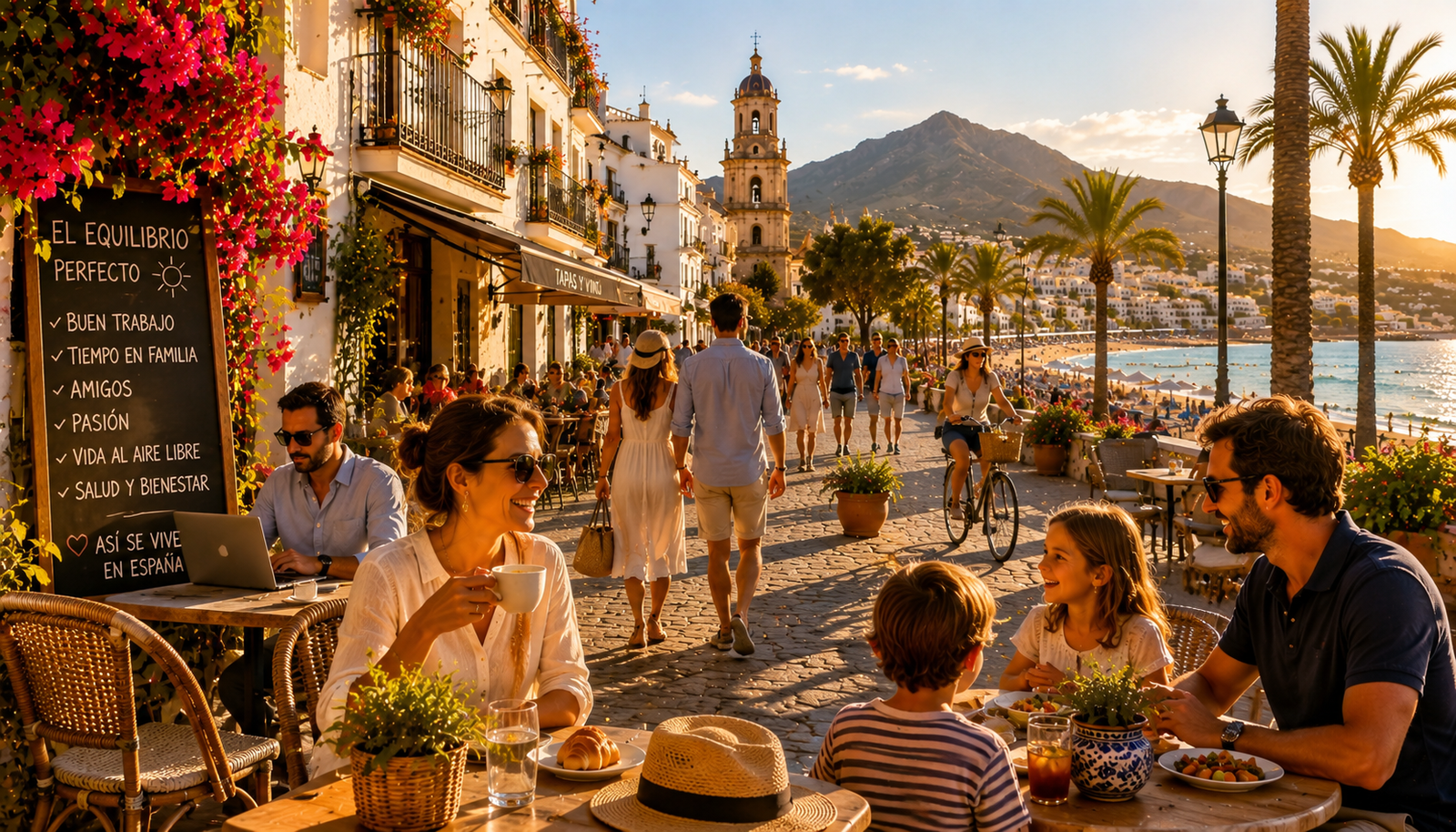
Spain Work-Life Balance Explained
Spain is famous for lifestyle. Many foreigners imagine shorter workdays, long lunches, sunny evenings, tapas, beach walks and a healthier rhythm. There is truth in that image, but it is not the full story.
Work-life balance in Spain depends on how you earn money. An employee in Madrid, a remote worker in Málaga, a self-employed consultant in Benalmádena, a hospitality worker in Marbella and a retiree in Estepona will all experience Spain differently.
💶 Calculate Your Take-Home Pay
Estimate your take-home pay and better understand how much of your gross salary you could receive after deductions.
🚨 Important Numbers for Living in Spain
Find emergency numbers and official resources for healthcare, police, taxes, traffic, property records and public services.
I have experienced Spain from different angles: living first in Valencia, then on the Costa del Sol, working as an employee in Torremolinos, later becoming self-employed, and raising three children here. My honest view is this: Spain can give you a better lifestyle, but only if your income, paperwork and location are stable.
Before moving for lifestyle reasons, compare practical relocation guides on SpainCheck.com, read what living in Spain really feels like, and check the full cost of living in Spain.
Realistic view: Spain is excellent for people who want more life outside work. But Spain is not automatically relaxed if you have low income, unstable work, high rent, visa stress, tax confusion or a long commute.
How Work-Life Balance in Spain Really Works
Watch: Life in Spain – Expectations vs Reality
This video is a useful companion for anyone thinking about moving to Spain, showing the difference between the dream and the real daily experience — including lifestyle, cost of living, culture, bureaucracy, housing, weather, social life and the adjustments many foreigners only discover after arriving.
Work-life balance in Spain is shaped by several things: legal working hours, collective agreements, holidays, family culture, late meal times, regional habits, climate and the strong social role of public spaces.
Spain’s official government portal explains that the general maximum working time is 40 hours of effective work per week, calculated as an annual average. Working conditions can also depend on collective agreements, sector rules and employment contracts.
This means Spain is not a country where everyone works only a few hours and spends the rest of the day at the beach. Many people work hard. But outside work, daily life often feels more social, outdoor and family-oriented than in many colder or more work-centred countries.
⏰ Working Hours
The general limit is 40 effective hours per week on annual average, but schedules vary by sector.
🏖 Holidays
Spain combines paid annual leave with national, regional and local public holidays.
🌇 Lifestyle
Evenings, cafés, parks, sports, family meals and outdoor life strongly shape the Spanish routine.
Typical Working Hours in Spain
Traditional Spanish working hours can feel unusual to foreigners. Some offices still have long lunch breaks and later finishing times, while modern companies, remote teams and international firms may use more standard European schedules.
In big cities like Madrid and Barcelona, working life can be intense. In coastal areas, hospitality, real estate, tourism and services often follow seasonal rhythms. In remote work, the schedule may be closer to your clients’ time zone than Spanish office culture.
| Work Type | Typical Rhythm | Work-Life Balance Reality |
|---|---|---|
| Office employee | Often Monday to Friday, with variation by company and sector. | Can be stable, but commute and salary level matter. |
| International company | Often more modern schedules, hybrid work and shorter lunch breaks. | Usually better for foreigners used to Northern European or U.S. structures. |
| Hospitality and tourism | Evenings, weekends, high season and split shifts are common. | Can be tiring despite Spain’s relaxed image. |
| Remote worker | Depends on foreign employer, clients and time zone. | Can offer excellent lifestyle if income and tax planning are stable. |
| Self-employed autónomo | Flexible but often demanding. | Freedom is real, but taxes, social security and clients create pressure. |
Daily Routine in Spain
Spain’s daily routine is one of the biggest lifestyle differences for foreigners. Lunch is often later. Dinner is much later. Evenings are active. Children stay outside later than in many northern countries, especially in spring and summer.
In many Spanish towns, life does not end after work. Parks fill, cafés become active, sports clubs start training, families walk outside and people meet in public spaces.
| Time of Day | Spanish Routine | Foreigners Notice |
|---|---|---|
| Morning | Coffee, school run, work, errands and local shops. | Breakfast is often simple and cafés are active early. |
| Lunch | Main meal for many people, often later than in Northern Europe. | Some businesses slow down or close during lunch hours. |
| Afternoon | Work continues, children finish school, sports and activities begin. | The day can feel split into two parts. |
| Evening | Paseo, cafés, playgrounds, sports, family time and late dinner. | Evening life is one of Spain’s biggest lifestyle advantages. |
| Weekend | Family meals, beach, mountains, shopping centres, sport and local events. | Sunday can be quiet outside tourist areas and large shopping centres. |
Paid Holidays and Public Holidays
Spain’s holiday culture is a major part of work-life balance. Employees generally have paid annual leave, and Spain also has national, regional and local public holidays.
In practice, public holidays can feel different depending on the autonomous community and municipality. Andalusia, Madrid, Catalonia, Valencia, the Balearic Islands and the Canary Islands may have different holiday calendars.
This matters for families and foreigners because schools, banks, offices and local services may close on regional or municipal holidays.
Practical tip: Always check the local holiday calendar for your town, not only the national Spanish calendar. Local fiestas can affect schools, shops, appointments, transport and work schedules.
Remote Work in Spain
Spain has become one of Europe’s most attractive countries for remote workers. The reasons are clear: climate, cafés, coworking spaces, airports, food, safety, culture and a lower-stress daily rhythm compared with many large global cities.
The Spanish telework or digital nomad visa is intended for foreigners who travel to Spain to carry out remote work or professional activity for companies located outside Spain. This makes Spain attractive for non-EU remote workers, including Americans, British citizens and other international professionals.
Remote workers should still be careful. Living in Spain can trigger tax residency, social security questions and visa requirements. Do not assume that working online means you can ignore Spanish rules.
Americans should also read Living in Spain as an American because U.S. tax filing and Spanish tax residency can overlap.
Self-Employed Life in Spain
Being self-employed in Spain can offer freedom, but it is not always easy. Autónomos need to manage invoices, tax declarations, social security payments, business expenses, clients, contracts and deadlines.
I have worked both as an employee and as self-employed in Spain. The biggest difference is responsibility. As an employee, your employer handles much of the structure. As self-employed, you may control your time, but you carry more risk.
For 2026, autónomo contributions continue to depend on real net income brackets, with reduced rates available for some new self-employed workers. Always confirm your exact situation with Seguridad Social or a gestor.
Autónomo Advantages
- More flexibility over your schedule.
- Ability to serve international clients.
- Works well with lifestyle businesses and consulting.
- Can fit family life better if income is stable.
Autónomo Challenges
- Monthly social security costs.
- Tax declarations and accounting.
- Client payment delays.
- No automatic paid holidays like an employee.
- More stress if income is irregular.
Work-Life Balance for Families
Spain can be excellent for families because children are part of public life. Parks, cafés, sports clubs, town festivals, beaches and family events are normal parts of the routine.
As a father of three on the Costa del Sol, this is one of the biggest lifestyle benefits I see. After school, children can go to football, swimming, playgrounds, beach walks or local events. Parents can meet other families naturally through school and sports.
But family work-life balance depends on location. School distance, traffic, parking, work schedule and housing cost can make life easy or stressful.
Families should compare the best places to live in Spain for expats and families before choosing a region.
Spain Compared with Northern Europe and the United States
Many foreigners move to Spain because they are tired of grey weather, high stress, high childcare costs, long winters, expensive healthcare or a culture where work dominates daily life.
Spain often feels more social and outdoor. People spend more time in cafés, plazas, parks, beaches and restaurants. Family life is more visible. The climate allows more evening activity. This creates a feeling that life is not only work.
| Topic | Spain | Northern Europe / U.S. Comparison |
|---|---|---|
| Daily rhythm | Later meals, later evenings, more public life. | Often earlier dinners and more home-based routines. |
| Weather | More outdoor time in many regions. | Long winters or extreme weather can limit outdoor lifestyle. |
| Healthcare | Strong public system for eligible residents. | U.S. healthcare can be much more financially stressful. |
| Work culture | Can be social and flexible, but varies by sector. | Often more productivity-focused and structured. |
| Salary levels | Often lower than Northern Europe or U.S. | Higher wages can come with higher costs and stress. |
| Family life | Children are visible in public spaces and restaurants. | Family routines may be more private or home-based. |
Best Places in Spain for Work-Life Balance
The best place depends on your income source. Madrid may be best for career growth. Valencia may be best for balance. Málaga and the Costa del Sol may be best for outdoor lifestyle. Alicante may offer better value. The Canary Islands may suit remote workers who want mild weather all year.
Valencia
Excellent balance of beach, city, parks, food, cycling and family life.
Málaga
Strong for remote workers, airport access, culture, beach and coastal lifestyle.
Costa del Sol
Ideal for outdoor living, families, retirees, international schools and property buyers.
Madrid
Best for career opportunities, but more intense and expensive than coastal Spain.
Alicante
Good climate, airport access and better value for many lifestyle movers.
Canary Islands
Excellent year-round weather and popular with digital nomads.
Property and Lifestyle: Why Location Matters
Your home strongly affects work-life balance. A beautiful property with poor transport, bad internet, no parking or a long school commute can destroy the lifestyle you moved for.
The type of residential community you choose can also influence your daily routine. Swimming pools, gyms, coworking spaces, landscaped gardens and sports facilities can make everyday life more convenient. If this lifestyle appeals to you, read what life is like in a modern new development in Spain.
If your goal is to build life on the Costa del Sol, start with Costa Prime Realty for local property search and buyer guidance.
For coastal apartment research, compare apartments on the Costa del Sol. For modern, low-maintenance homes, see new developments on the Costa del Sol.
Marbella can be ideal for international schools, luxury lifestyle, golf, restaurants and private healthcare. For local research, visit Homes Marbella. Sotogrande offers a more private, spacious golf and marina lifestyle, which you can compare at Property Sotogrande.
If outdoor space, pool, garden and privacy are important for your ideal lifestyle, review villas for sale in Spain and market insights from Villa for Sale Spain Blog.
Taxes, Housing Costs and Lifestyle Reality
Work-life balance depends on money. Spain can feel relaxed when your income is stable and housing cost is controlled. It can feel stressful when rent is high, tax planning is poor or self-employed income is irregular.
Property buyers should understand purchase taxes, ownership costs, non-resident tax, capital gains and inheritance issues. Use Spain Property Tax before buying or selling property.
If you are still deciding whether Spain is right for you, read Is Spain a Good Place to Live? and Quality of Life in Spain.
Pros and Cons of Spain Work-Life Balance
Pros
- Strong outdoor lifestyle in many regions.
- Paid holidays and public holiday culture.
- Family-friendly daily routine.
- More cafés, parks, beaches and public spaces.
- Remote work can be excellent with stable income.
- Healthier rhythm for many families and retirees.
- Good climate in many coastal areas.
- Social life feels easier than in many colder countries.
Cons
- Local salaries can be lower than expected.
- Bureaucracy can reduce the feeling of freedom.
- Self-employed people carry more administrative pressure.
- Housing costs are high in popular cities and coastal areas.
- Split shifts can be tiring in some sectors.
- Summer heat can affect productivity and comfort.
- Tax planning is essential for remote workers and property owners.
- English is not enough in every work or administrative situation.
How to Improve Your Work-Life Balance in Spain
1. Choose Location Wisely
Live close to work, school, cafés, supermarkets, healthcare and transport.
2. Control Housing Cost
High rent or mortgage pressure can ruin Spain’s lifestyle advantage.
3. Learn Spanish
Basic Spanish reduces stress with doctors, schools, neighbours and paperwork.
4. Use Outdoor Life
Walk, go to parks, use cafés, visit beaches and build movement into the day.
5. Plan Taxes Early
Remote workers, Americans, autónomos and property owners need professional advice.
6. Build Local Routine
Sports, markets, cafés and community make Spain feel like home.
Frequently Asked Questions
Does Spain have good work-life balance?
Spain can offer very good work-life balance because of holidays, outdoor living, family culture, social life and climate. However, the reality depends on your job, income, housing cost and region.
How many hours do people work in Spain?
The general maximum working time is 40 effective hours per week on annual average, but actual schedules depend on contracts, collective agreements, sector and company culture.
Is remote work good in Spain?
Yes, Spain is excellent for many remote workers because of climate, cafés, coworking spaces, airports and lifestyle. Remote workers still need to plan visas, taxes and social security correctly.
Is Spain good for self-employed people?
Spain can be good for self-employed people with stable income and good planning. The challenge is managing autónomo contributions, tax declarations, accounting and irregular client income.
Are salaries high in Spain?
Salaries in Spain are often lower than in Northern Europe or the United States. Spain’s lifestyle advantage is strongest when income is stable, housing cost is controlled and the location supports daily life.
What is the best place in Spain for work-life balance?
Valencia, Málaga, the Costa del Sol, Alicante and the Canary Islands are strong lifestyle choices. Madrid and Barcelona are better for careers, but they are also more expensive and intense.
Final Thoughts
Spain’s work-life balance is real, but it is not automatic.
The country gives you many tools for a better life: sunshine, food, cafés, walking, family culture, public holidays, beaches, parks and a social rhythm that makes life feel less isolated.
But work-life balance depends on income, housing, taxes, paperwork, commute, job type and location. If those parts are wrong, Spain can feel stressful. If they are planned well, Spain can offer one of the best daily lifestyles in Europe.
Useful Spain Work, Lifestyle and Property Resources
Use these websites to compare lifestyle, relocation, property, taxes and area decisions before moving or working from Spain.
Continue Reading About Life in Spain
Useful Official Sources
- Spanish Government: Working Hours, Leave and Holidays — official information about working time and leave.
- Spanish Ministry of Labour and Social Economy — official labour information and employment policy.
- Spanish Social Security — official information for workers, employers and self-employed people.
- Spanish Consulate: Telework Visa — official digital nomad visa guidance.
- AEMET — official Spanish weather forecasts, climate data and warnings.
- INE Spain — official population, employment, demographic and economic statistics.
This article is for general information only. Work conditions, holidays, taxes, self-employed contributions, visas and remote-work rules depend on contracts, sector, nationality, legal status and personal circumstances. Always check official sources and speak with qualified legal, tax, immigration or employment professionals before making decisions.